
Mold Damage Restoration in Kansas City, MO
The Mold Is Only Half the Problem.
By the time mold shows up, it’s usually already eaten into drywall, warped flooring, or ruined insulation behind a wall. Removing the mold doesn’t put your room back together.
That’s where restoration comes in. We clean up the mold, dry out the moisture, and rebuild what’s damaged — same drywall, same flooring, same finished look you had before, done under one contract instead of three separate calls.
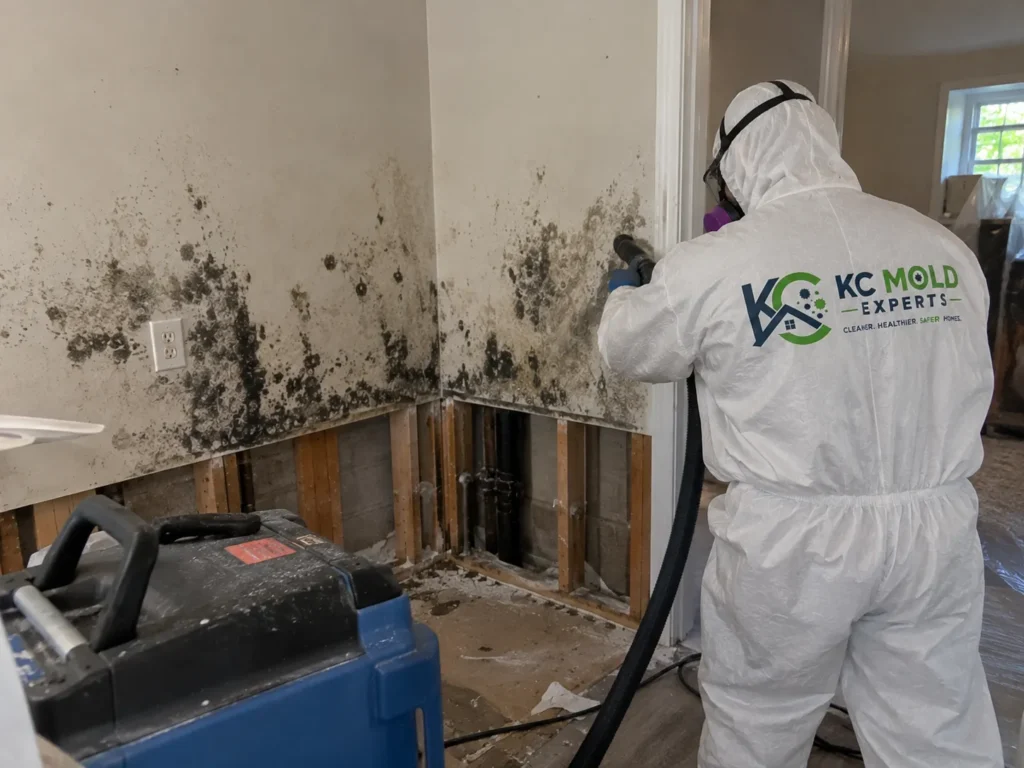
Cleanup and Rebuild, Under One Roof
A lot of companies stop once the mold is gone and hand you off to a general contractor for repairs. That gap is where jobs stall, timelines slip, and nobody takes responsibility when something doesn’t line up.
KC Mold Experts handles the cleanup and the rebuild together. Our technicians are IICRC-trained, and we’re licensed and insured as a full-service contractor in both Missouri and Kansas — not just a mold crew that stops at demolition.
What We Can Restore After Mold Damage
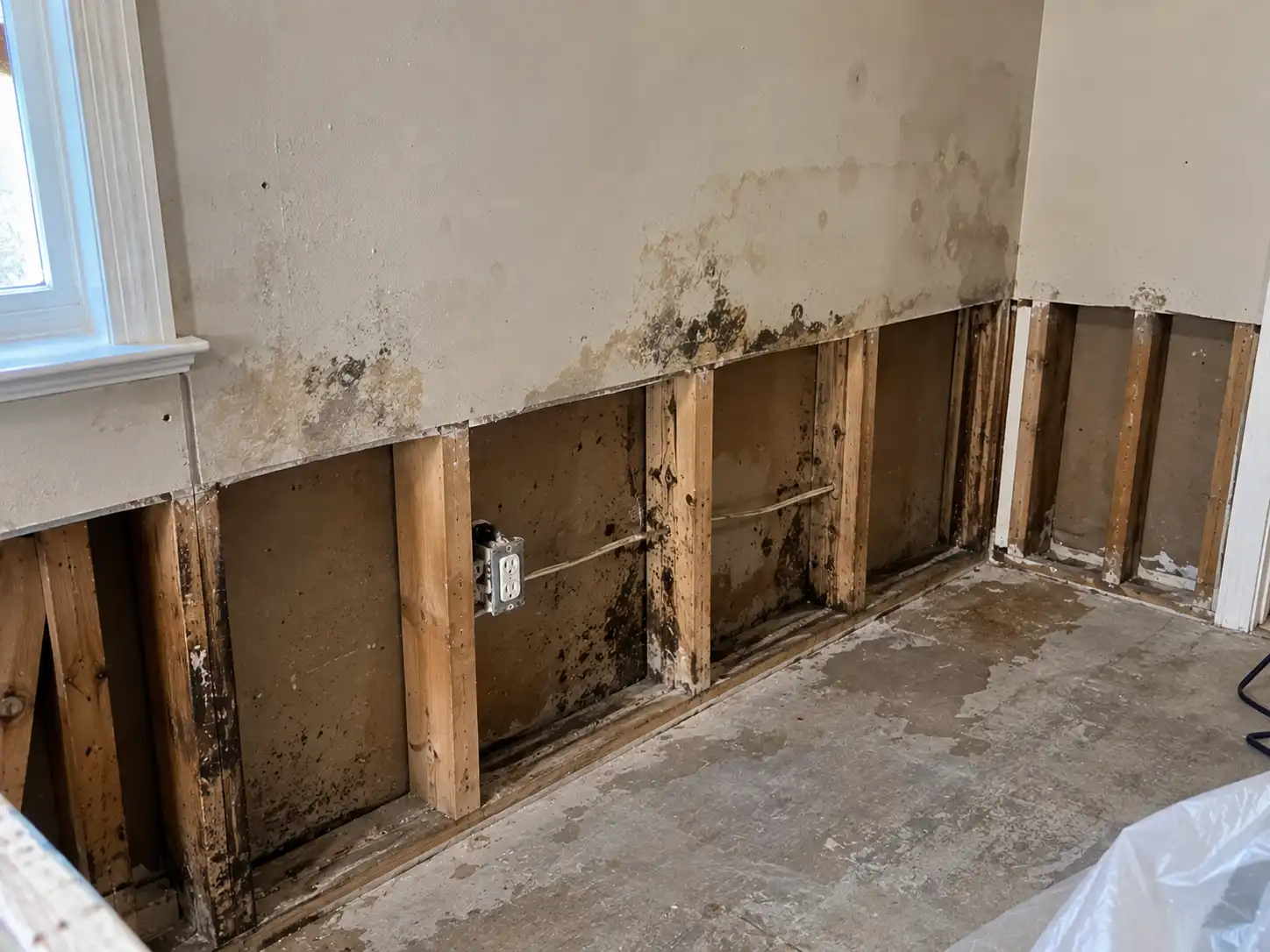
Drywall and Walls
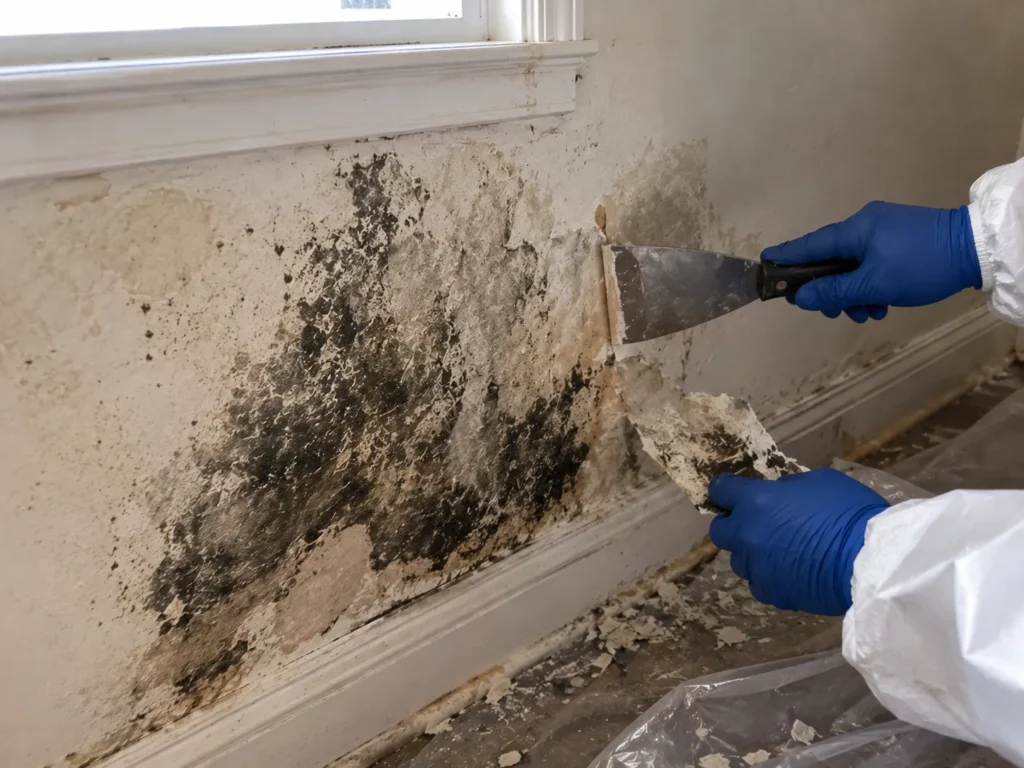
Mold-damaged drywall usually can’t be saved once growth has reached the paper backing, since the paper holds moisture and feeds continued growth even after cleaning. We remove the affected sections, treat the framing behind them, and rebuild with matching drywall, texture, and paint.
If mold is limited to the surface and hasn’t penetrated the material, cleaning and sealing may be enough. We test each section rather than assuming a full wall needs replacement.
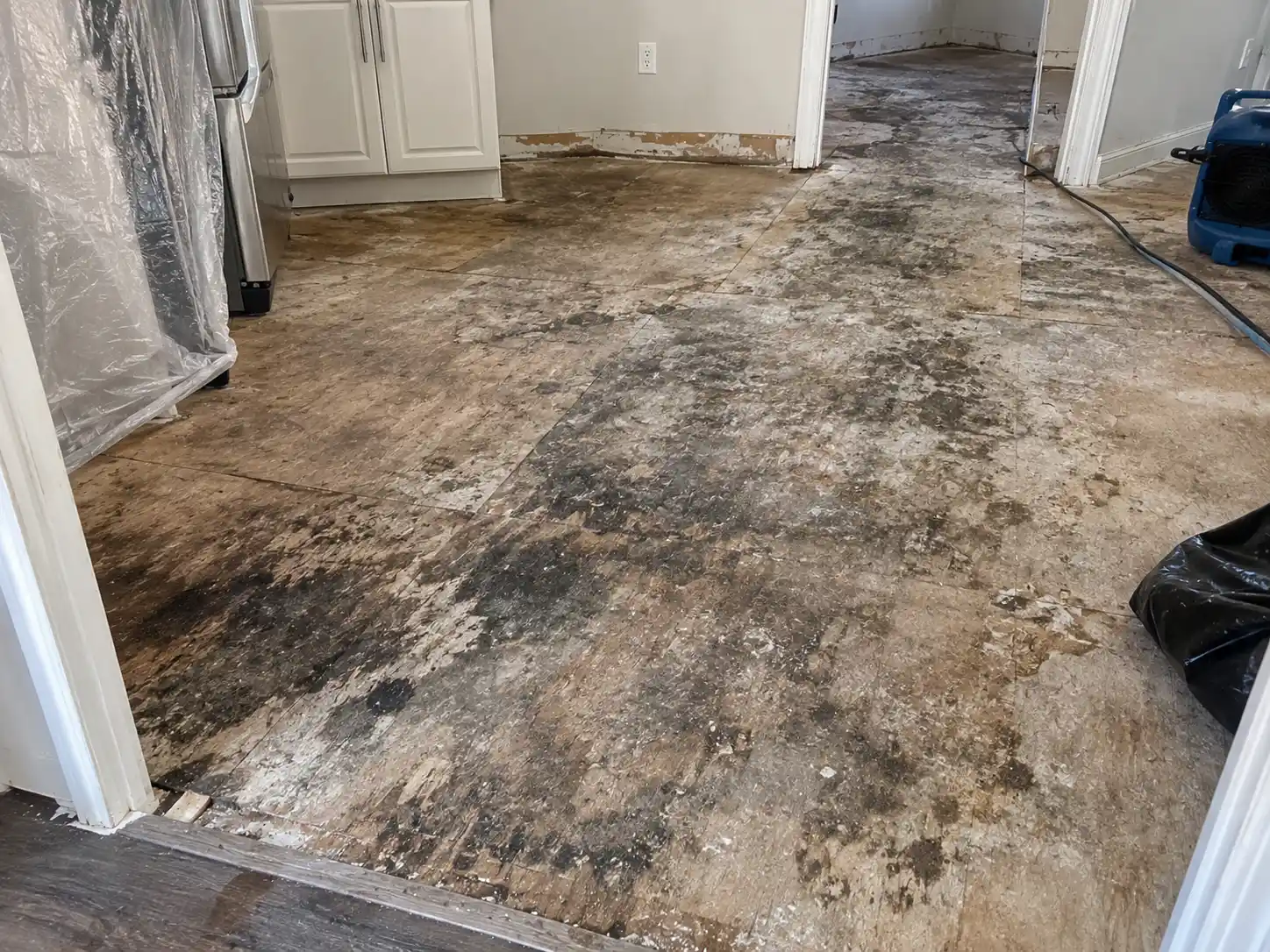
Flooring
Hardwood, laminate, and engineered flooring absorb moisture from below, often warping or cupping before mold becomes visible on the surface. Carpet and carpet padding hold moisture even longer, and mold growth in padding usually means the whole section needs replacing, not just cleaning.
Tile and vinyl are more resistant, but moisture trapped underneath can still support growth in the subfloor. We check what’s happening below the surface before deciding what can stay.
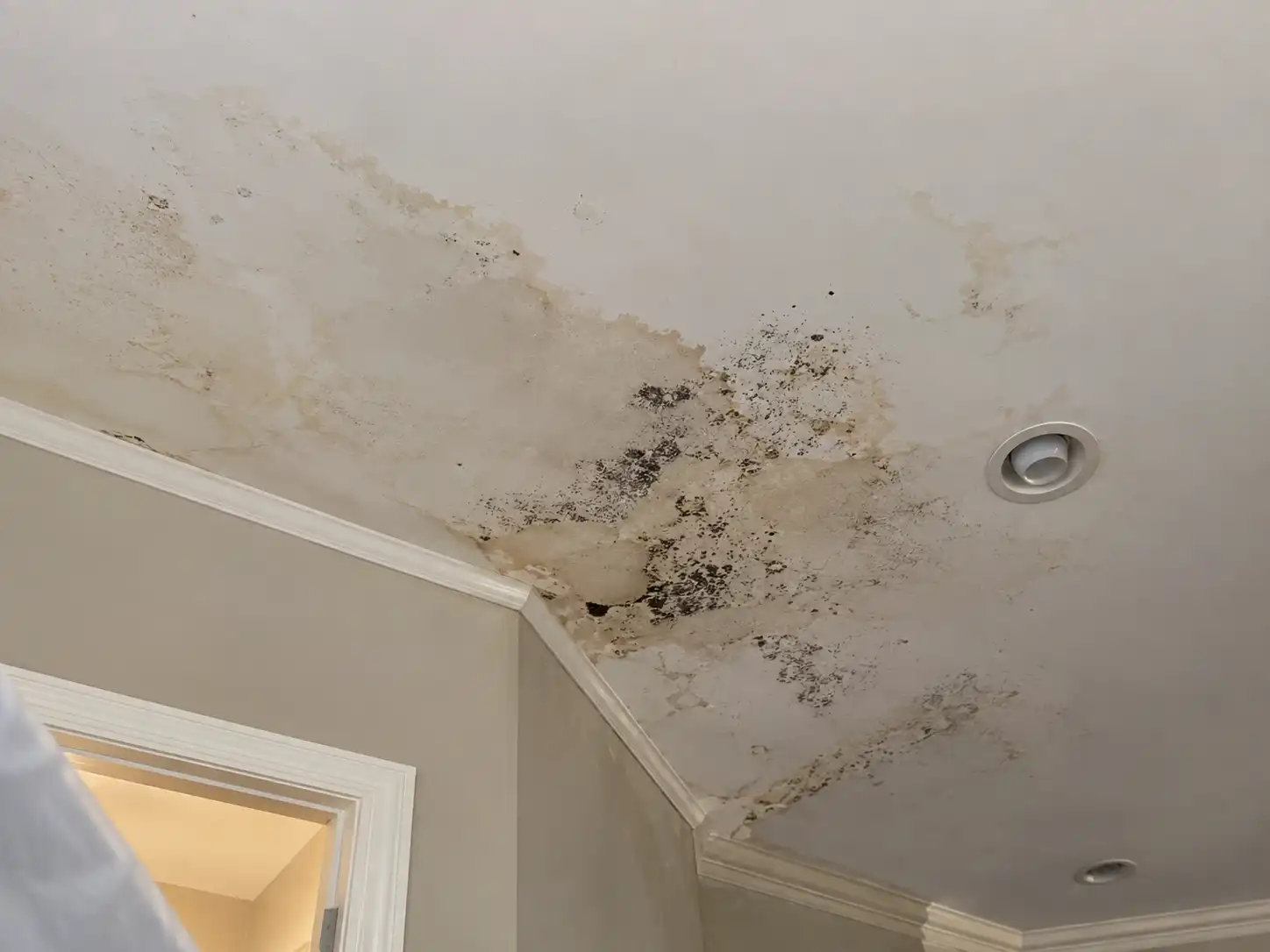
Ceilings
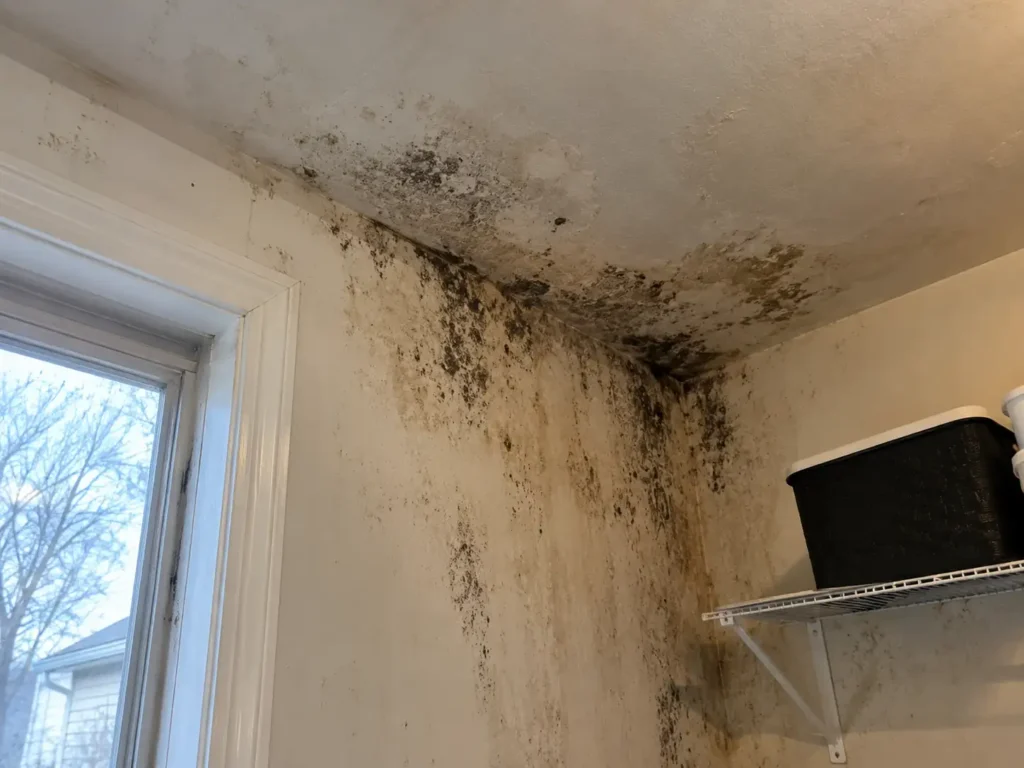
Ceiling damage almost always starts above the visible stain, usually from a roof leak, a plumbing line from the floor above, or condensation from poor attic ventilation. Drywall ceiling sections with mold growth are removed and replaced, matched to the existing texture so the repair doesn’t stand out.
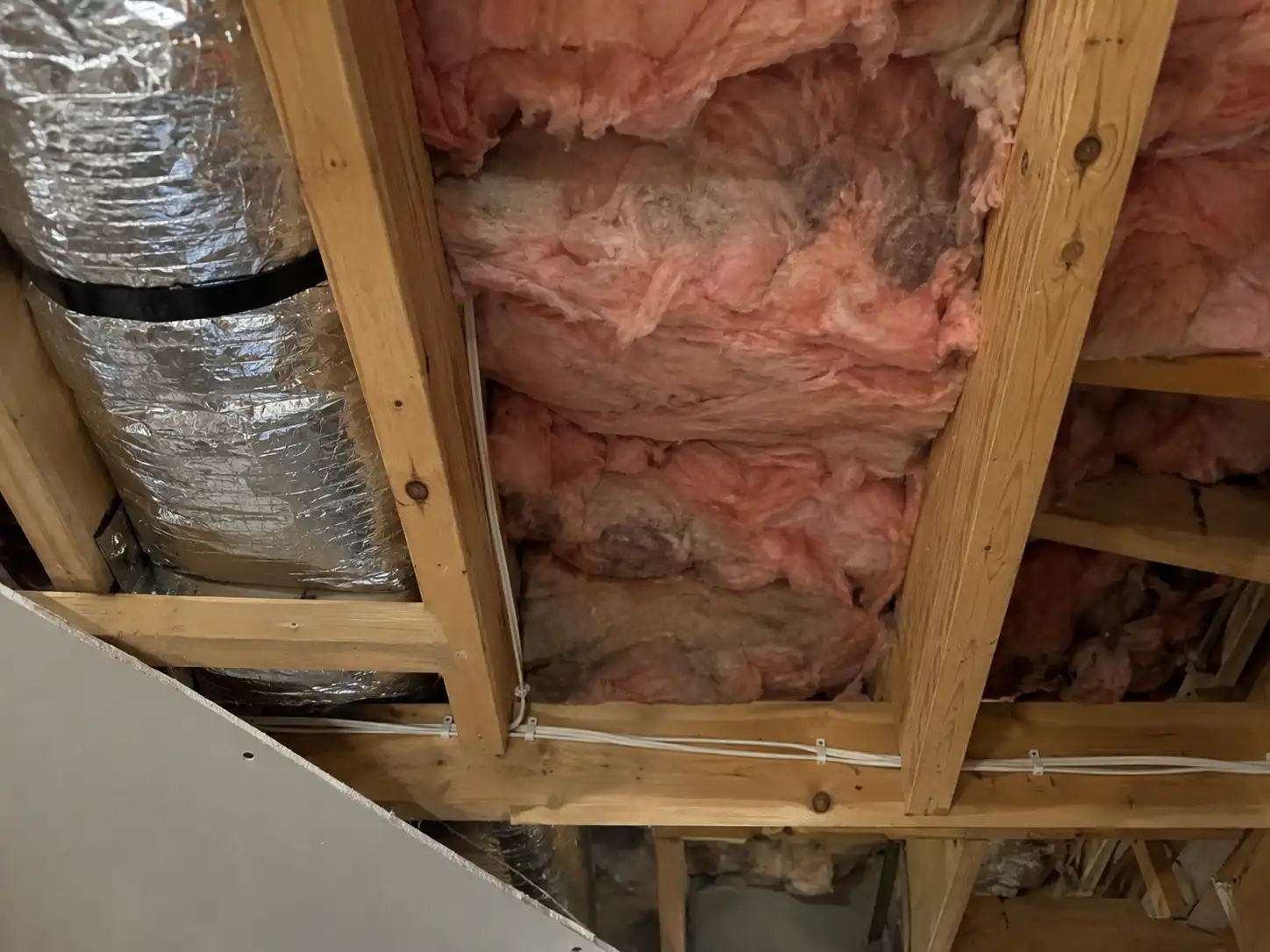
We also check insulation directly above the affected section, since a leak that damaged the ceiling below usually reached the insulation first.
Insulation
Wet insulation loses its ability to insulate and becomes a long-term moisture reservoir even after the surrounding area dries. Fiberglass and cellulose insulation that’s been wet typically needs full replacement rather than drying in place.
We replace affected insulation as part of the same job, since leaving contaminated insulation behind a newly repaired wall just moves the problem out of sight.
Other Affected Building Materials
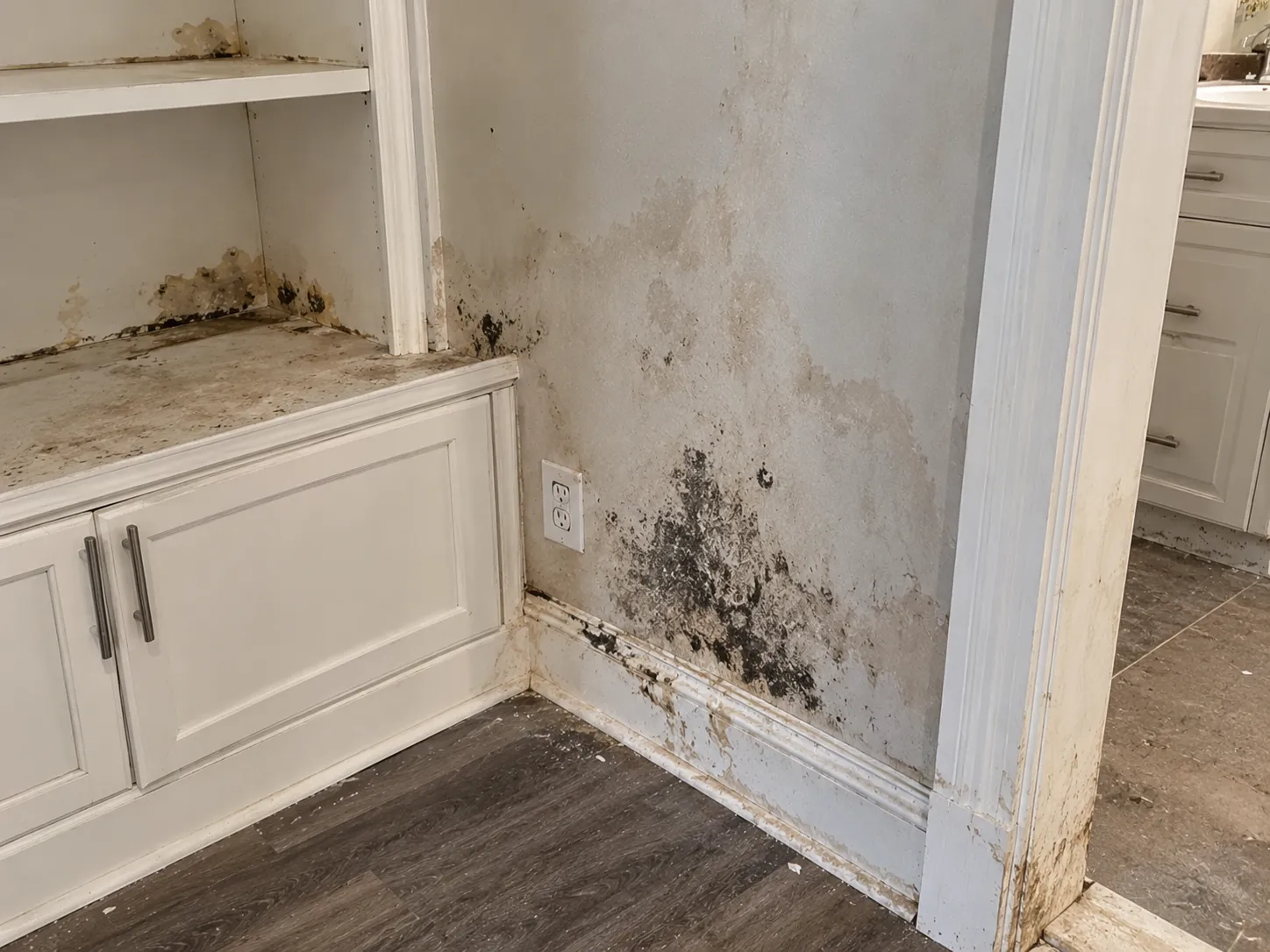
Trim, baseboard, cabinetry, and built-in shelving near a moisture source are evaluated individually. Solid wood can sometimes be cleaned and refinished, while particleboard or MDF components usually need replacement once they’ve absorbed moisture.
We document each material during assessment so your estimate reflects what actually needs replacing, not a blanket assumption about the whole room.
Assessing Mold-Damaged Areas
Identifying Affected Materials
Determining What Can Be Cleaned
Non-porous and some semi-porous materials — solid wood, tile, some framing — can often be cleaned and treated instead of replaced, provided the mold hasn’t penetrated below the surface. We test rather than assume, since over-removing material adds unnecessary cost.
Determining What Needs Removal
Identifying Moisture and Water Damage
What Happens When Mold Damages Your Property?
Mold doesn’t just sit on a surface — it breaks down the organic material it’s growing on. Drywall paper, wood, and insulation all lose structural integrity the longer mold is active, which is why a small stain today can mean a larger repair in six months.
Left unaddressed, mold damage tends to spread along moisture paths — up a wall, across a ceiling, into a subfloor — rather than staying contained to where it was first noticed. The cost and scope of restoration typically grows with time, not the other way around.
Residential Mold Damage Restoration
We restore single-family homes, condos, and rental properties after mold has damaged walls, flooring, ceilings, or insulation. Most residential jobs start with a leak or long-term humidity issue that went unaddressed long enough to cause structural material damage, not just surface mold.
We work directly with homeowners on scope and pricing, and we coordinate with your insurance adjuster when the damage is tied to a covered event like a burst pipe.
Commercial Mold Damage Restoration
Commercial restoration covers offices, retail spaces, and multi-tenant buildings where mold damage affects drywall, flooring, or ceiling tile across a larger footprint. We provide documentation suitable for property managers, landlords, and insurers.
We phase work to keep as much of a commercial space operational as possible, sequencing by floor or section rather than closing an entire building where the scope doesn’t require it.
Our Mold Damage Restoration Process in Kansas City
01
Damage Assessment
02
Mold Removal and Cleanup
We contain the work area and remove active mold growth using HEPA filtration and EPA-registered antimicrobial treatment, following the same containment protocols used in our standard remediation process.
03
Removal of Unsalvageable Materials
Materials that can’t be cleaned — water-damaged drywall, saturated insulation, ruined flooring — are removed and disposed of as part of the same job, not billed as a separate discovery later.
04
Drying and Moisture Control
05
Repairs and Reconstruction
06
Final Restoration
Mold Remediation vs. Mold Damage Restoration
Remediation is the process of removing mold and correcting the moisture source that caused it — inspection, containment, removal, cleaning, and testing. It ends when the space is confirmed mold-free.
Restoration picks up from there. It’s the repair and rebuild work — drywall, flooring, insulation, trim — needed to make the space usable and finished again. Most jobs beyond a small, contained spot need both.

Why Choose Us for Mold Damage Restoration
- Free, written inspection reports — not a guess over the phone
- IICRC-trained technicians who follow the S520 standard
- Licensed and insured in Missouri and Kansas
- Independent lab testing, not self-graded results
- 24/7 emergency response — mold doesn't wait for business hours
- Moisture source identified and documented, not just the mold treated
- Containment and negative air pressure to stop cross-contamination during removal
- Photo-documented before/after for insurance claims
- Post-remediation clearance testing before we call the job done
- No cross-selling reconstruction you don't need — remediation and repair kept separate
- Locally owned and operated, serving Kansas City for 10 years
- Direct communication with your insurance adjuster, no runaround
When Mold Damage Requires More Than Cleaning
Surface cleaning works for small, isolated spots on hard, non-porous materials. It doesn’t work once mold has damaged the structural integrity of drywall, warped flooring, or saturated insulation.
If the material itself has broken down — soft drywall, buckled flooring, insulation that’s lost its shape — cleaning won’t restore it. At that point, removal and rebuild are the only options that actually fix the problem.
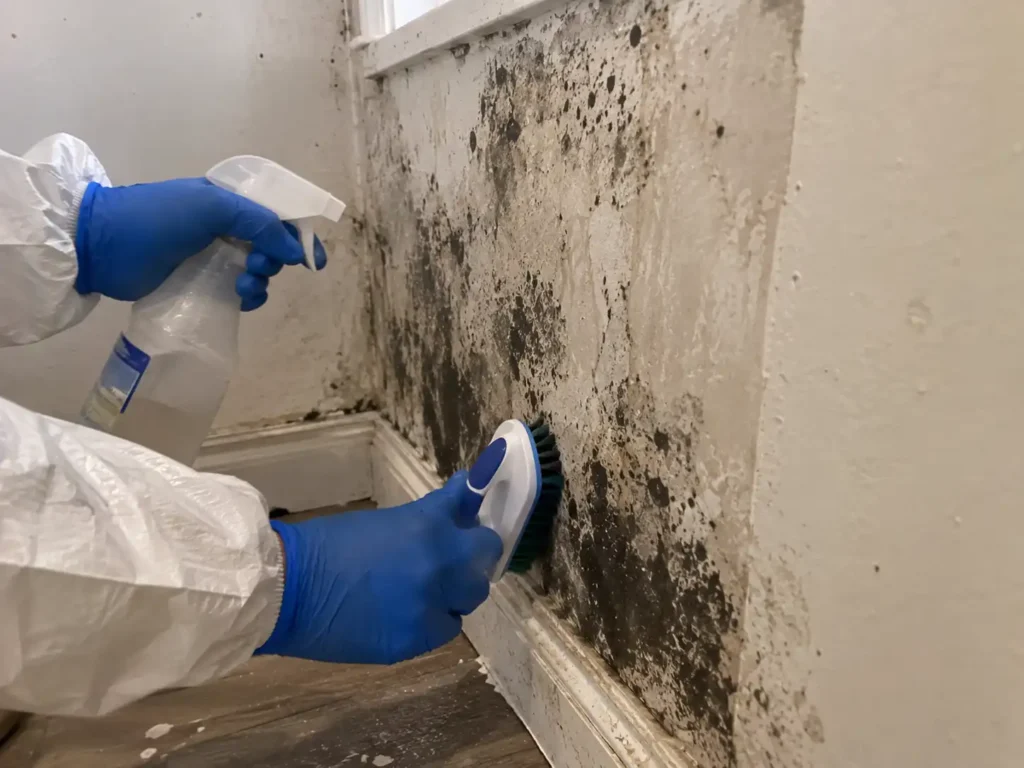
Mold Removal and Restoration for Water-Damaged Properties
Mold and water damage restoration usually go together, since mold rarely shows up without a moisture event behind it. If your property had a leak, flood, or burst pipe, we assess both the water damage and any resulting mold growth as one job.
Handling both under one scope avoids the coordination gap between a water damage company and a separate mold company working on the same space.
What Determines the Extent of Restoration?
The extent of restoration depends on how long moisture was present before it was addressed, and how far it traveled through the building’s materials. A leak caught within a day or two usually causes less structural damage than one that went unnoticed for weeks.
The type of material matters too. Porous materials like drywall and insulation reach the point of no return faster than solid wood or tile exposed to the same moisture.
Mold Damage Restoration Cost Factors
The size of the affected area is the largest factor, since both cleanup and rebuild costs scale with square footage. A single damaged wall section costs meaningfully less than a full room with damaged flooring, drywall, and insulation.
Material replacement adds cost beyond cleanup — flooring and cabinetry typically cost more to replace than drywall and trim. Drying time also matters: materials that were wet for weeks usually require more removal than a recently discovered leak.
We provide a written estimate after assessment, not a phone estimate based on a description alone.
Areas We Serve in the Kansas City Metro
We provide this service throughout Kansas City, MO and the surrounding metro, including:
- Kansas City, MO (Brookside, Waldo, Westport, Northland, Downtown)
- Overland Park, KS
- Lee's Summit, MO
- Independence, MO
- Olathe, KS
- Blue Springs, MO
- Shawnee, KS
- Raytown, MO
- Gladstone, MO
- Liberty, MO
Frequently Asked Questions
It includes mold cleanup, removal of damaged materials, drying, and full repair — drywall, flooring, insulation, and trim — to bring the space back to a finished, usable condition.
Mold damage restoration typically costs $1,500 to $10,000 or more, depending on the size of the area and the materials that need replacing.
Surface mold on drywall can sometimes be cleaned. Once mold has grown into the paper layer, the drywall needs to be removed and replaced rather than restored.
Removal is required once mold has penetrated a porous material — drywall paper, insulation, carpet padding — to the point that cleaning can’t fully eliminate it.
Smaller jobs with limited material replacement often take 3 to 7 days. Larger jobs involving multiple rooms or significant rebuild work can take two to four weeks.
Restore Your Kansas City Property After Mold Damage
Get a written inspection report before you decide anything. Same-week appointments available across Kansas City.