🏆 Kansas City's Trusted Mold Removal Team
Mold Removal & Remediation in Kansas City, MO
Found Mold? We Remove It For Good.
KC Mold Experts provides same-day on-site assessments and 24/7 rapid response across the entire Kansas City metro. Our IICRC-trained specialists contain the spread, eliminate toxic spores at the root, and back every job with independent lab clearance testing.
Request a Free Mold Inspection
IICRC Certified
Licensed & Insured
Written Reports
Independent Lab Testing

Certified, Insured, Fast-Response Mold Removal for KC Homes
KC Mold Experts is licensed and insured in Missouri and Kansas. Our technicians are IICRC-trained.
That means we follow the S520 standard, the same one insurance companies and inspectors expect. We respond fast, usually within the same week you call.
Every inspection is free. You get a written report, not a verbal guess. You decide what to do next with real information in hand.
Professional Mold Removal & Remediation Services
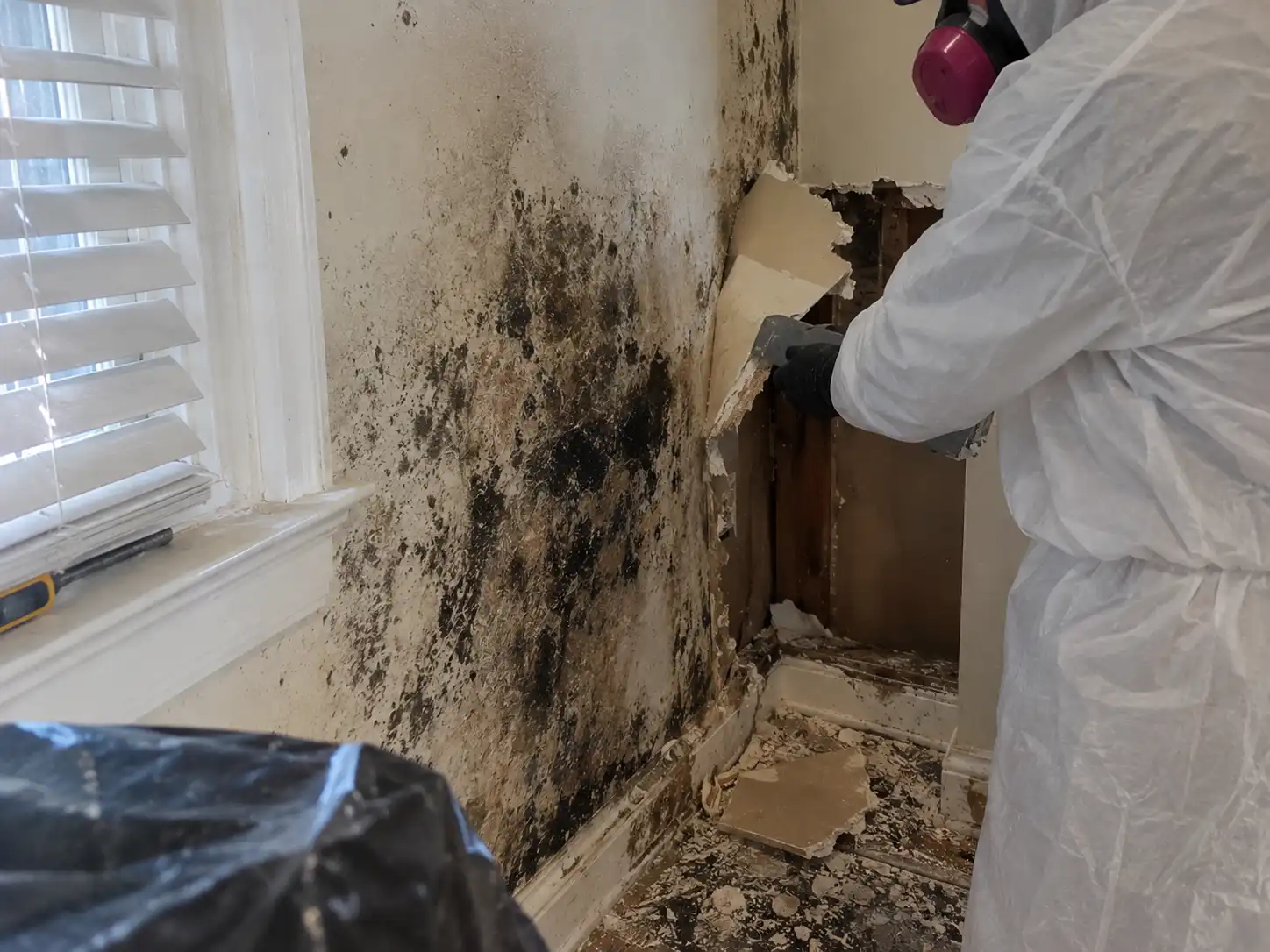
Mold Removal
Mold removal means physically taking out mold and the material it’s growing on. This can include drywall, insulation, and flooring.
Removal alone isn’t enough. If the moisture problem isn’t fixed too, mold comes back.
That’s why removal is just one step in a full remediation job.
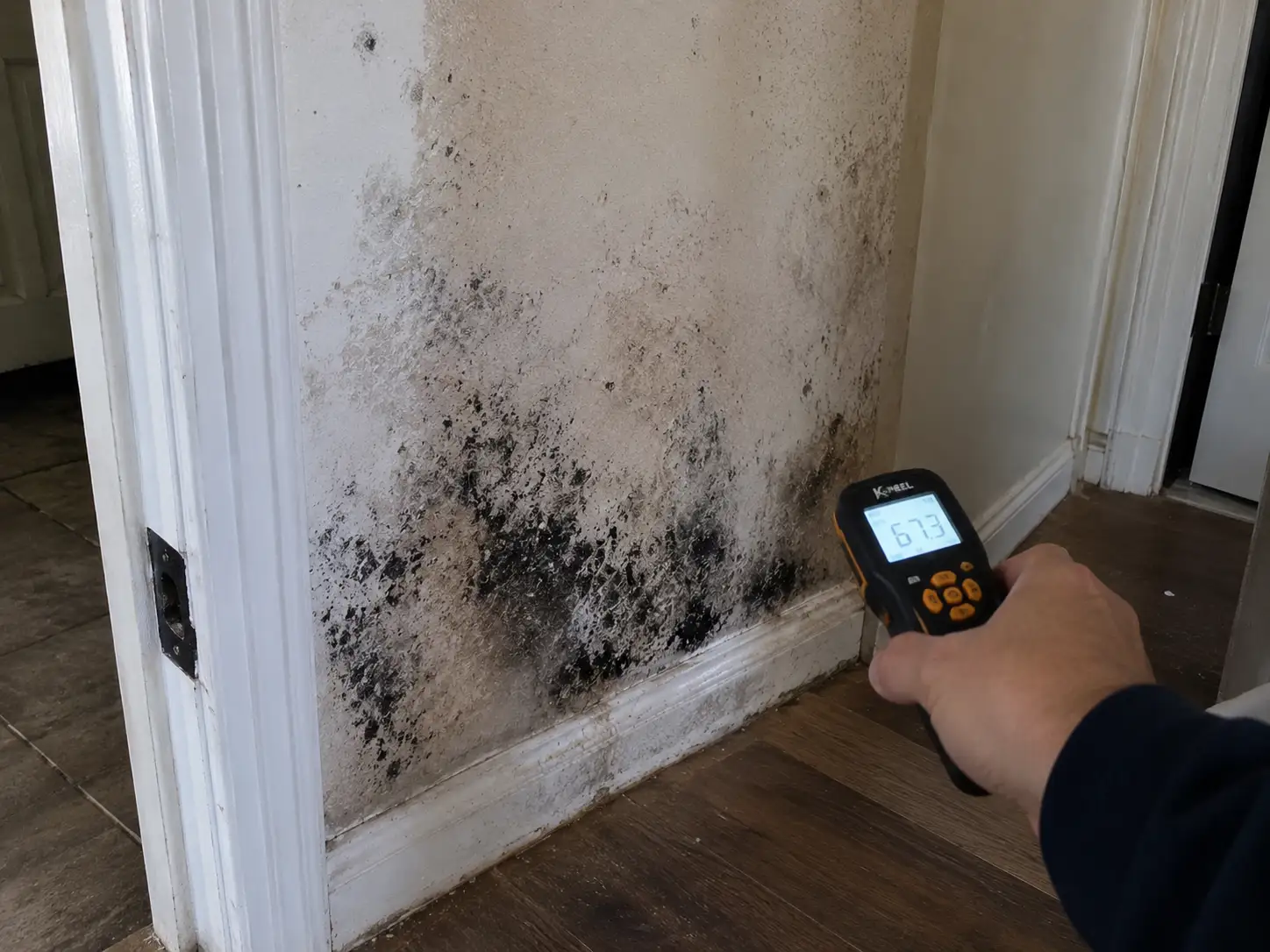
Mold Inspection
An inspection finds visible mold and hidden moisture. We use moisture meters and thermal cameras to check behind walls and under floors.
You get photos and a written report. This inspection is free, even if you don’t hire us for the work.
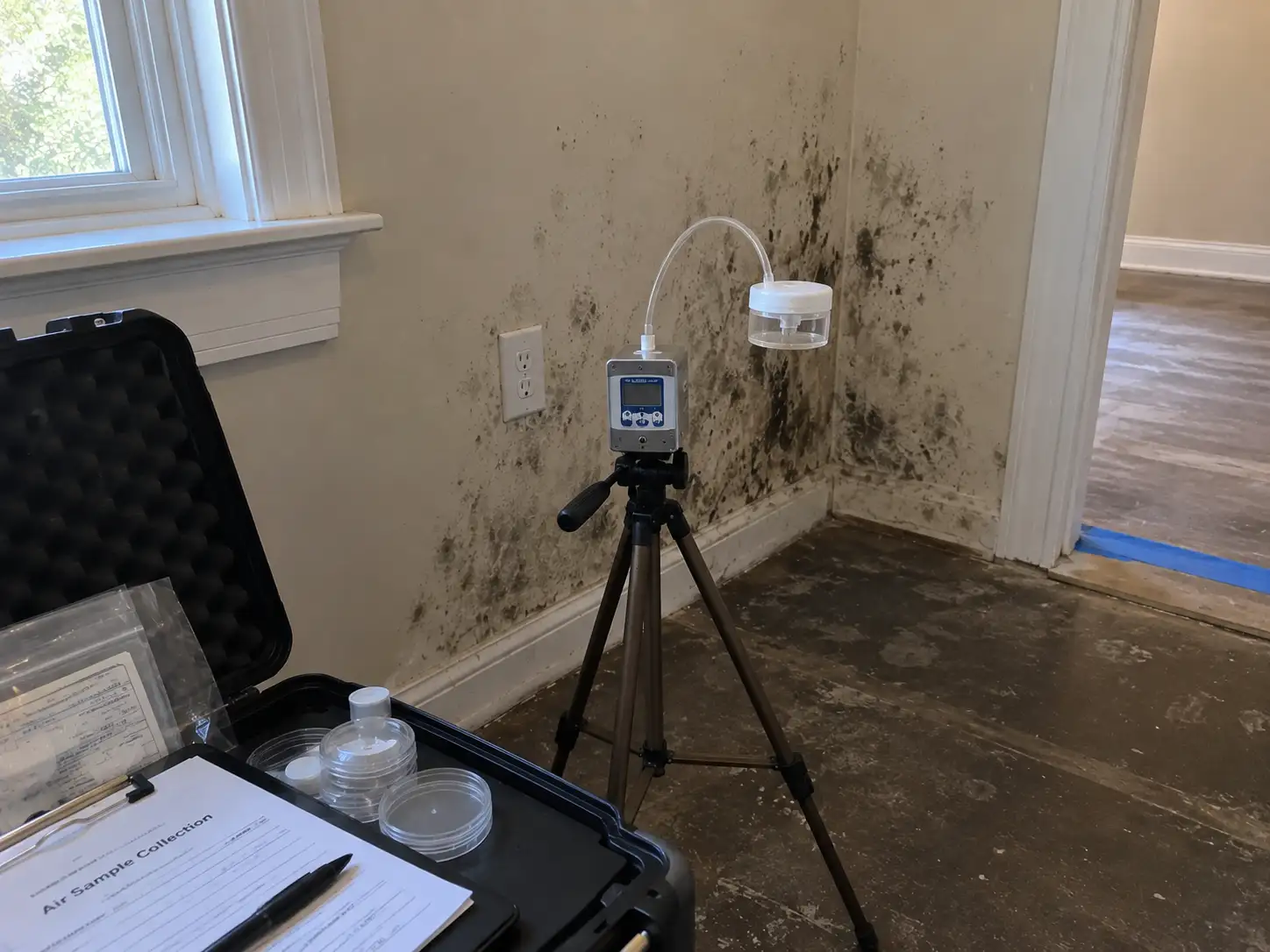
Mold Testing
Testing tells you which type of mold is present and how much. We use air samples, surface swabs, or dust sampling.
We send samples to an outside lab. We never test our own work, since that would be a conflict of interest. Testing is also used after the job is done. This confirms the space is safe to use again.
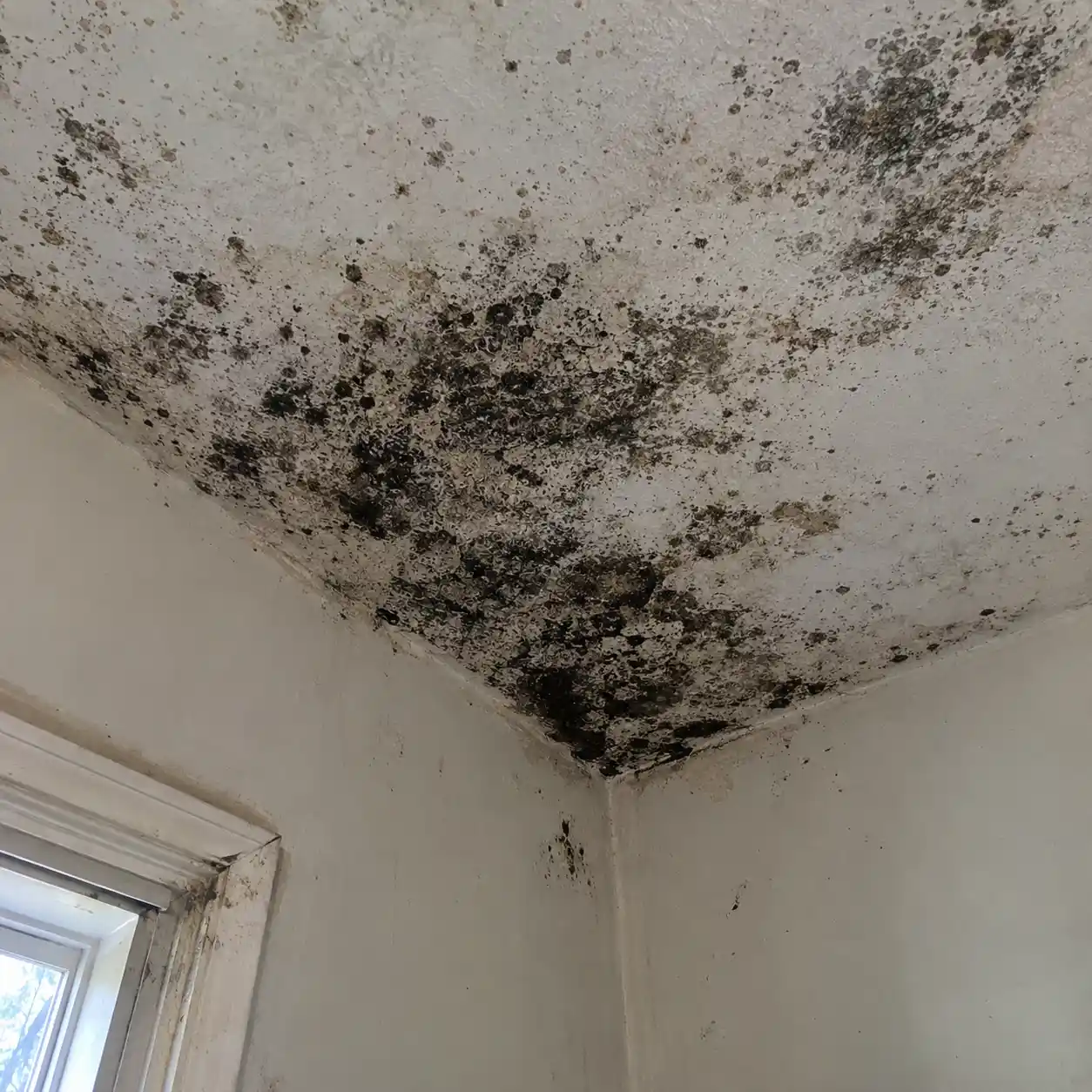
Black Mold Removal
Black mold usually means a species called Stachybotrys. It’s greenish-black and needs steady moisture to grow, not just humidity.
If we find it, that points to a real water problem. We use stronger containment on these jobs, since this mold can release spores easily when disturbed.
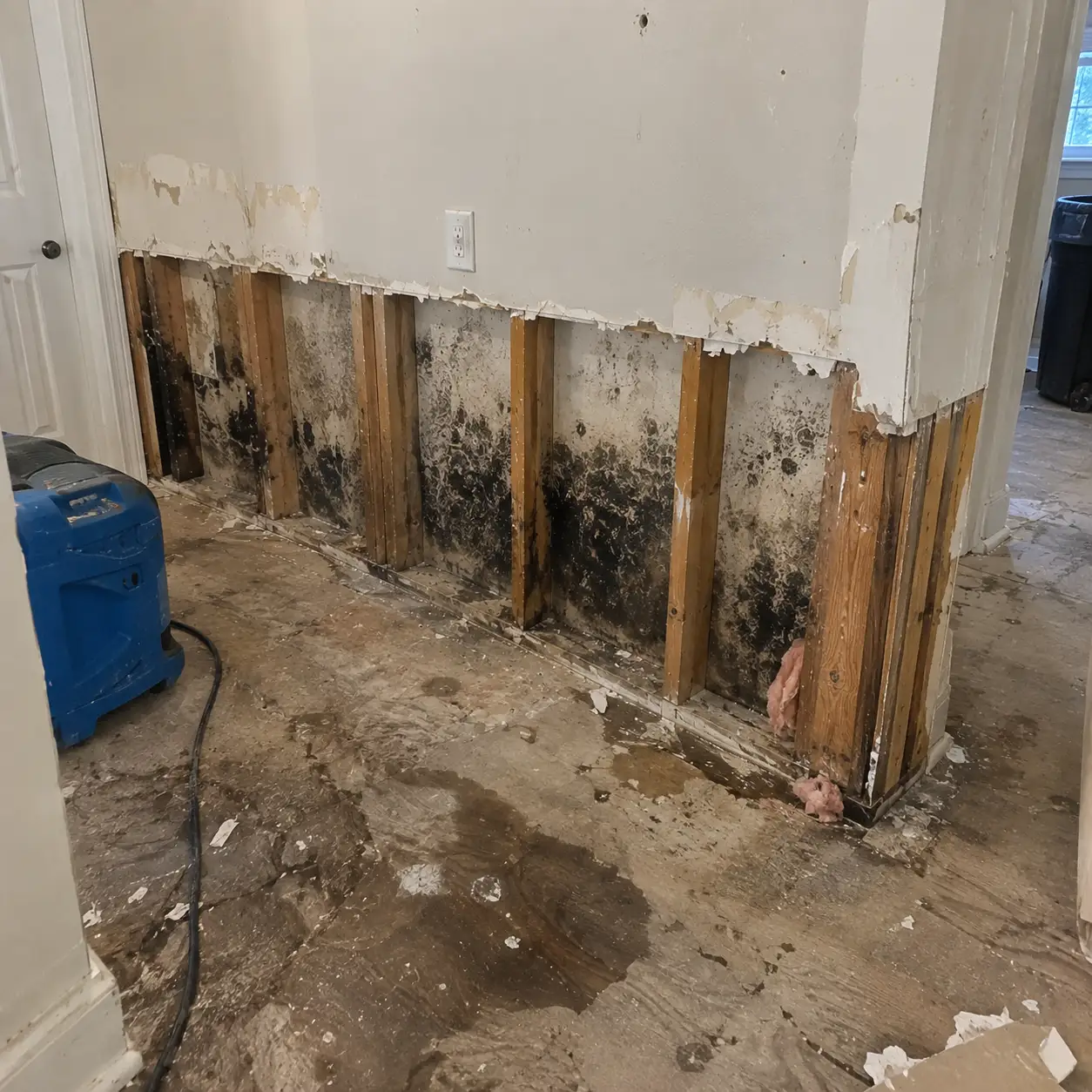
Mold Damage Restoration
Once mold is removed and the area passes testing, we rebuild. This includes new drywall, insulation, flooring, and paint.
One company handles both the removal and the rebuild. That means one point of contact, start to finish.
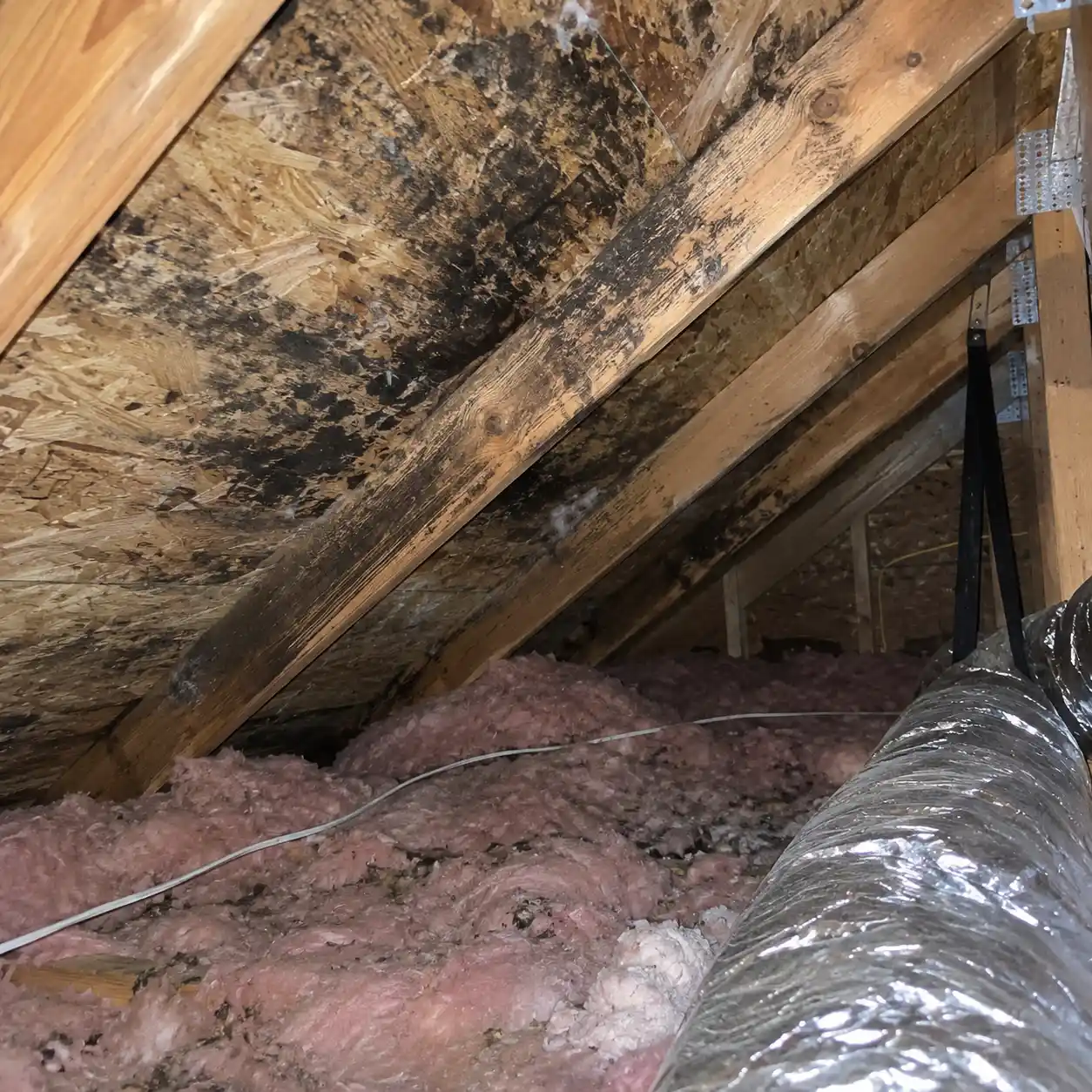
Attic Mold Remediation
Attic mold usually comes from one of three problems. Poor roof ventilation, a bathroom fan vented into the attic, or ice buildup letting water in during winter.
We remove the mold and fix the airflow problem. If we only remove the mold, it comes back.
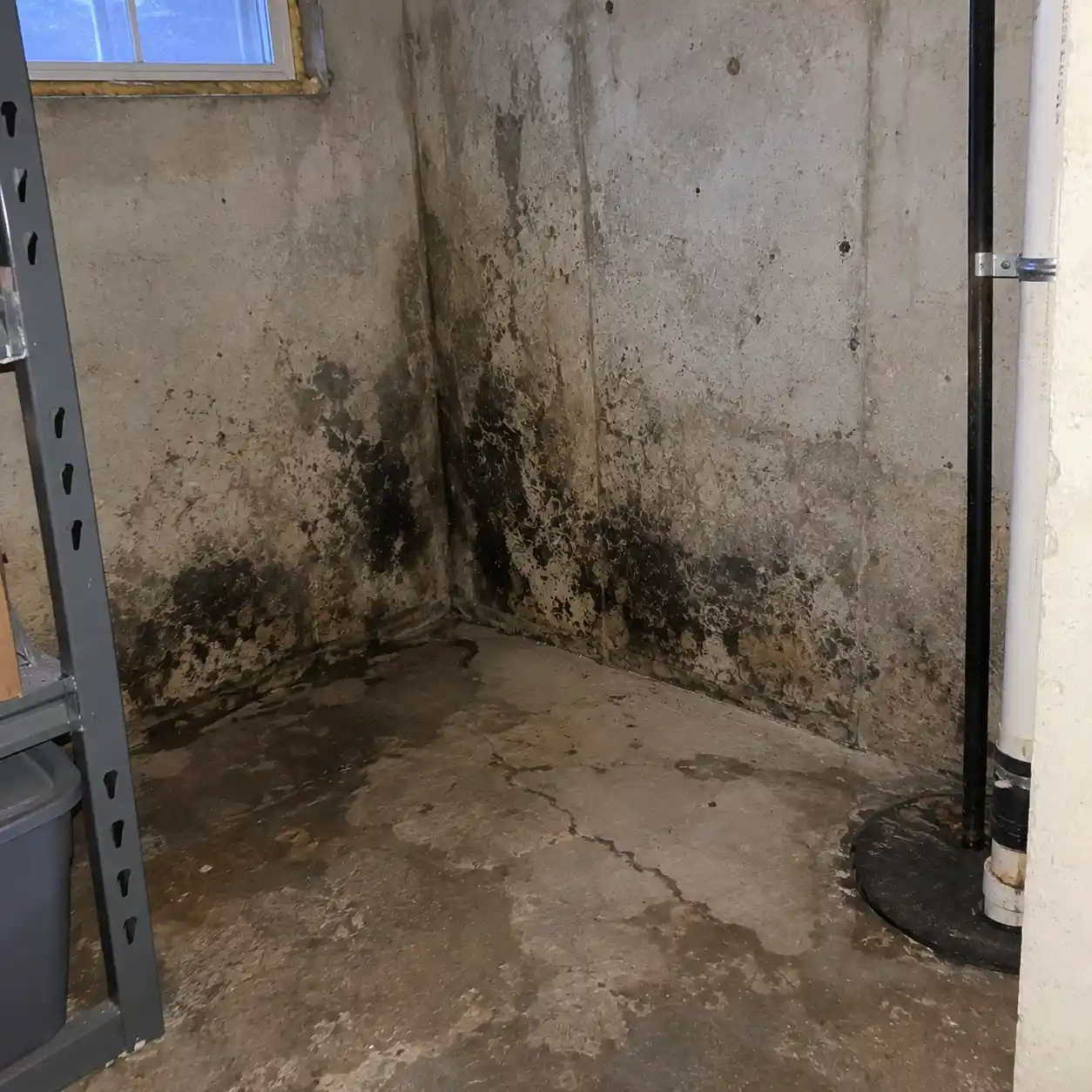
Basement Mold Remediation
Basements are the most common place we find mold in Kansas City homes. Concrete walls pull moisture from the ground, and finished basements trap it against carpet and drywall.
We often need to fix the moisture source too. This might mean sump pump repair or drainage work, not just mold removal.
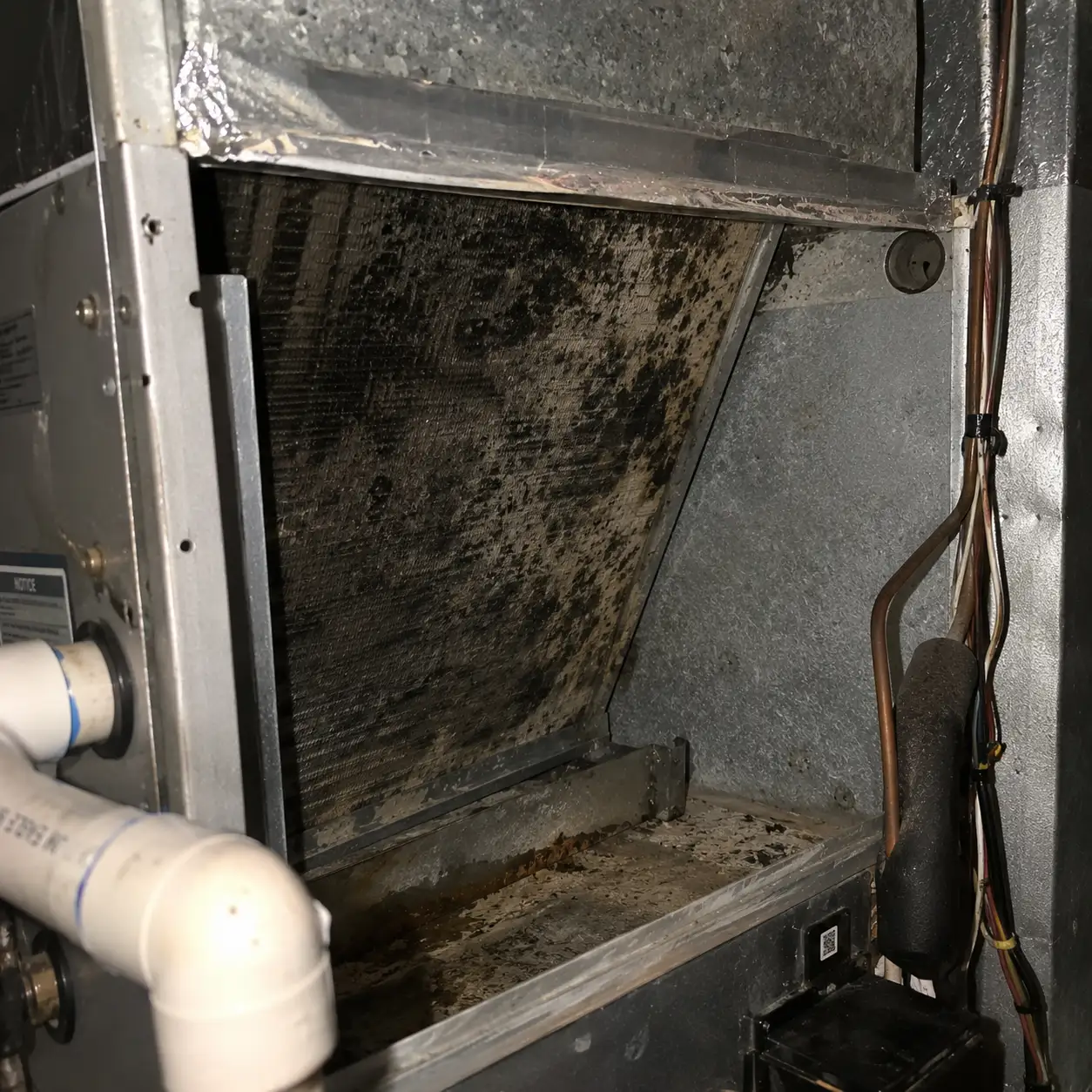
HVAC Mold Remediation
Mold inside your ductwork spreads through your whole house every time the system runs. This makes it a high-priority problem, even in a small space.
We clean coils, drain pans, and ducts. If a broken part caused the mold, we tell you and coordinate with an HVAC technician.
Signs You May Need Mold Removal or Remediation
- A musty smell in a basement, closet, or near a vent
- Dark or discolored spots on drywall, ceilings, or grout
- Peeling paint or bubbling drywall
- Past water damage that didn’t dry within two days
- Allergy symptoms or headaches that improve when you leave the building
- Condensation on windows in cold weather
- Soft or warped flooring near a wall or bathroom
If more than one of these applies, get an inspection first.
Don’t start demolition yourself. Disturbing mold without containment can spread spores through your whole home.
Our Mold Removal & Remediation Process
01
Inspection & Moisture Assessment
02
Containment Setup
For small jobs, we simply seal off the work area. For larger jobs, we build plastic barriers and run negative air machines.
This keeps air pressure lower inside the work area than outside. Spores stay contained instead of spreading to clean rooms.
03
Mold & Contaminated Material Removal
Soft materials like drywall, insulation, and carpet usually can’t be cleaned. We remove and bag them for disposal.
Harder materials, like framing or some flooring, may just need cleaning instead. We check each case.
04
HEPA Filtration & Air Cleaning
HEPA filters catch particles as small as 0.3 microns, including mold spores. We run HEPA air scrubbers during the job.
We also HEPA-vacuum surfaces before and after removal. This pulls spores out of the air and off surfaces.
05
Cleaning & Antimicrobial Treatment
After removal, we clean and treat the remaining surfaces. We use an EPA-registered antimicrobial product.
This happens before any rebuild work begins.
06
Fixing the Moisture Source
Removing mold without fixing the water problem is a short-term fix. It will come back.
We find the cause during inspection. This might mean sump pump repair, roof repair, or fixing a bathroom fan.
We build this into the job, not as an extra charge later.
07
Final Clearance Testing
For bigger jobs, we recommend a final check before closing things up. This can be a visual check or a lab test, depending on the job.
This confirms the space is actually safe, not just that it “looks clean.”
Mold Removal vs. Remediation vs. Mitigation — What's the Difference?
Mold Removal
Removal means physically taking out mold and the material it grew on. It’s one part of remediation, not the whole job.
Mold Mitigation
Mitigation means slowing down or limiting mold growth. This often happens right after a leak, before the full job is planned.
It limits damage. It doesn’t fix the problem.
Full Mold Remediation
Remediation is the complete process. Inspection, containment, removal, cleaning, moisture repair, and final testing.
This is what a real remediation company should deliver, not just removal.
Residential Mold Remediation
Common Areas Where Mold Is Found in KC Homes
Basements come first. Then bathrooms with poor ventilation, attics with badly vented fans, and areas near windows with a history of condensation.
Older homes built before the 1980s often hide moisture behind original plaster walls. These walls don’t have modern vapor barriers.
Whole-House & Recurring Mold Issues
If mold shows up in more than one place, it’s usually a bigger problem. This could mean poor ventilation across the whole house, or a crawlspace pushing damp air upward.
We check the whole building, not just the spot you noticed. Treating one spot at a time is why some homeowners call again a year later.
Commercial Mold Remediation
Offices, Retail & Commercial Buildings
Commercial buildings bring extra needs. Bigger HVAC systems, code requirements during containment, and documentation for insurance or a landlord.
We provide clear reports for property managers and insurers.
Minimizing Disruption During Remediation
We plan work in phases. We can work floor by floor, or around business hours.
This keeps as much of your space open as possible.
Mold Removal by Types
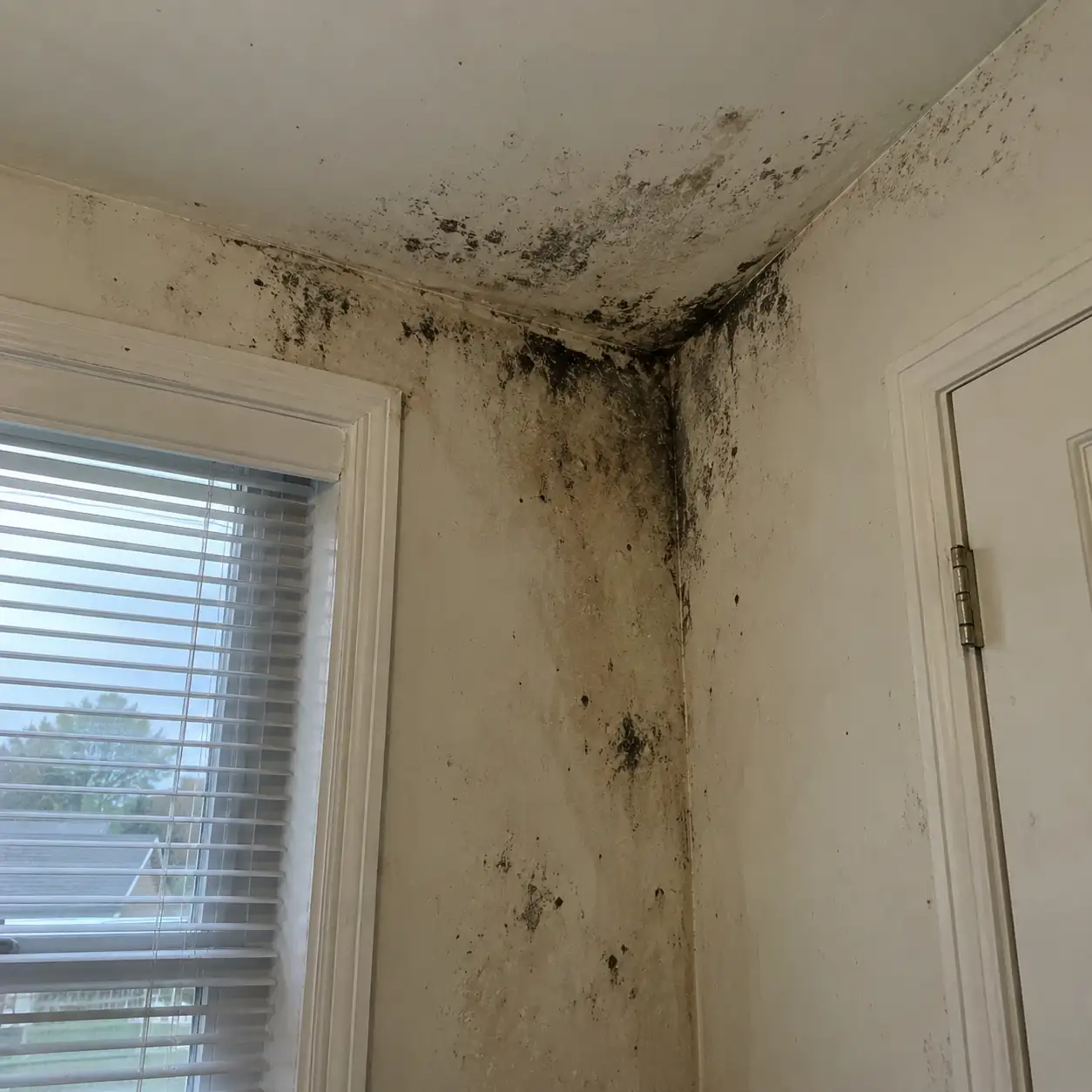
Bathroom Mold Removal
Bathrooms trap moisture from showers and poor ventilation. Mold grows fast on grout, caulk, and drywall behind tile.
We remove the mold and check the exhaust fan and ventilation. Without airflow fixes, bathroom mold almost always returns.
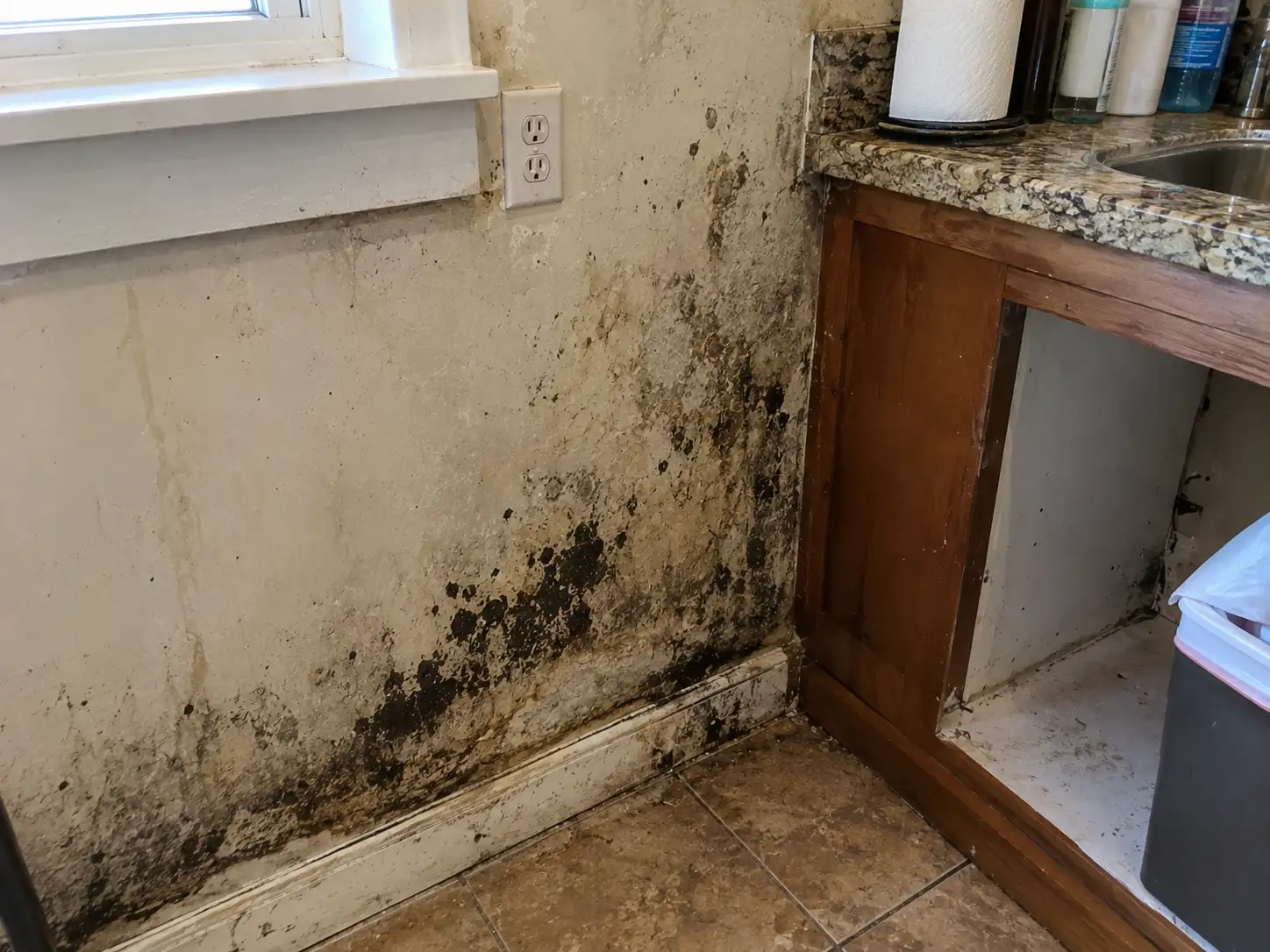
Kitchen Mold Removal
Kitchen mold usually starts under sinks, behind appliances, or near a slow leak. It often goes unnoticed until it spreads to cabinets or flooring.
We check plumbing connections and appliance seals as part of the job, not just the visible spot.
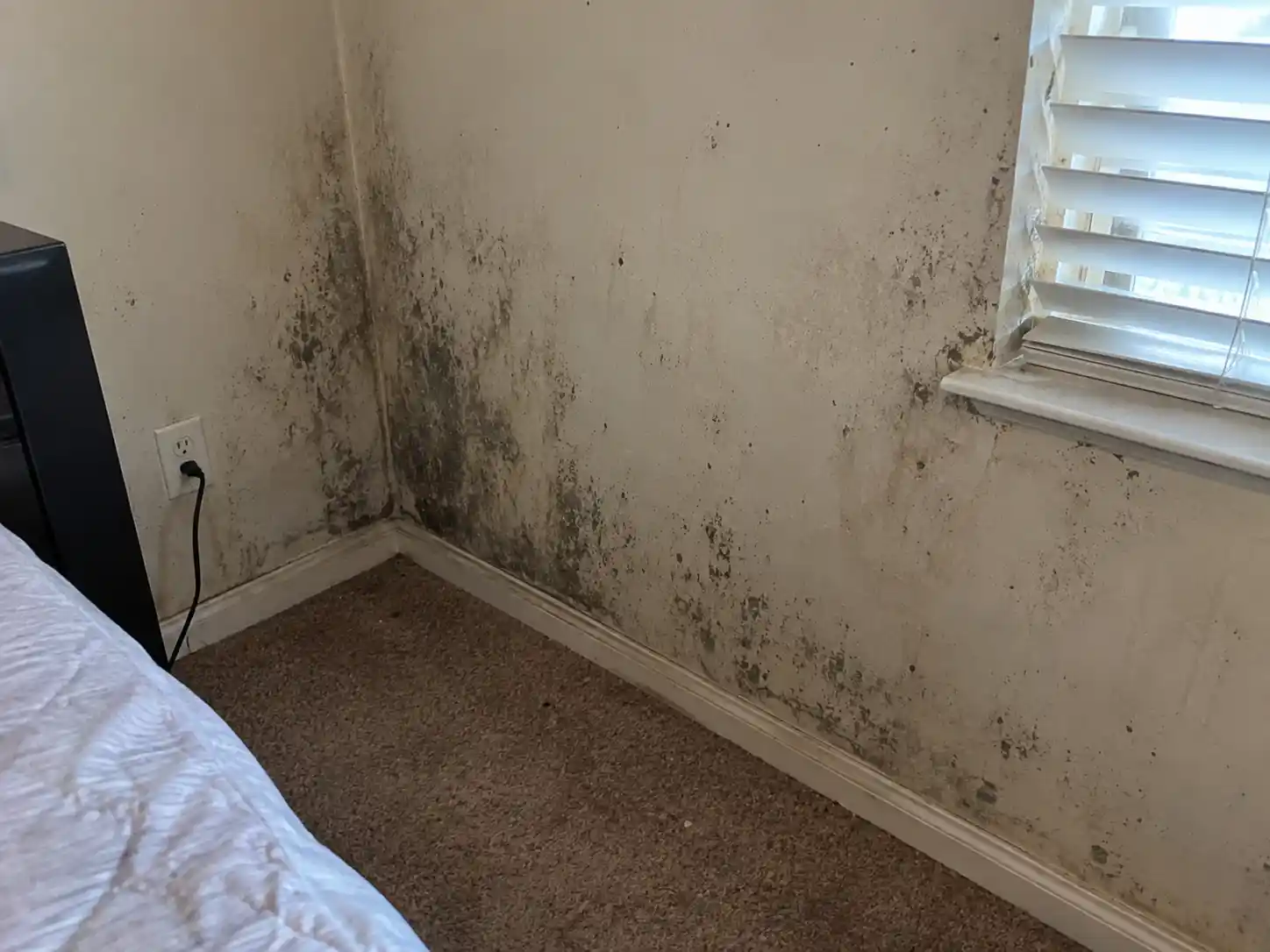
Bedroom & Closet Mold Removal
Bedroom mold often shows up on exterior walls or inside closets with poor airflow. Cold surfaces meeting warm, humid air cause condensation.
We remove the mold and identify the insulation or ventilation gap causing it.
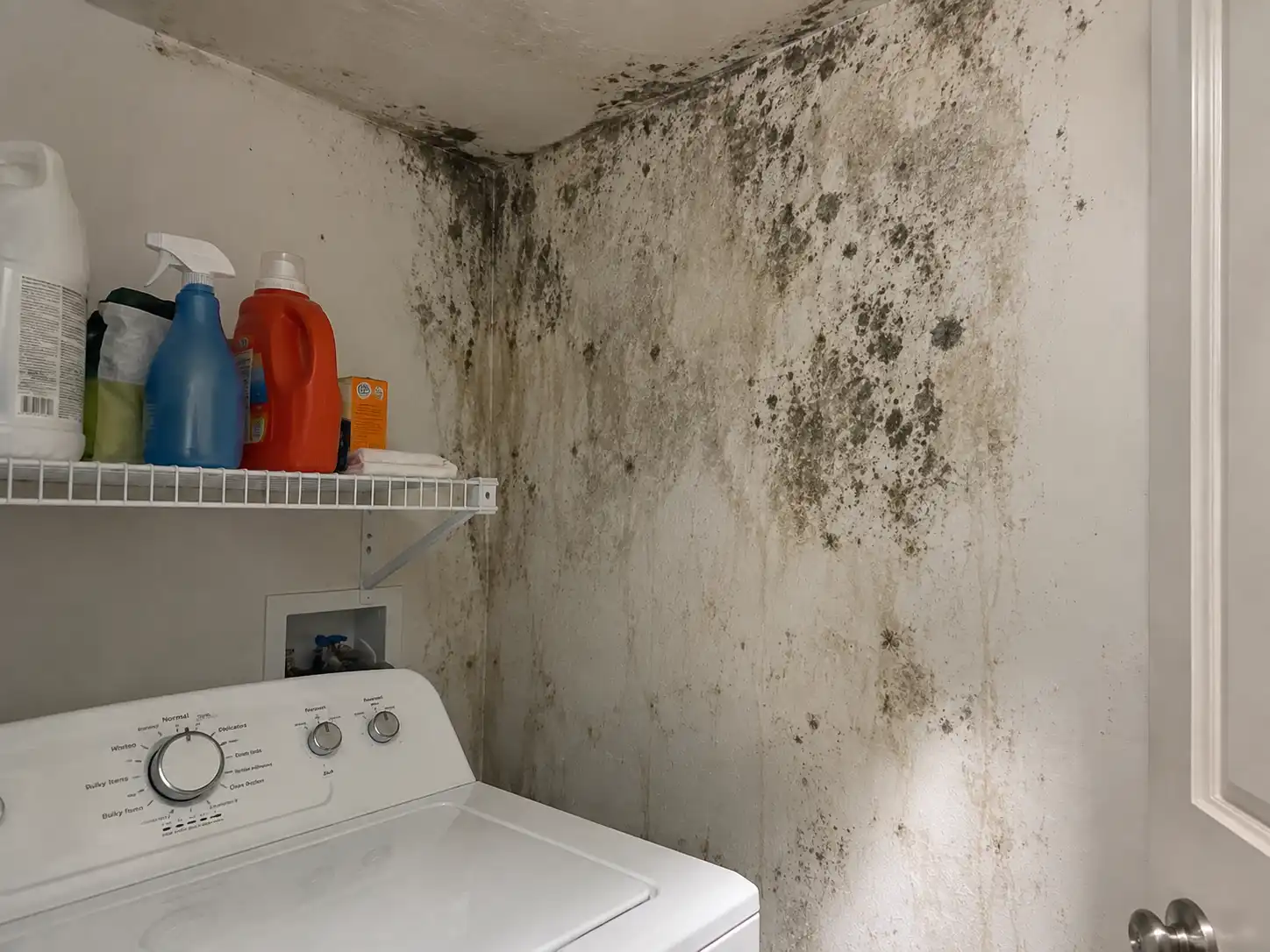
Laundry Room Mold Removal
Washing machines and dryer vents add constant moisture to a small space. A disconnected or clogged dryer vent is a common hidden cause.
We remove the mold and check vent connections as part of the inspection.
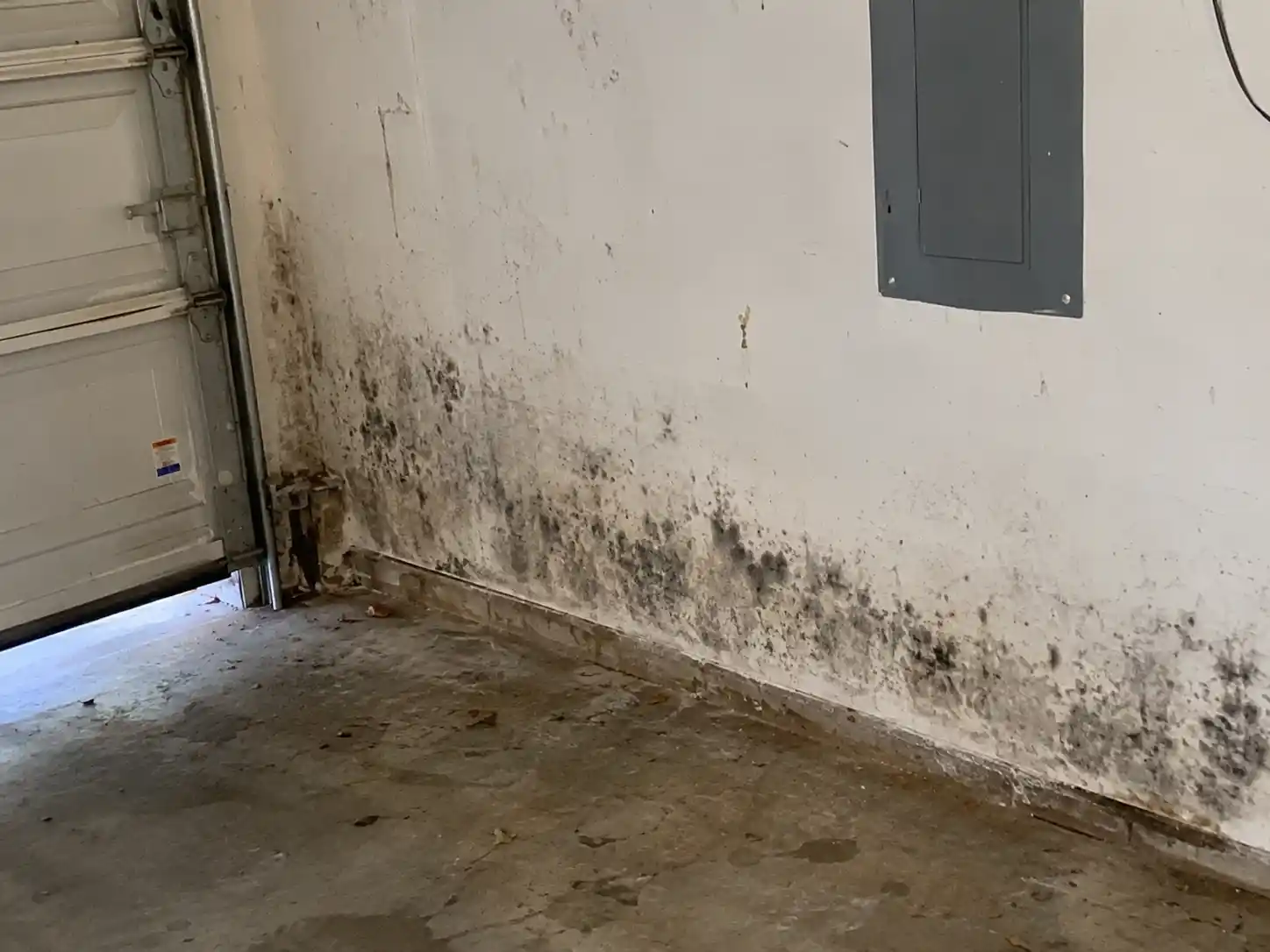
Garage Mold Removal
Garages often have poor insulation and humidity swings, especially attached garages near a water heater or laundry hookup.
We treat the mold and flag any moisture source tied to plumbing or grading outside the garage.

Why Kansas City Chooses KC Mold Experts
- Free, written inspection reports — not a guess over the phone
- IICRC-trained technicians who follow the S520 standard
- Licensed and insured in Missouri and Kansas
- Independent lab testing, not self-graded results
- 24/7 emergency response — mold doesn’t wait for business hours
- Moisture source identified and documented, not just the mold treated
- Containment and negative air pressure to stop cross-contamination during removal
- Photo-documented before/after for insurance claims
- Post-remediation clearance testing before we call the job done
- No cross-selling reconstruction you don’t need — remediation and repair kept separate
- Locally owned and operated, serving Kansas City for 10 years
- Direct communication with your insurance adjuster, no runaround
Mold Remediation Cost Factors in Kansas City

Size & Extent of Contamination
Bigger jobs cost more. A small ceiling stain costs less than mold spread across a basement wall.
Cost scales with square footage.

Materials That Need Removal
Soft materials like drywall and carpet usually get replaced. Hard materials, like tile or framing, can sometimes just be cleaned.
That costs less.

Moisture & Restoration Requirements
If we need to fix a leak or a sump pump, that’s extra work. We can handle it in the same contract, so you’re not managing two contractors.
We give you a written estimate after we inspect the space, not a number over the phone.
Areas We Serve in the Kansas City Metro
We provide 24/7 emergency response, moisture inspections, and certified mold removal throughout the entire bi-state Kansas City metropolitan area.
- Kansas City, MO (Brookside, Waldo, Westport, Northland, Downtown)
- Overland Park, KS
- Lee's Summit, MO
- Independence, MO
- Olathe, KS
- Blue Springs, MO
- Shawnee, KS
- Raytown, MO
- Gladstone, MO
- Liberty, MO
Frequently Asked Questions
It depends on the size of the job and what needs to be replaced. Small jobs may cost a few hundred dollars, and larger jobs cost more.
We give you a written estimate after a free inspection.
Small jobs often take 1 to 3 days. Bigger jobs can take one to two weeks.
Lab testing, if used, adds a few more days.
Removal is taking out the mold. Remediation is the full process — removal, cleaning, moisture repair, and testing.
Removal alone often isn’t enough.
For small jobs, most people stay home and avoid the work area. For bigger jobs, we may suggest staying elsewhere for a few days.
We’ll tell you clearly at the inspection.
Yes, if the moisture problem isn’t fixed, or if humidity stays high.
That’s why we fix the cause, not just the mold.
Yes, for many common causes — sump pumps, drainage, small plumbing fixes.
For bigger repairs, like a full roof replacement, we bring in the right contractor.
Sometimes. It depends on the cause.
A sudden event, like a burst pipe, is more likely to be covered. Long-term neglect usually isn’t.
We can help document the cause for your claim.
Schedule Your Free Mold Inspection in Kansas City
Get a written report before you decide anything. Same-week appointments available across Kansas City.