
Mold Removal in Kansas City, MO
That Musty Smell Isn't Going Away On Its Own.
Mold spreads while you wait. It gets into more walls, more carpet, more of your air.
It can also make breathing harder, especially for kids or anyone with allergies. The longer it sits, the more it costs to fix.
We find it, remove it, and confirm it’s actually gone. Most jobs are done within days, not weeks.
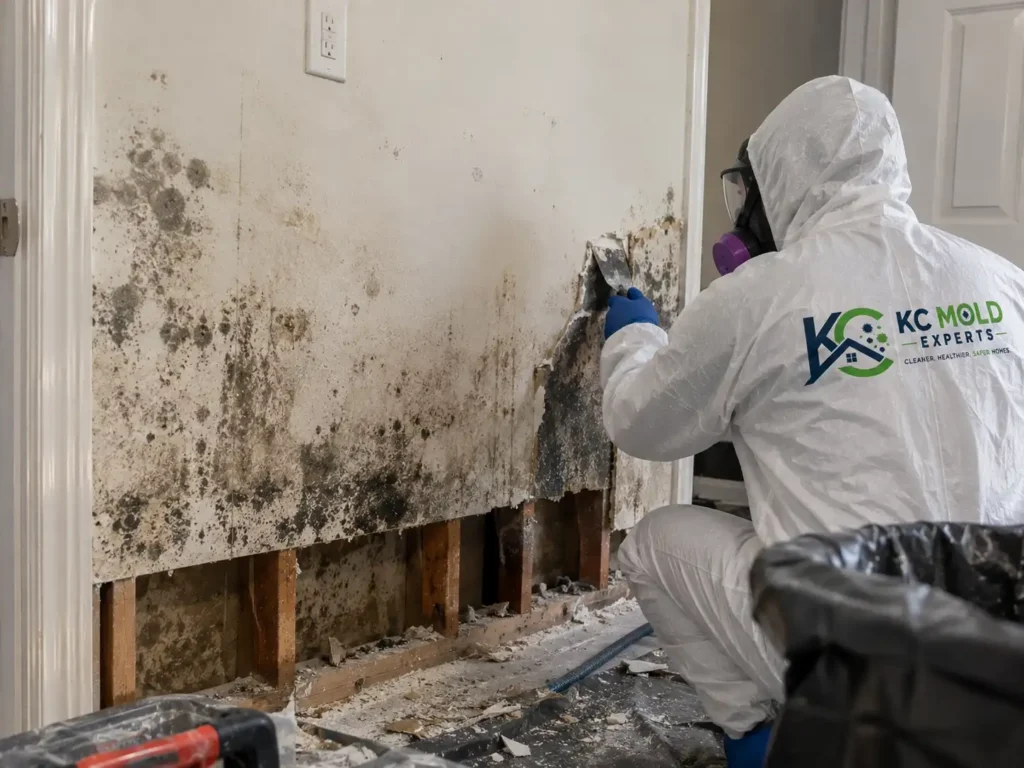
Certified, Insured, Fast Mold Removal for KC Homes & Businesses
KC Mold Experts is licensed and insured in Missouri and Kansas. Our technicians are IICRC-trained.
We remove mold from homes, offices, and commercial buildings across the Kansas City metro. Every job starts with a free inspection, not a guess.
Certified Mold Removal Services in Kansas City MO
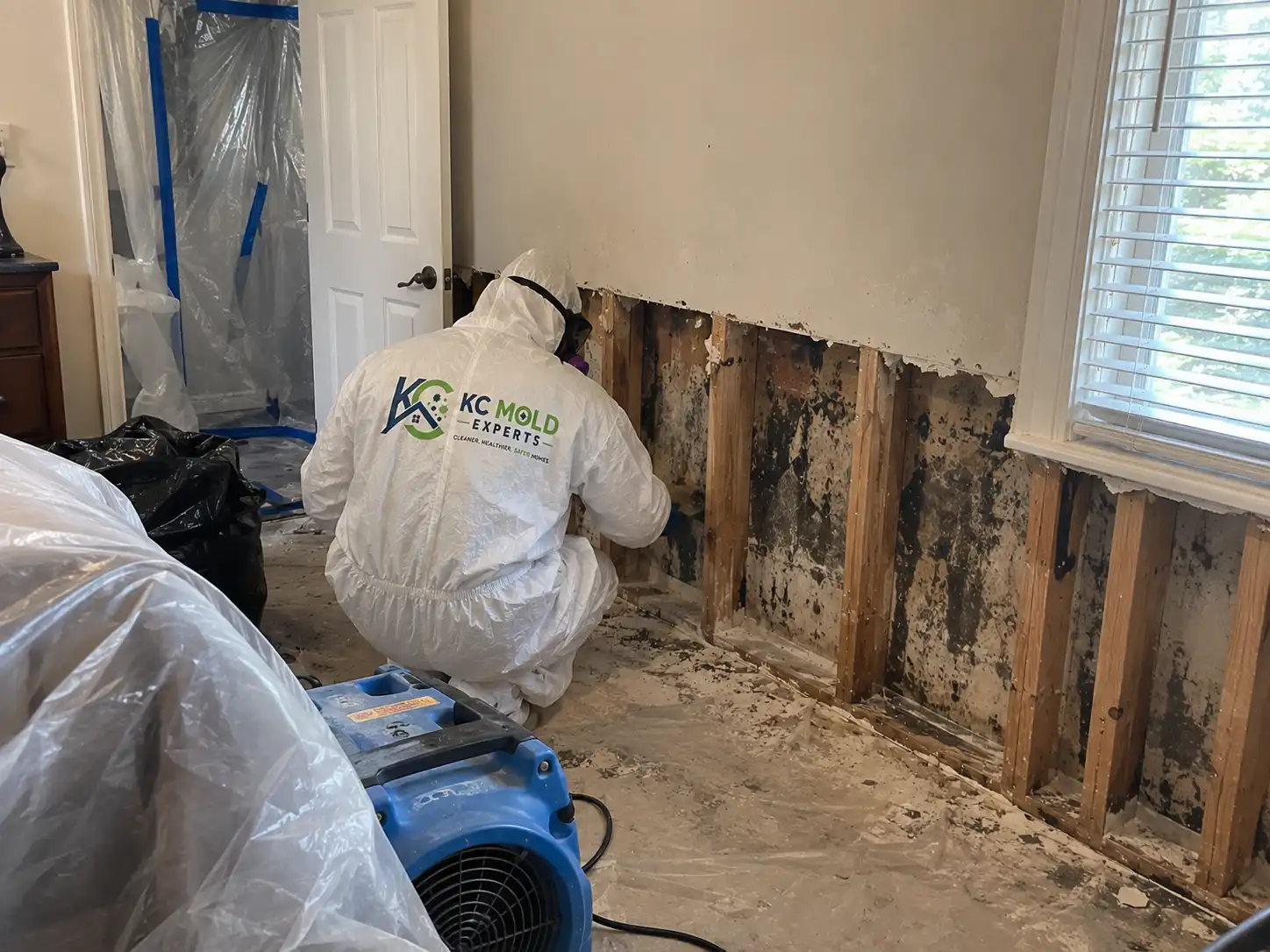
Residential Mold Removal
We remove mold from single-family homes, condos, and rental properties. This includes basements, bathrooms, attics, and any room with visible growth.
We check for hidden moisture during every job, not just the spot you noticed.
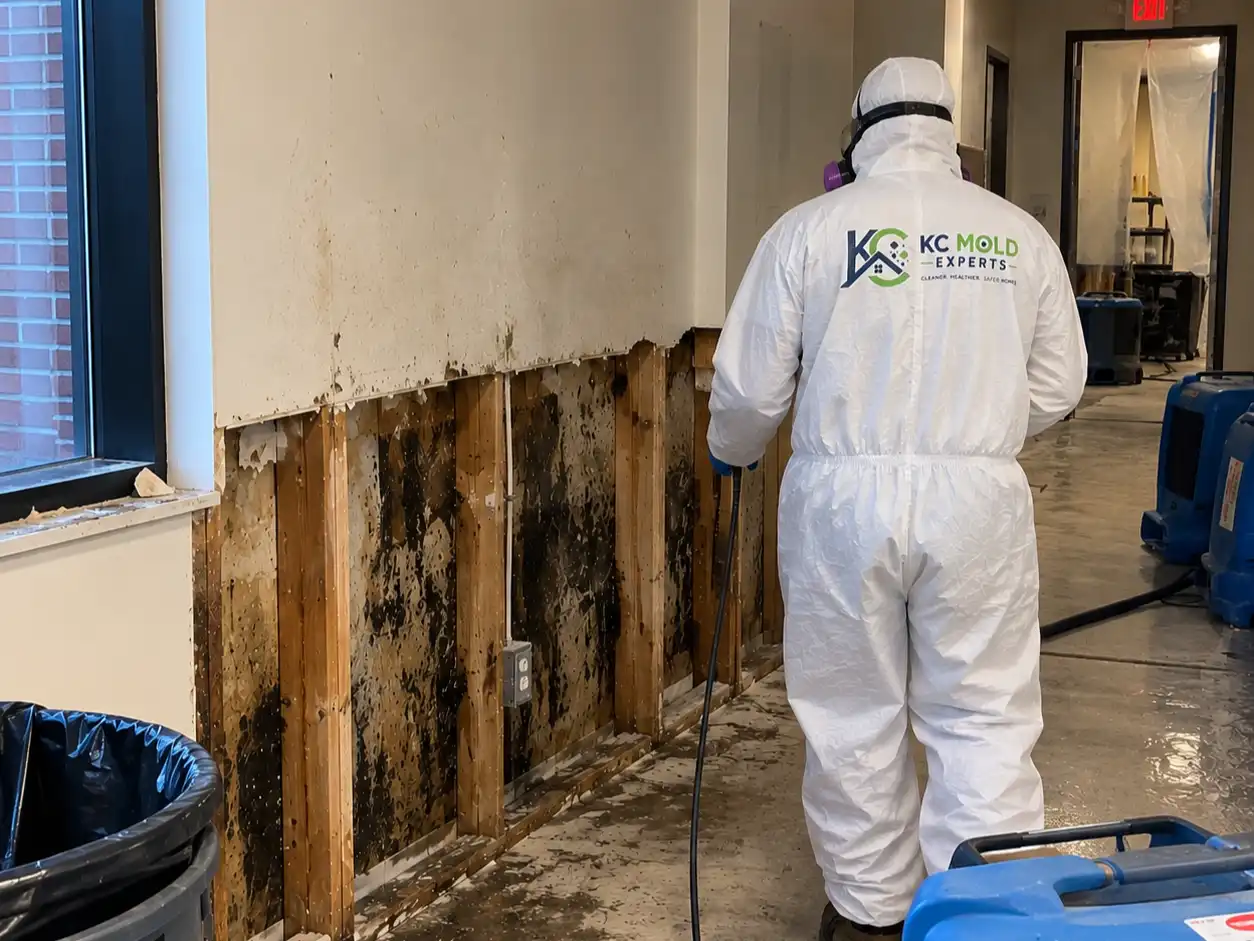
Commercial Mold Removal
We work with offices, retail spaces, and multi-tenant buildings. We provide documentation for property managers, landlords, and insurers.
We schedule around business hours where possible to limit downtime.
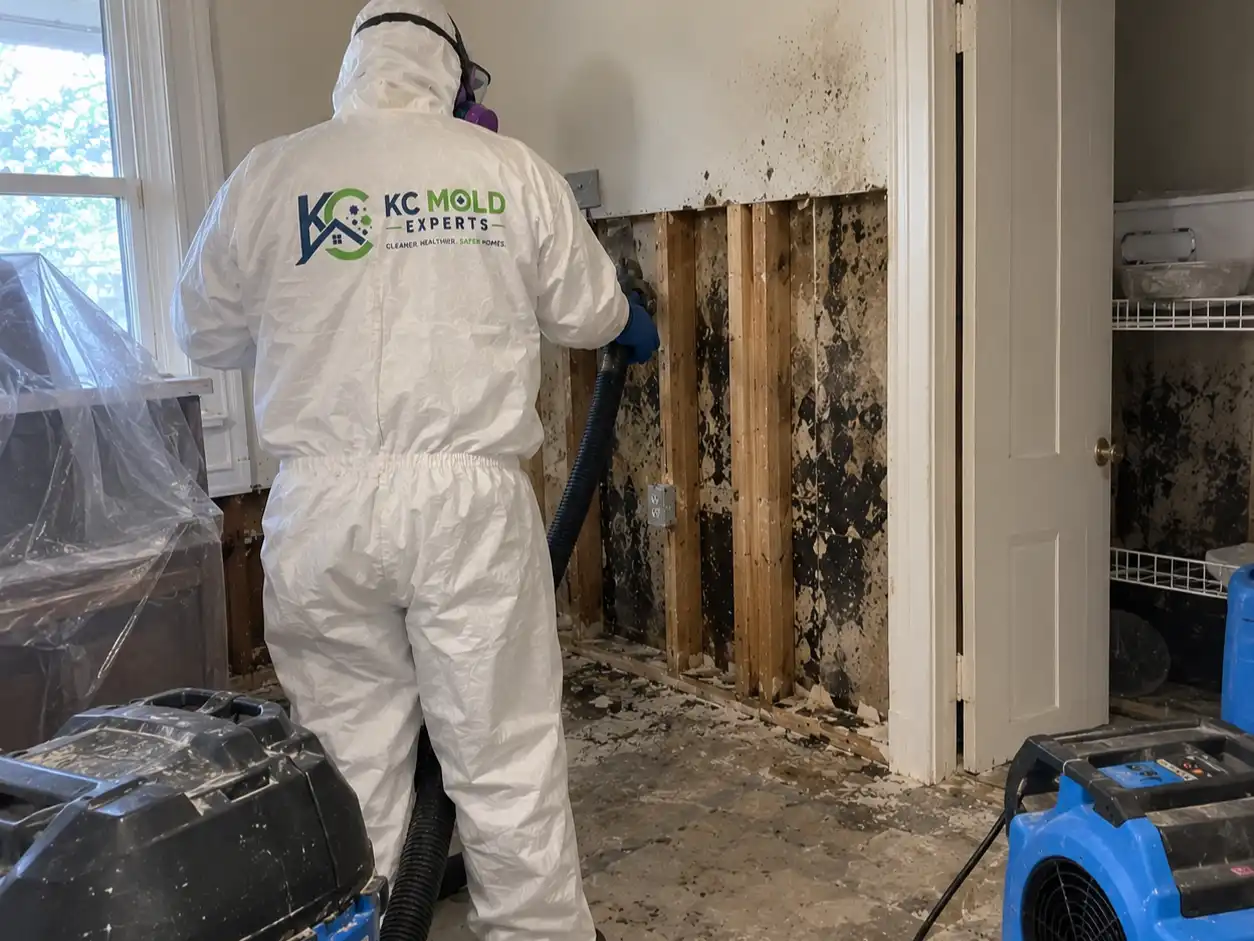
Mold Cleanup Kansas city
Mold cleanup covers smaller jobs — a single wall, a small ceiling stain, a contained spot. We scope these jobs based on size, not a flat rate.
Small jobs still get the same containment and HEPA cleaning as larger ones.
Mold Removal After Water Damage
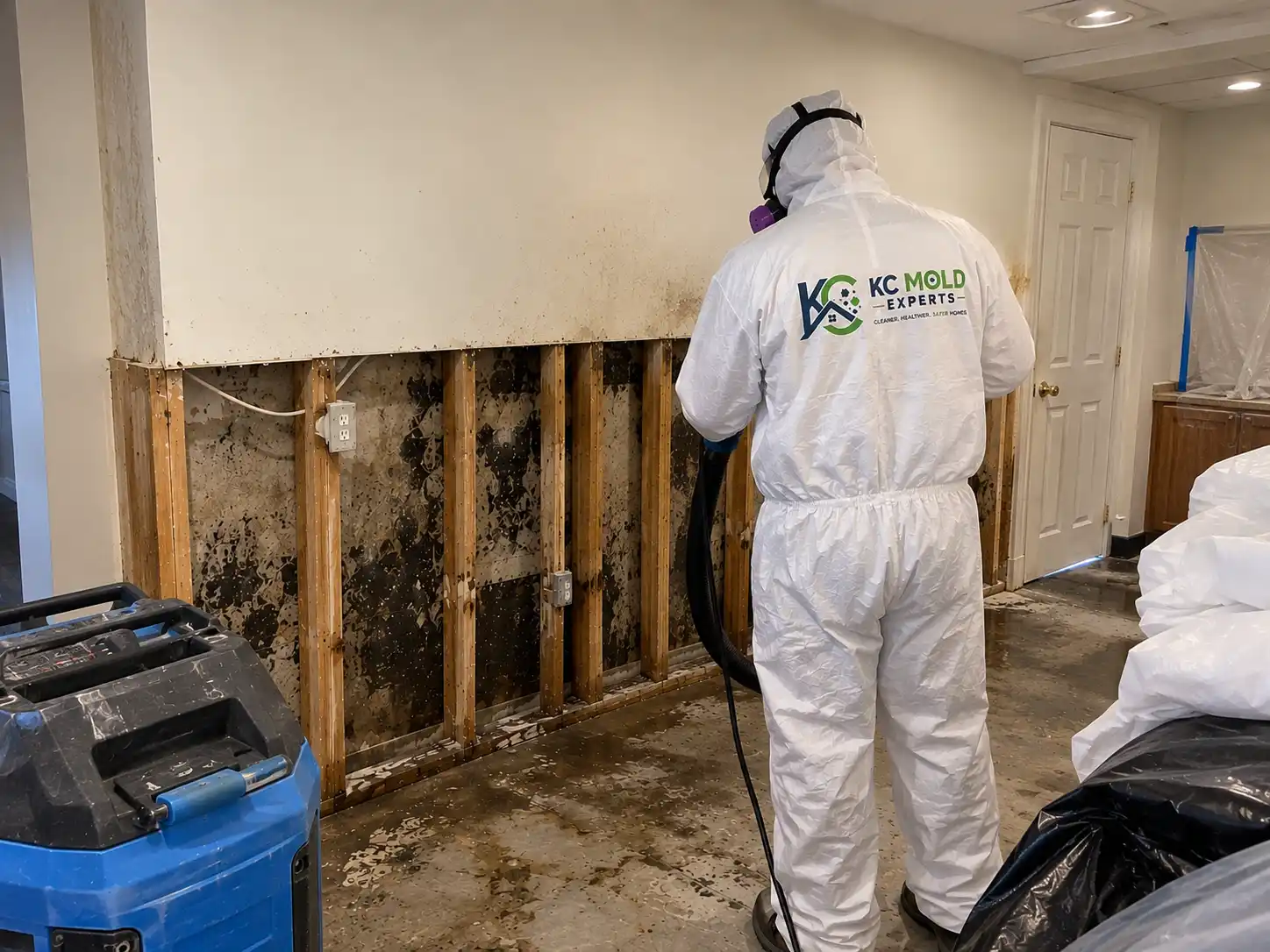
Water damage from a leak, flood, or burst pipe often leads to mold within days. We remove the mold and check for remaining moisture in walls, subfloor, and insulation.
If drying wasn’t complete the first time, mold usually comes back in the same spot.
Where Mold Is Commonly Found
Walls and Drywall
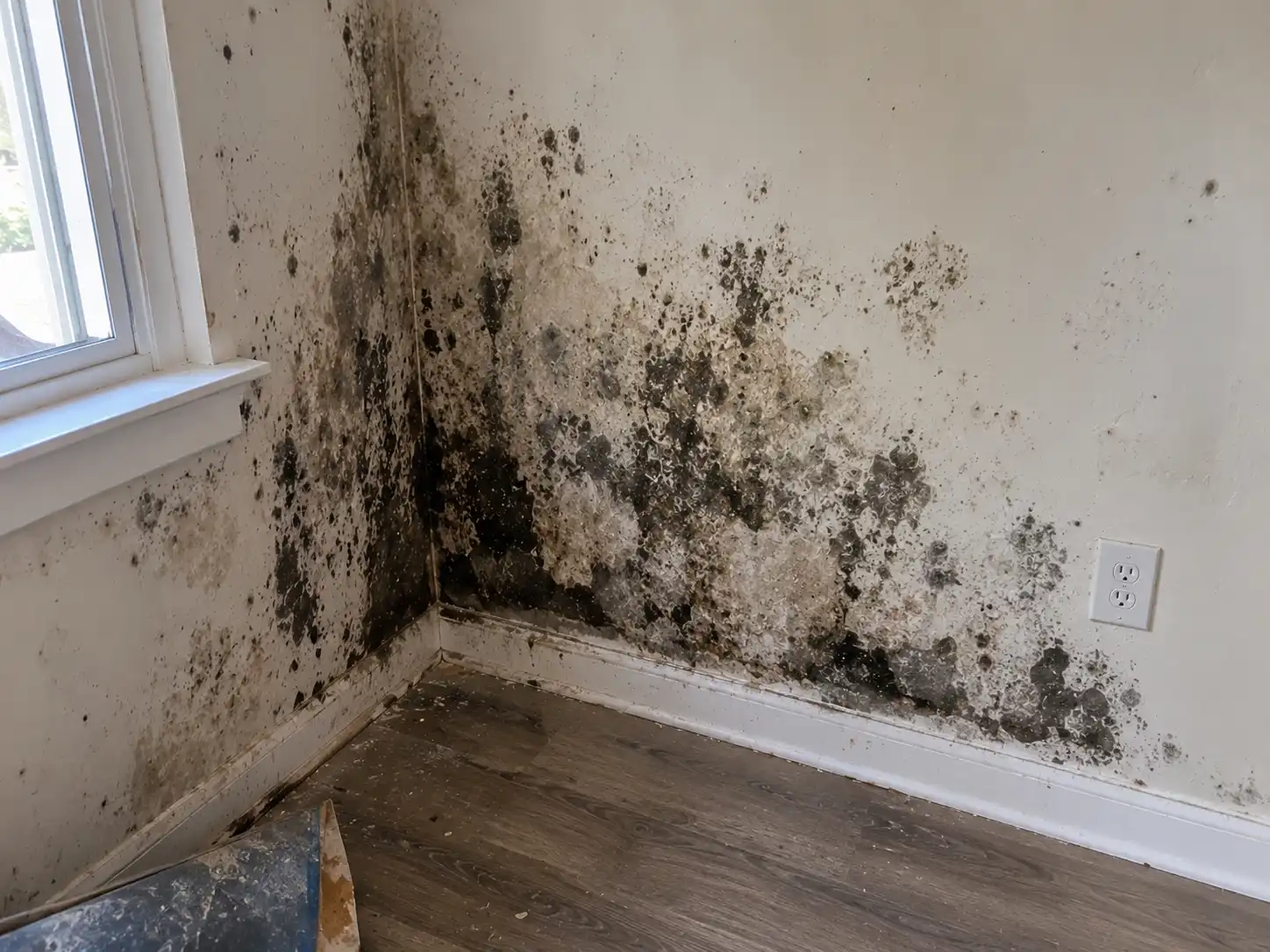
Drywall absorbs moisture easily, especially near plumbing, exterior walls, or past leaks. Once mold gets into the paper layer of drywall, cleaning the surface isn’t enough.
Ceilings
Ceiling mold usually points to a roof leak, a plumbing leak from the floor above, or condensation from poor attic ventilation. The stain is often smaller than the moisture problem behind it.
Bathrooms
Bathrooms combine constant moisture with, in many homes, weak ventilation. Grout, caulk, and the drywall behind tile are the most common growth spots.
Carpet and Other Materials
Carpet, carpet pad, and fabric-covered furniture hold moisture longer than hard surfaces. Once mold sets into carpet fibers or padding, replacement is usually needed instead of cleaning.
Inside Walls and Hidden Areas
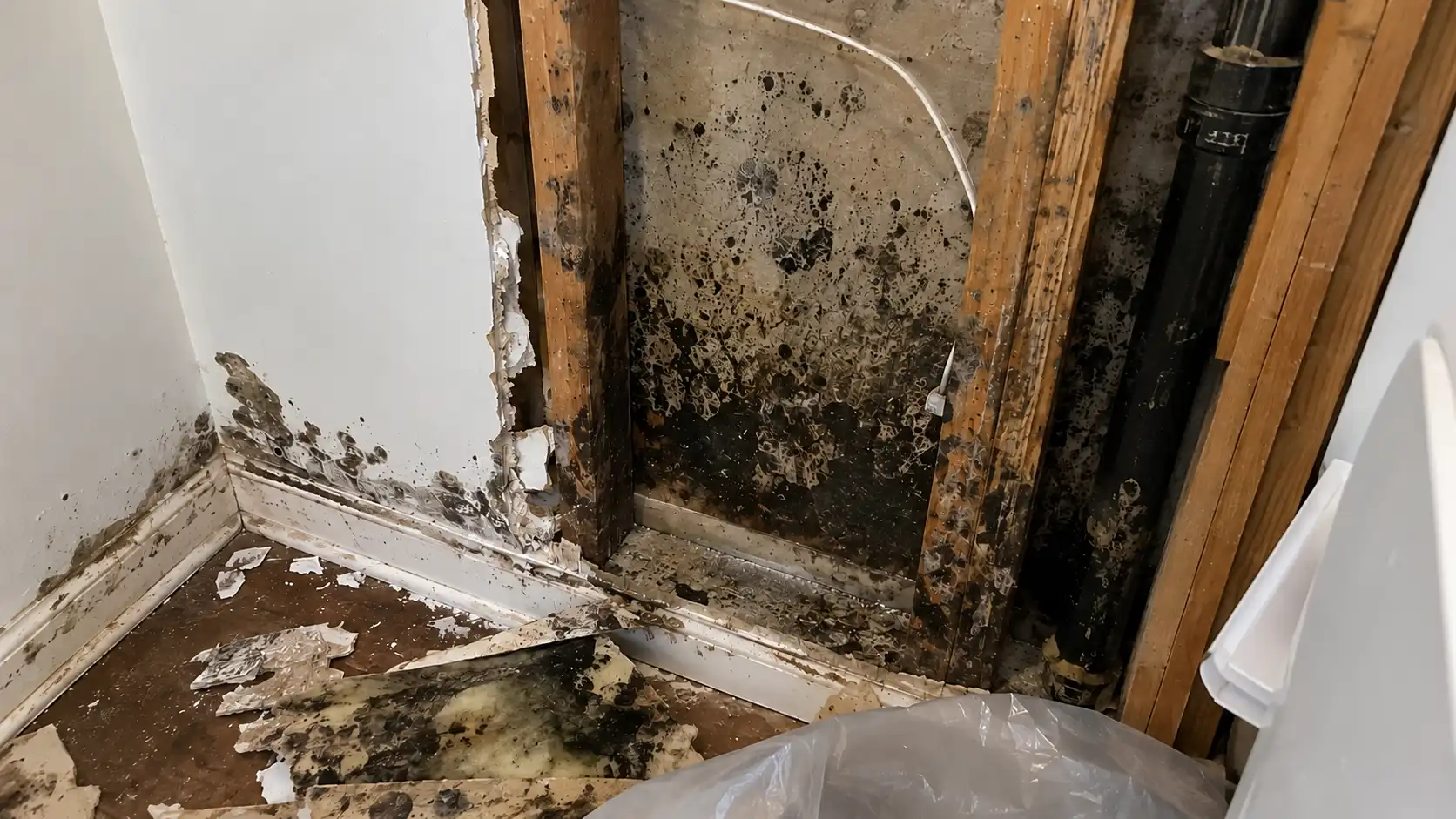
Mold inside a wall cavity often isn’t visible until it’s spread significantly. A musty smell with no visible source is one of the clearest signs of hidden growth.
Signs You May Need Professional Mold Removal
- A musty smell in one room or the whole building
- Dark, green, or white spots on walls, ceilings, or grout
- Peeling paint or bubbling drywall
- A past leak that didn’t fully dry within two days
- Allergy symptoms or headaches that ease up outside the building
- Condensation on windows or cold surfaces
If more than one of these applies, get an inspection before doing anything yourself.
Mold Removal vs. Mold Remediation: What's the Difference?
Mold removal is the physical extraction of mold and the material it’s growing on. It’s a real service, but it’s one step, not the whole process.
Mold remediation is the complete process — inspection, containment, removal, HEPA cleaning, moisture-source correction, and final testing. Remediation is what stops mold from coming back.
We offer both. Small, contained jobs may only need removal. Larger or recurring problems usually need full remediation.
Mold Removal vs. Mold Remediation: What's the Difference?
Mold removal is the physical extraction of mold and the material it’s growing on. It’s a real service, but it’s one step, not the whole process.
Mold remediation is the complete process — inspection, containment, removal, HEPA cleaning, moisture-source correction, and final testing. Remediation is what stops mold from coming back.
We offer both. Small, contained jobs may only need removal. Larger or recurring problems usually need full remediation.
How Our Mold Removal Process Works
01
Assessing the Affected Area
We inspect the visible mold and check for hidden moisture with meters and thermal cameras. This sets the scope for the job.
02
Containment
For larger jobs, we seal off the work area with plastic barriers and run negative air machines. This keeps spores from spreading to clean rooms during the work.
03
Mold Removal
We remove mold-affected material that can’t be cleaned — often drywall, insulation, or carpet. Materials that can be cleaned instead of removed are treated on-site.
04
HEPA Cleaning
We use HEPA vacuums and air scrubbers to pull spores out of the air and off surfaces. HEPA filters are rated by the U.S. Department of Energy to capture 99.97% of particles at 0.3 microns, which includes mold spores.
05
Final Cleanup
We clean and treat remaining surfaces before we leave. For larger jobs, we recommend a final check to confirm the space is safe.
Professional Mold Removal vs. DIY Cleanup
When Surface Cleaning Isn't Enough
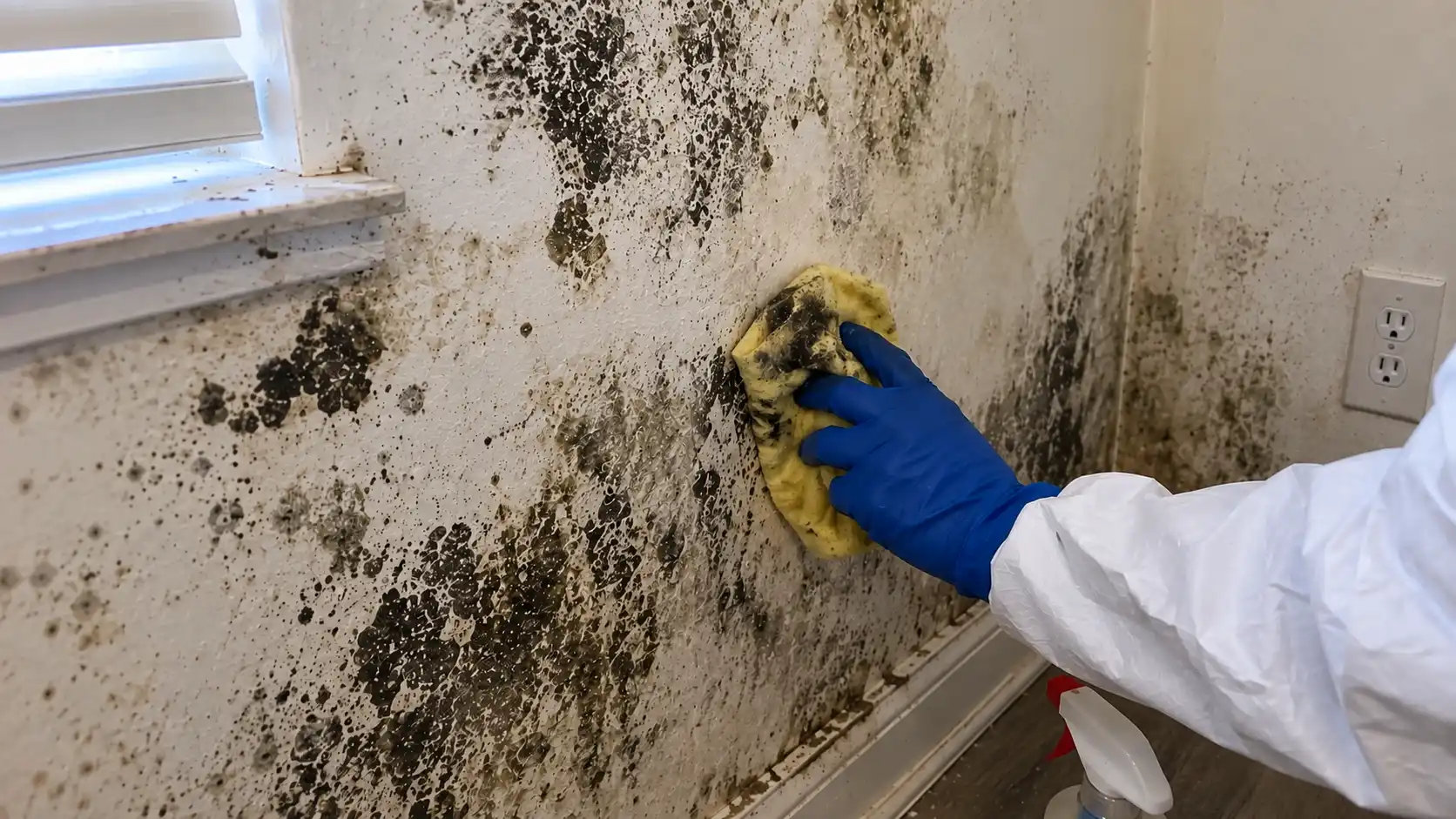
Wiping visible mold off a hard surface can work for very small, isolated spots. It doesn’t work once mold has grown into a porous material or spread behind a wall.
Cleaning the surface without removing the source often just makes the mold harder to see, not gone.
Hidden Mold and Contaminated Materials
DIY cleanup can’t detect mold inside a wall or under flooring. Disturbing a mold-affected area without containment can spread spores through the rest of the building.
If the mold covers more than a small, isolated spot, call a professional before starting any cleanup yourself.

Why Choose Us for Mold Removal
- Free, written inspection reports — not a guess over the phone
- Technicians trained to the ANSI/IICRC S520 Standard for Professional Mold Remediation
- Licensed and insured in Missouri and Kansas
- Independent, third-party lab testing — not self-graded results
- Antimicrobial products registered with the EPA
- Same-week appointments
When Mold-Contaminated Materials Need to Be Removed
Some materials can be cleaned. Others need to be removed and replaced.
Porous materials — drywall, insulation, carpet, and some wood — absorb mold and usually can’t be fully cleaned. Non-porous materials, like tile or metal, can often be cleaned and treated instead.
We check each material during inspection. We don’t remove more than the job requires.
What Affects Mold Removal Cost?
The size of the affected area is the biggest factor. A small bathroom spot costs less than mold spread across a basement wall.
The materials involved matter too. Drywall and carpet that need replacing cost more than surfaces that can be cleaned in place.
Hidden mold adds cost, since it usually means opening a wall or floor to reach it. We give you a written estimate after inspection, not a number over the phone.
Areas We Serve in the Kansas City Metro
We provide this service throughout Kansas City, MO, and the surrounding metro, including:
- Kansas City, MO (Brookside, Waldo, Westport, Northland, Downtown)
- Overland Park, KS
- Lee's Summit, MO
- Independence, MO
- Olathe, KS
- Blue Springs, MO
- Shawnee, KS
- Raytown, MO
- Gladstone, MO
- Liberty, MO
Frequently Asked Questions
Mold removal typically costs $500 to $3,000 for a contained residential job, depending on the size of the affected area and materials involved (replace with your actual price range — do not publish this placeholder as-is). We provide a written estimate after a free inspection, not a phone quote.
Most contained mold removal jobs take 1 to 2 days. Larger jobs involving more material removal can take up to a week.
Surface mold on drywall can sometimes be cleaned. Mold that has grown into the paper layer requires removing and replacing the drywall.
DIY removal is reasonable for a small, isolated spot under about 10 square feet on a hard surface. Anything larger, hidden, or on a porous material needs professional containment.
No. Mold removal alone doesn’t fix the moisture source. Mold returns if the underlying cause — a leak, humidity, or poor ventilation — isn’t corrected.
The wall is opened enough to remove the contaminated material and reach the moisture source. The area is then cleaned, treated, and rebuilt.