
Attic Mold Remediation in Kansas City, MO
Your Attic Is the One Room You Never Check.
That’s exactly why mold gets a head start up there. By the time a stain shows through the ceiling below, it’s often been growing in the attic for months.
We inspect the roof deck, insulation, and ventilation together, remove what’s contaminated, and fix the airflow or moisture problem that let it start. Not just the visible patch.
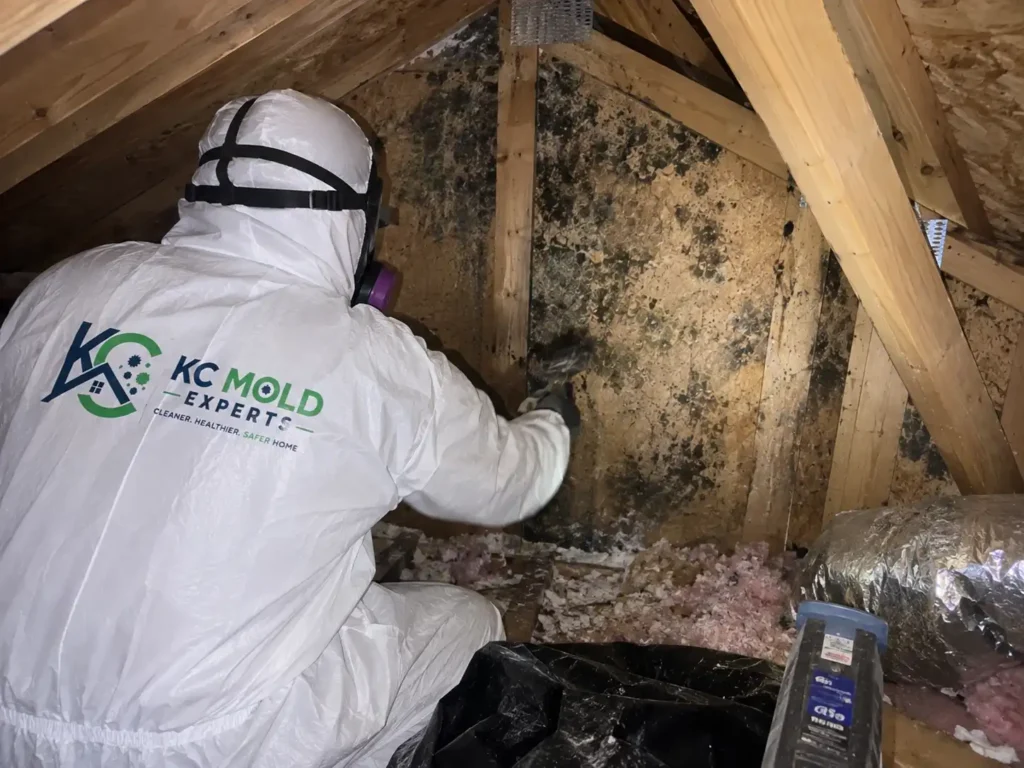
Attic Work Isn't the Same Job as a Basement Job
Attics bring their own problems — tight clearance, roof access, insulation that has to come out before you can even see the deck underneath. A crew set up for basement or bathroom mold isn’t always equipped for that.
Our technicians are IICRC-trained and work attic spaces regularly, with the harnesses, staging, and insulation-handling equipment those jobs actually require. KC Mold Experts is licensed and insured in Missouri and Kansas.
Professional Attic Mold Remediation Services
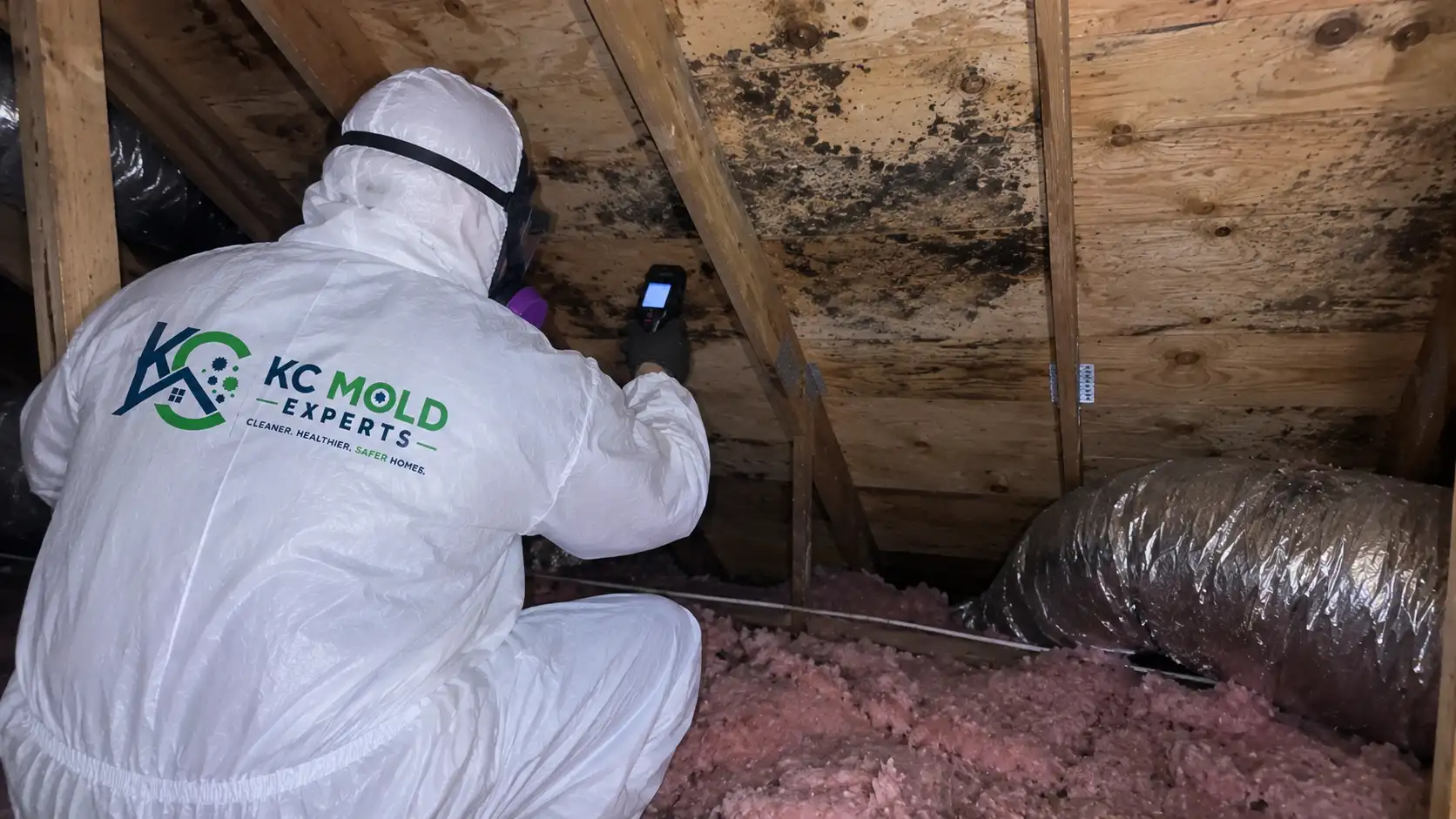
Attic Mold Inspection
We check the roof deck, rafters, and insulation for visible growth and elevated moisture, using thermal imaging to spot problem areas without pulling insulation first. This tells us the scope before we quote the job, not after.
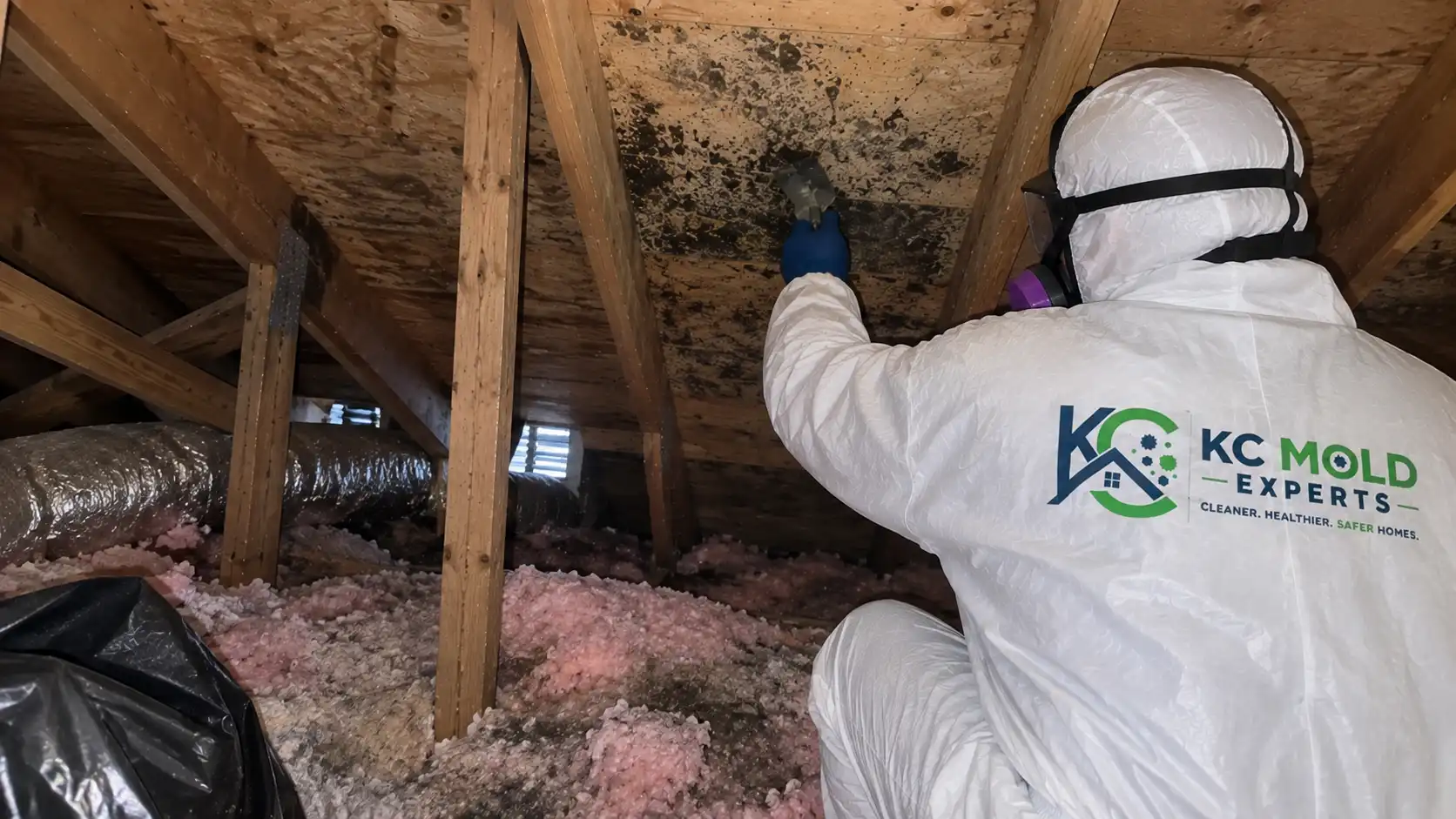
Attic Mold Removal
We remove active mold growth from roof decking, framing, and any contaminated insulation, using the same containment and HEPA filtration standards as our other remediation work.
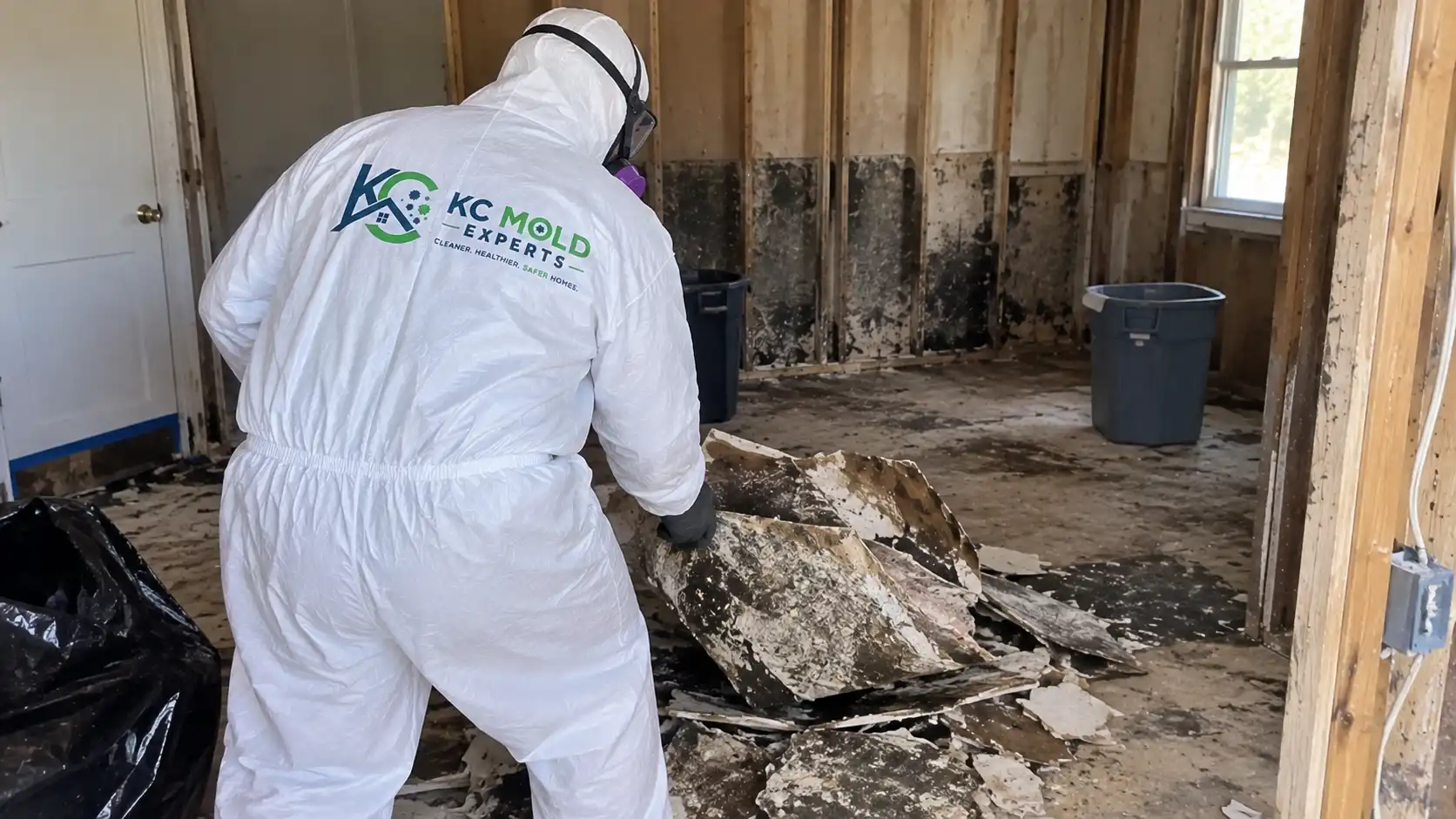
Contaminated Material Removal
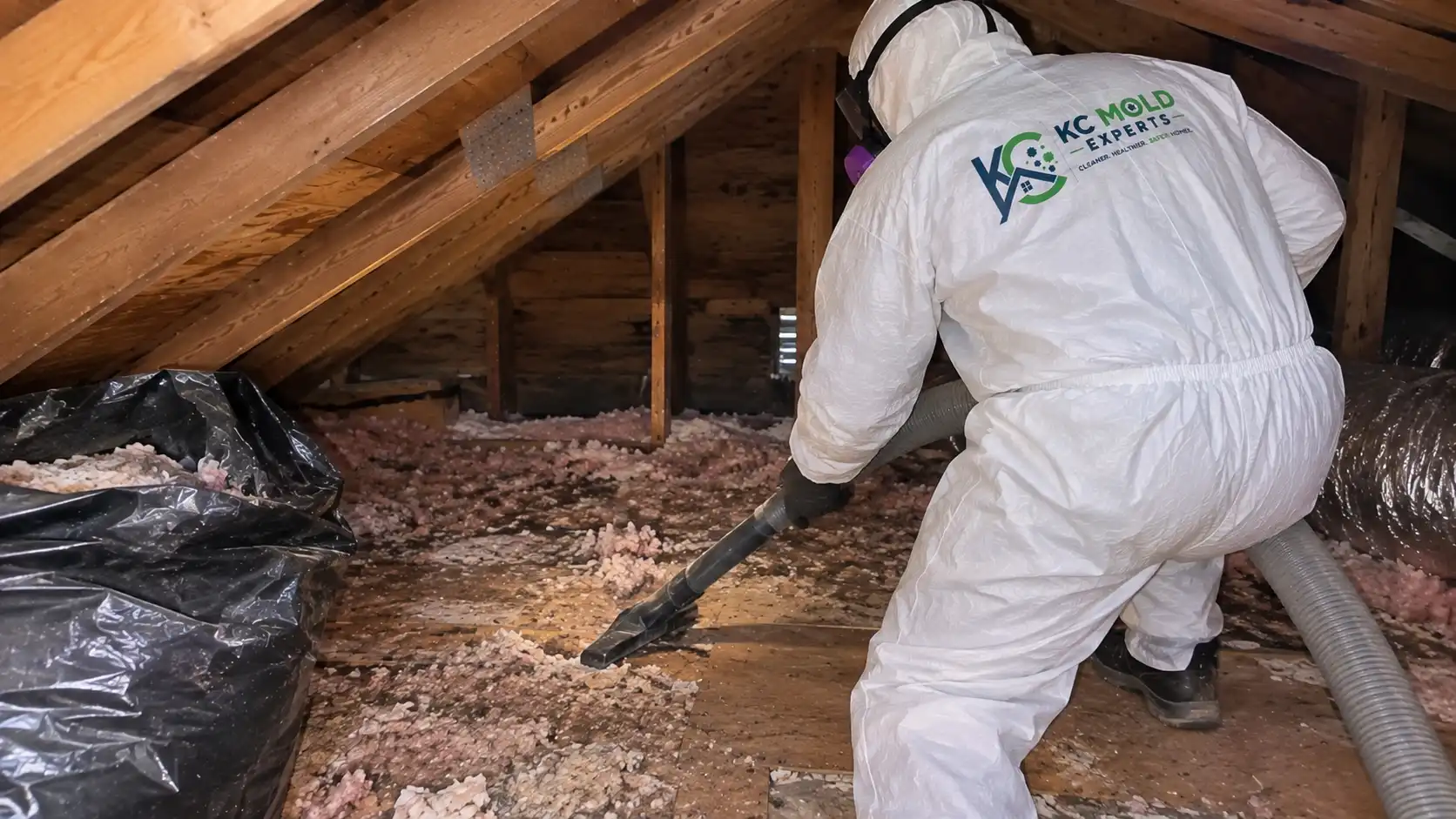
Insulation that’s been wet or shows mold growth is bagged and removed rather than cleaned in place, since fiberglass and cellulose insulation don’t hold up to cleaning the way a hard surface does. Damaged decking or framing sections are removed and replaced where structural integrity is affected.
Attic Cleaning
Once contaminated material is out, we HEPA-vacuum and treat the remaining surfaces with an EPA-registered antimicrobial before any new insulation goes in.
Moisture Source Assessment
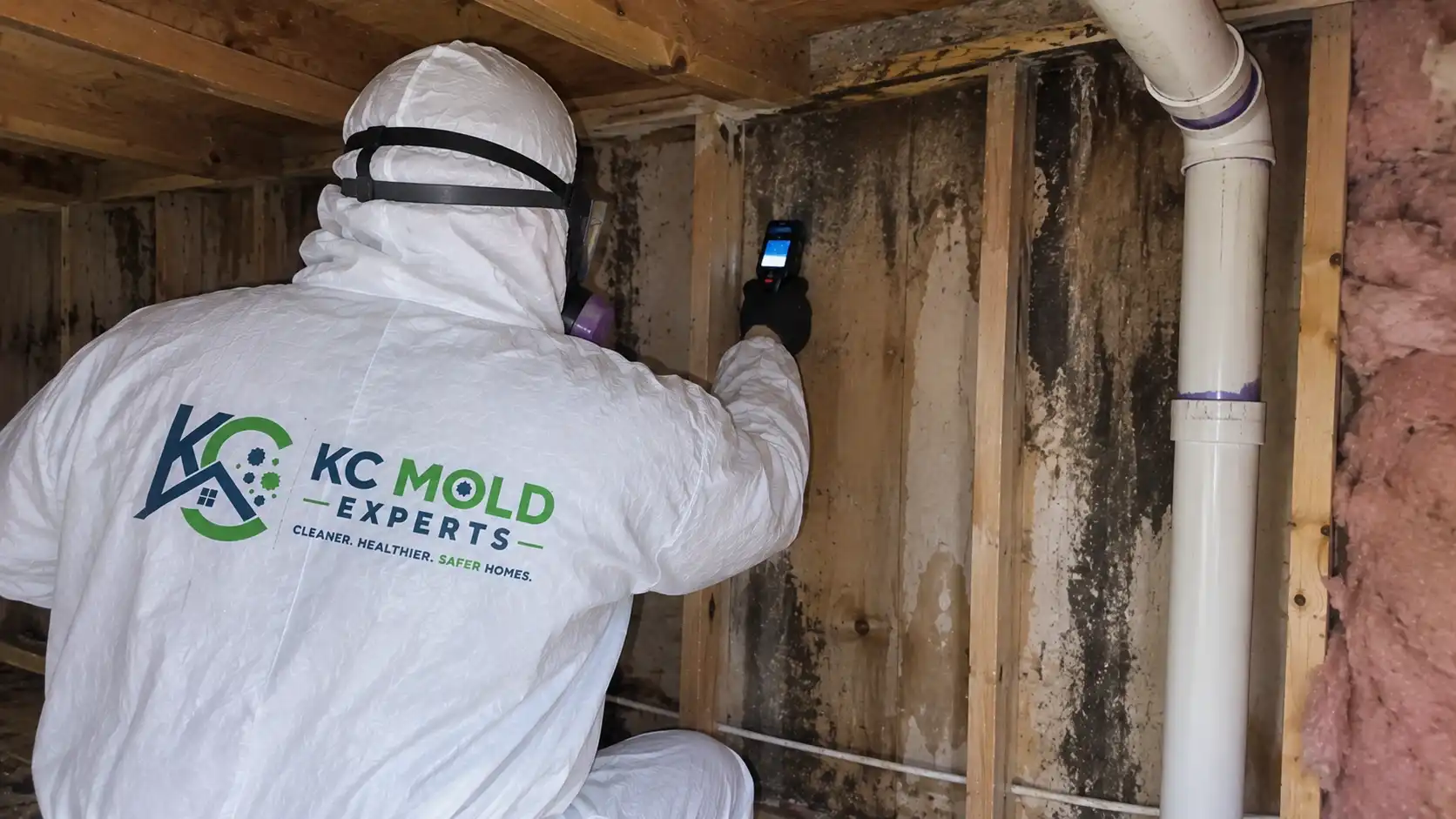
We identify what let moisture into the attic in the first place — a roof leak, a bath fan vented into the attic instead of outside, or insufficient soffit and ridge ventilation — and include the fix in your scope.
Why Mold Grows in Attics
Roof Leaks and Water Intrusion
A damaged shingle, cracked flashing, or failed roof vent boot lets water into the attic gradually, often for months before it’s noticed from inside the house. By the time a ceiling stain appears, the roof deck above it has usually been wet for a while.
Poor Attic Ventilation
Attics need balanced intake and exhaust ventilation — typically soffit vents pulling air in and ridge or gable vents pushing it out — to stay dry. Without it, heat and moisture build up under the roof deck, especially in summer, and create the conditions mold needs.
Condensation and Humidity
In winter, warm, moist air from inside the house rises into a cold attic and condenses on the underside of the roof deck. This is one of the most common causes of attic mold in Kansas City homes, and it happens even without any leak at all.
Moisture Around Insulation and Building Materials
A bathroom exhaust fan vented into the attic instead of outside dumps warm, humid air directly onto insulation and framing every time it runs. Over time, this creates a localized moisture problem even in an attic with otherwise adequate ventilation.
Can Attic Mold Damage Insulation or Building Materials?
Removal is the physical extraction of mold-affected material from the attic — insulation, decking, framing. It addresses what’s already there.
Remediation includes removal plus identifying and fixing the ventilation or moisture problem that caused it. Without that second part, attic mold in Kansas City homes tends to come back with the next humid summer or cold winter.
Attic Mold Removal vs. Attic Mold Remediation
Removal is the physical extraction of mold-affected material from the attic — insulation, decking, framing. It addresses what’s already there.
Remediation includes removal plus identifying and fixing the ventilation or moisture problem that caused it. Without that second part, attic mold in Kansas City homes tends to come back with the next humid summer or cold winter.
How We Inspect an Attic for Mold
Checking for Visible Growth
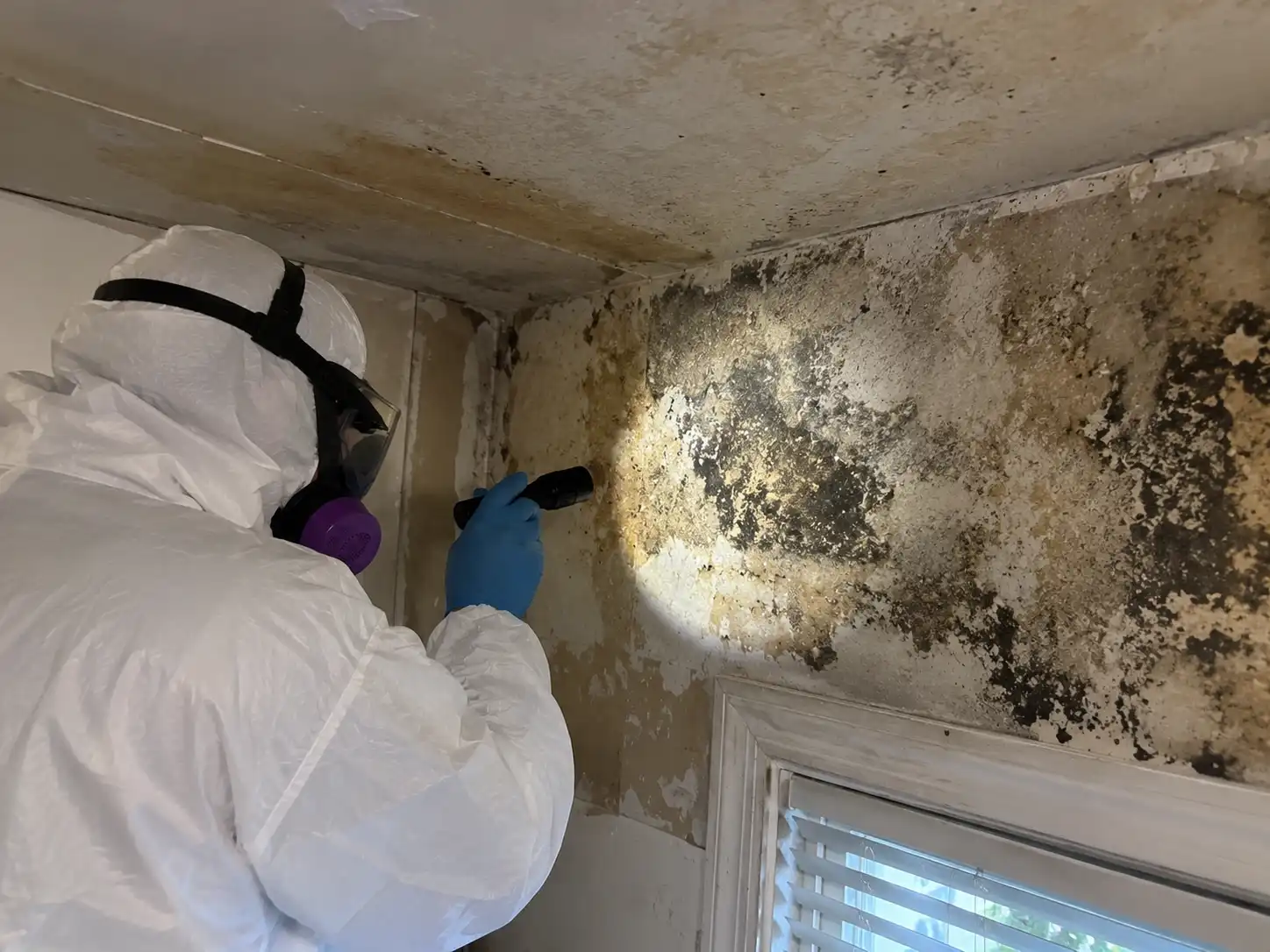
We inspect the roof deck, rafters, and insulation surface for discoloration and growth, working section by section rather than a quick walkthrough.
Looking for Moisture
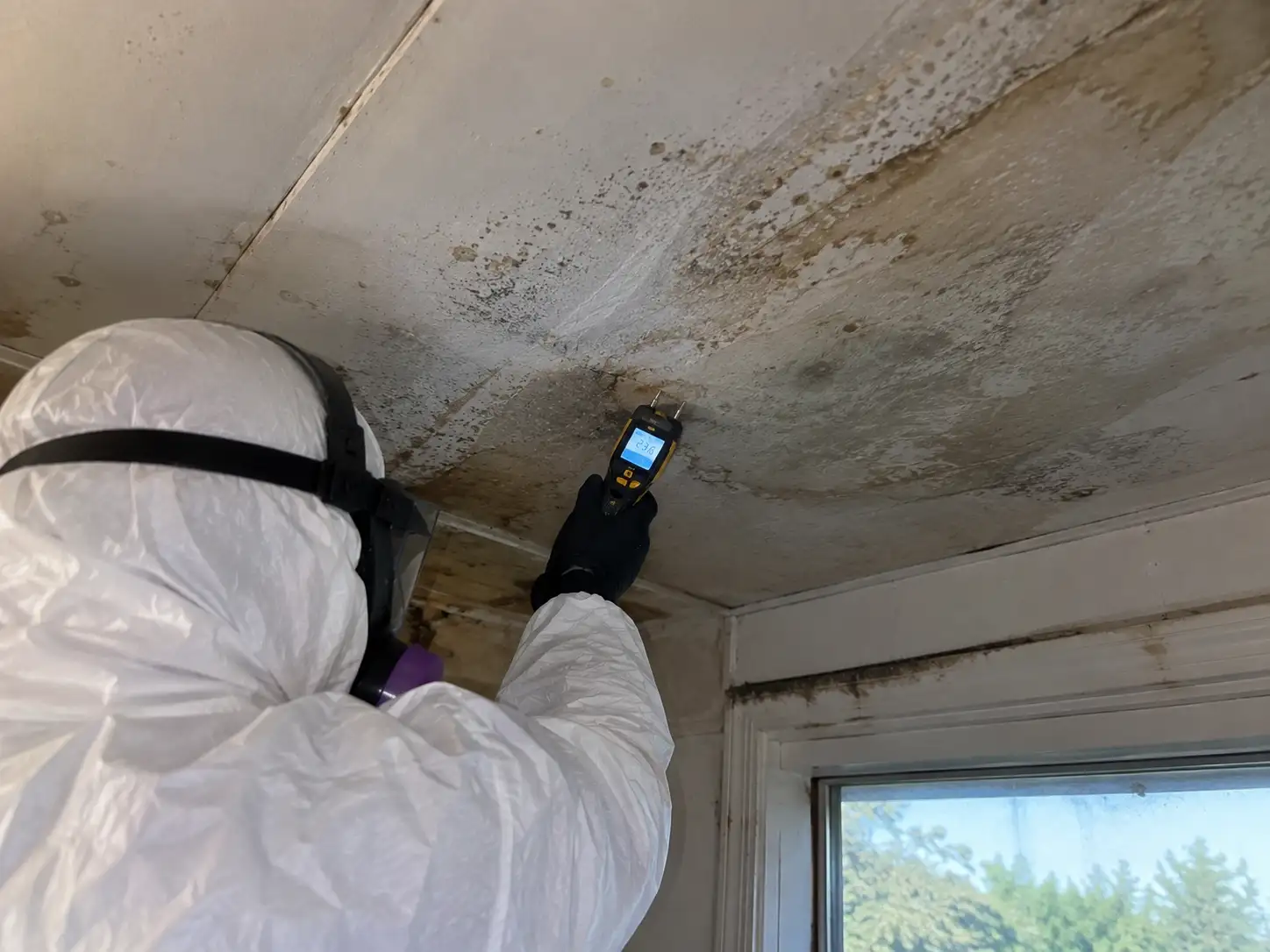
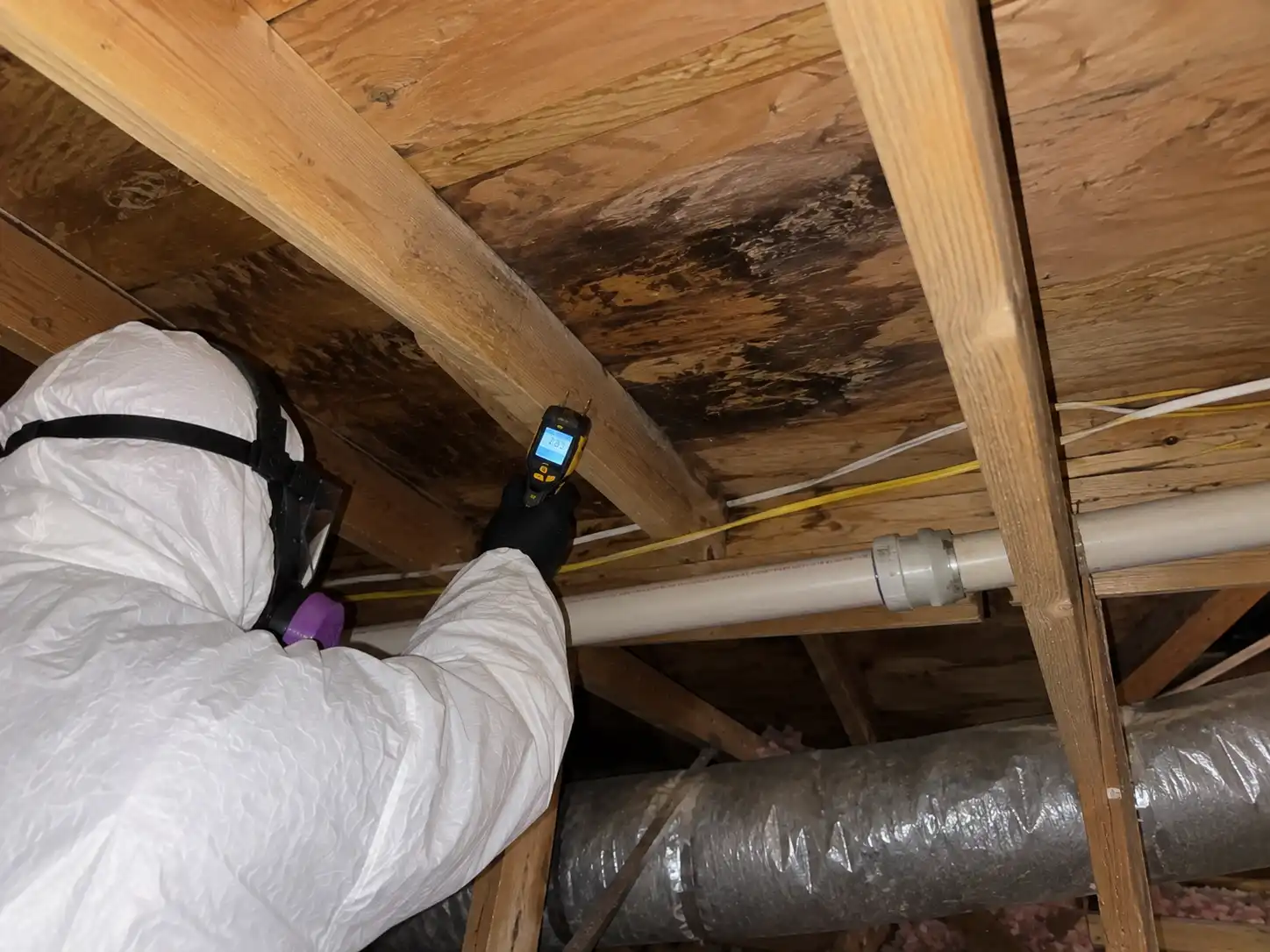
We use moisture meters on the roof deck and framing to find elevated readings that don’t show up visually yet. Thermal imaging helps identify cold spots consistent with active moisture or air leaks.
Evaluating Insulation
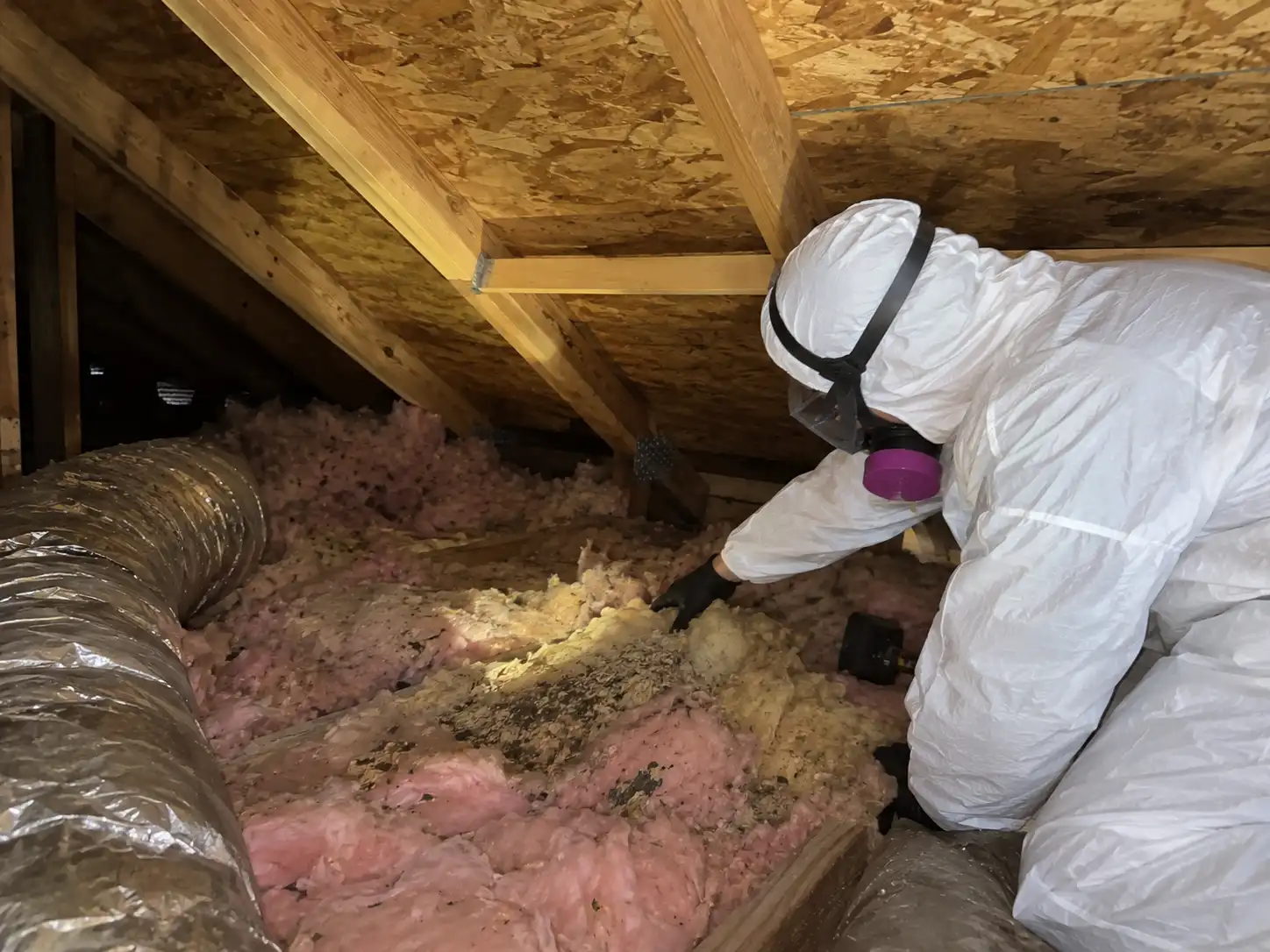
We check insulation condition and depth, since inadequate or compressed insulation contributes to the condensation problems that lead to mold.
Identifying Potential Moisture Sources
Signs of Mold in Your Attic

Visible Growth
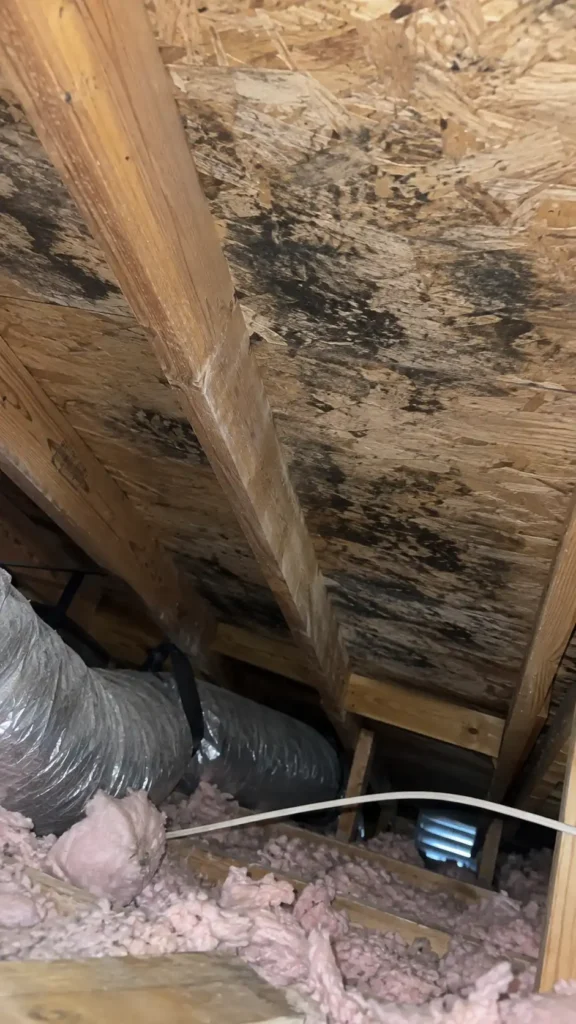
Dark spots or discoloration on the underside of the roof deck, rafters, or insulation are the most direct sign. Attic mold is often more visible on the wood than on insulation itself, since insulation can mask early growth.
Musty Odors
Discolored Insulation or Materials
Recurring Moisture Problems
Ice dams in winter, ceiling stains that keep coming back, or a bathroom fan that always seems to leave the ceiling below it slightly damp are all signs of an ongoing attic moisture problem, not a one-time event.
Attic Mold Remediation Process in Kansas city
01
Assessing the Affected Area
We document the scope of visible growth and moisture readings across the attic, which determines the containment size and material removal needed.
02
Containing the Attic Space
03
Removing Contaminated Materials
Affected insulation, and any decking or framing beyond cleaning, is removed and bagged for disposal inside containment.
04
HEPA Cleaning and Filtration
We HEPA-vacuum remaining surfaces and run air scrubbers to clear spores from the attic air before treatment and rebuild.
05
Addressing the Moisture Source
We correct the ventilation, roofing, or exhaust issue identified during inspection as part of the same scope, not a separate follow-up call.
06
Final Cleanup
We install new insulation where needed and do a final check before closing the job out. Larger jobs may include post-remediation testing.

Why Choose Us for Mold Damage Restoration
- Free, written inspection reports — not a guess over the phone
- IICRC-trained technicians who follow the S520 standard
- Licensed and insured in Missouri and Kansas
- Independent lab testing, not self-graded results
- 24/7 emergency response — mold doesn't wait for business hours
- Moisture source identified and documented, not just the mold treated
- Containment and negative air pressure to stop cross-contamination during removal
- Photo-documented before/after for insurance claims
- Post-remediation clearance testing before we call the job done
- No cross-selling reconstruction you don't need — remediation and repair kept separate
- Locally owned and operated, serving Kansas City for 10 years
- Direct communication with your insurance adjuster, no runaround
Can Attic Mold Damage Insulation or Building Materials?
Yes. Insulation that’s been wet loses its ability to insulate effectively and typically needs full replacement rather than drying in place. Roof decking and framing can also lose structural integrity if moisture and mold are left long enough, which is why an attic mold problem caught early is a cleaning job, and one caught late is often a rebuild.
How to Prevent Attic Mold From Coming Back
Make sure bathroom and kitchen exhaust fans vent all the way outside, not into the attic space. Check that soffit and ridge or gable vents aren’t blocked by insulation, which restricts the airflow attics need to stay dry.
Address roof leaks promptly rather than waiting for a ceiling stain to appear, since the roof deck is usually wet well before that happens. Keep attic insulation at an adequate depth, since thin insulation contributes to the condensation that leads to mold in the first place.
Attic Mold Remediation Cost
Cost depends on the size of the affected area, how much insulation needs replacing, and whether ventilation or roofing repair is part of the scope. Attics with extensive insulation replacement or roof deck damage cost more than a contained, early-stage problem.
We provide a written estimate after inspection, not a number based on a phone description.
Areas We Serve in the Kansas City Metro
We provide this service throughout Kansas City, MO, and the surrounding metro, including:
- Kansas City, MO (Brookside, Waldo, Westport, Northland, Downtown)
- Overland Park, KS
- Lee's Summit, MO
- Independence, MO
- Olathe, KS
- Blue Springs, MO
- Shawnee, KS
- Raytown, MO
- Gladstone, MO
- Liberty, MO
Frequently Asked Questions
Attic mold usually comes from a roof leak, poor ventilation, condensation from warm indoor air meeting a cold roof deck, or a bathroom fan vented into the attic instead of outside.
Yes. Insulation that’s been wet loses effectiveness and typically needs to be replaced rather than dried and reused.
Not always. Insulation that’s dry and shows no growth can often stay. Insulation that’s been wet or shows mold usually needs replacement.
Attic mold remediation typically costs $1,000 to $5,000, depending on the size of the area and how much insulation or roofing repair is needed.
Yes. Attics need balanced intake and exhaust airflow to stay dry. Without it, heat and moisture build up under the roof deck and create conditions mold needs to grow.
Smaller, contained jobs often take 1 to 2 days. Larger jobs involving significant insulation replacement or roof repair can take up to a week.