
Basement Mold Remediation in Kansas City, MO
Your Basement Might Be Growing Mold Right Now, Even Without a Flood.
You don’t need standing water for mold to start. Just steady dampness, low airflow, and a few days.
KC Mold Experts finds the moisture, removes the mold, and fixes what’s causing it. Basement mold remediation is one of our most common calls in Kansas City, since basements trap moisture more than almost any other room in the house.
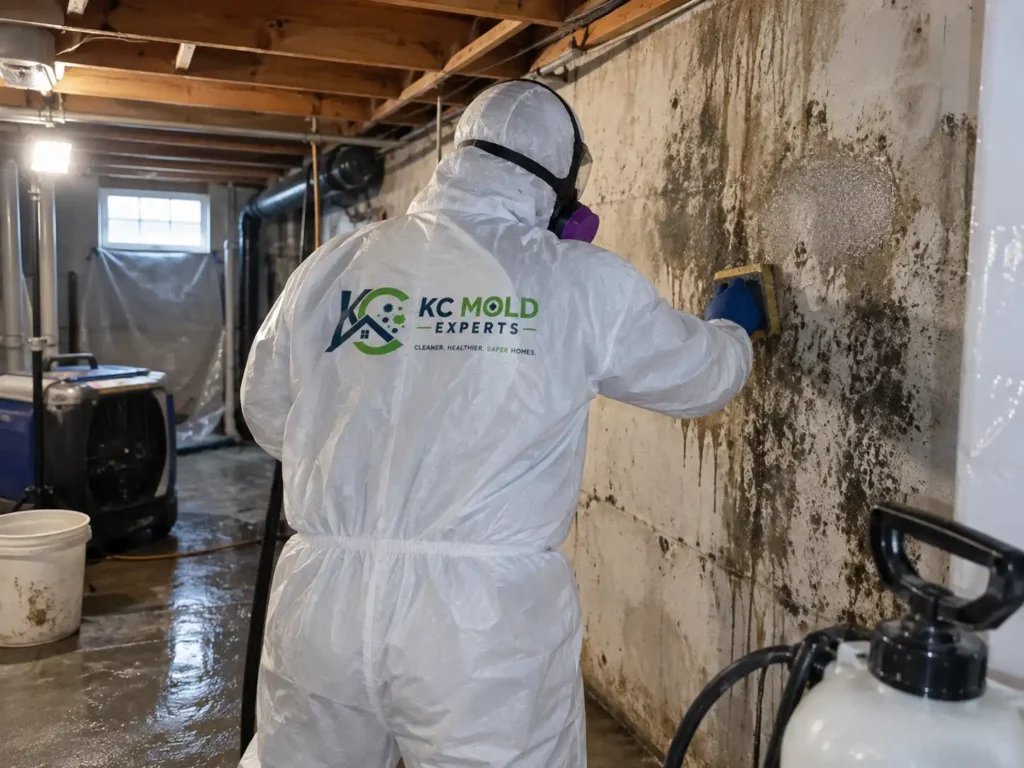
Below-Grade Work Needs Below-Grade Experience
Basements behave differently than the rest of a house. Moisture comes from the ground itself, not just the air, so drying and containment have to account for that.
Our technicians are IICRC-trained in below-grade moisture control, and KC Mold Experts is licensed and insured in Missouri and Kansas.
Professional Basement Mold Remediation Services
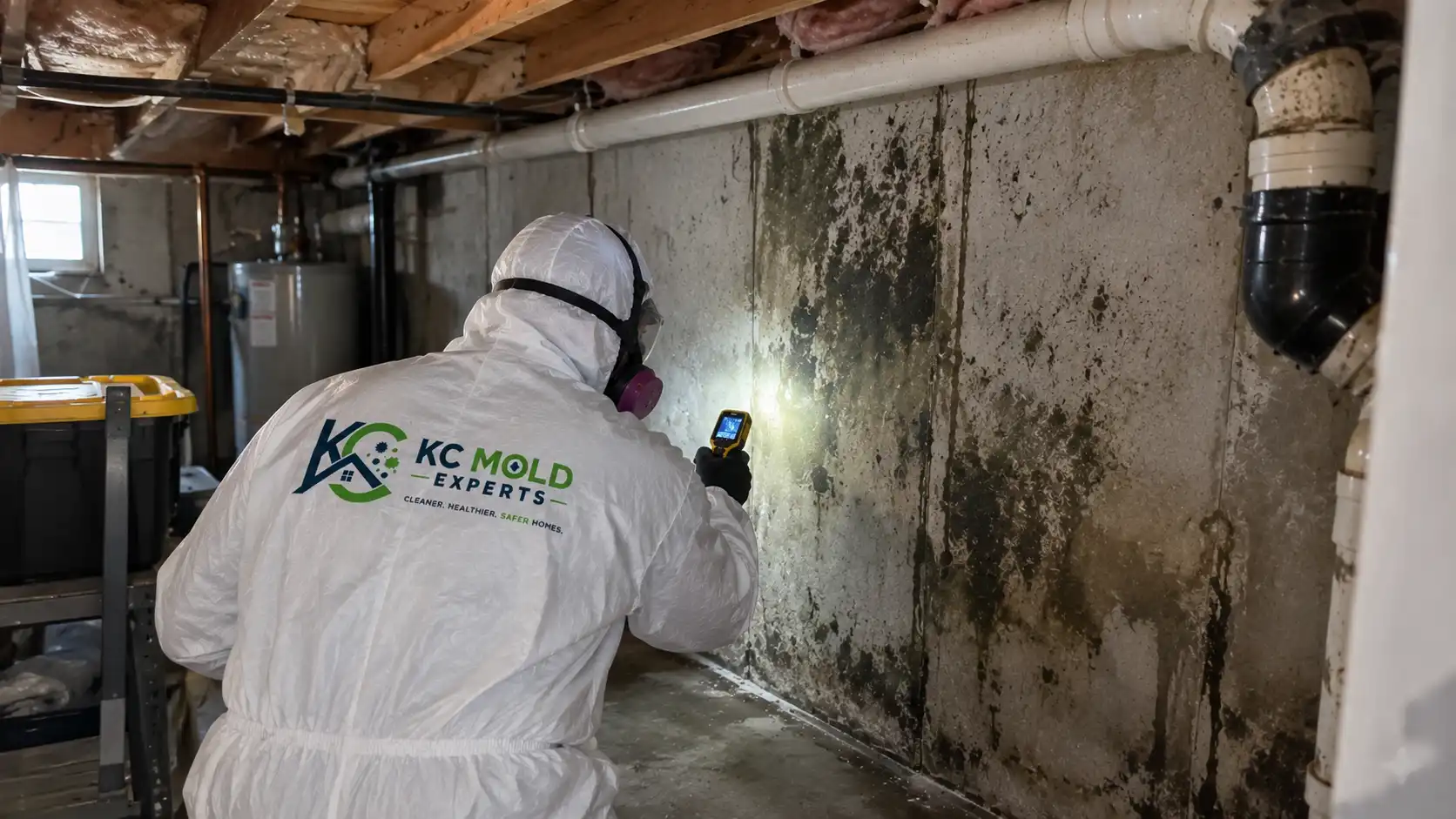
Basement Mold Inspection
A full visual and moisture-based check of the basement, with a written report and photos.
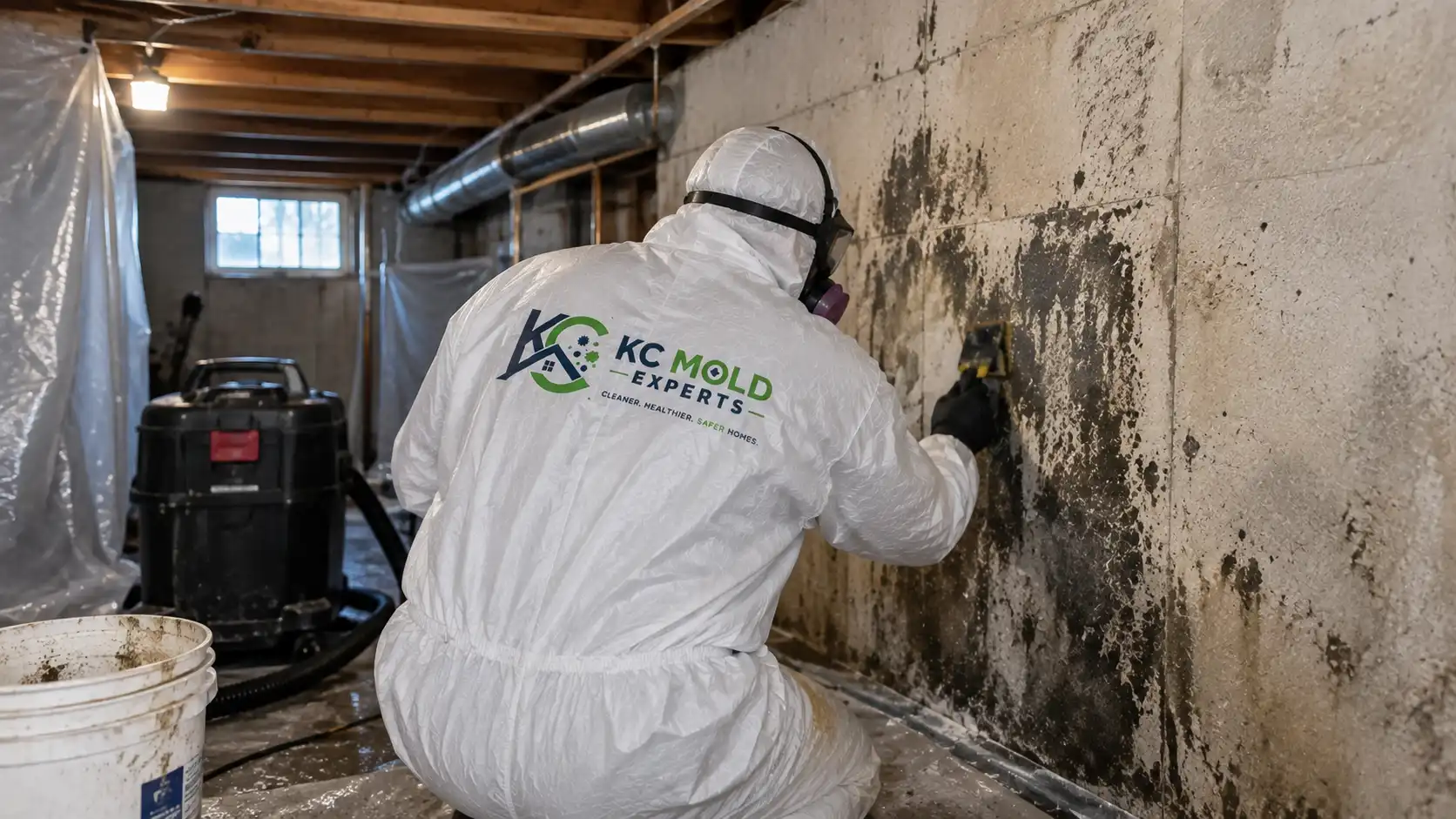
Basement Mold Removal
Physical removal of mold-affected material, following the same containment and HEPA standards used across all our remediation work.
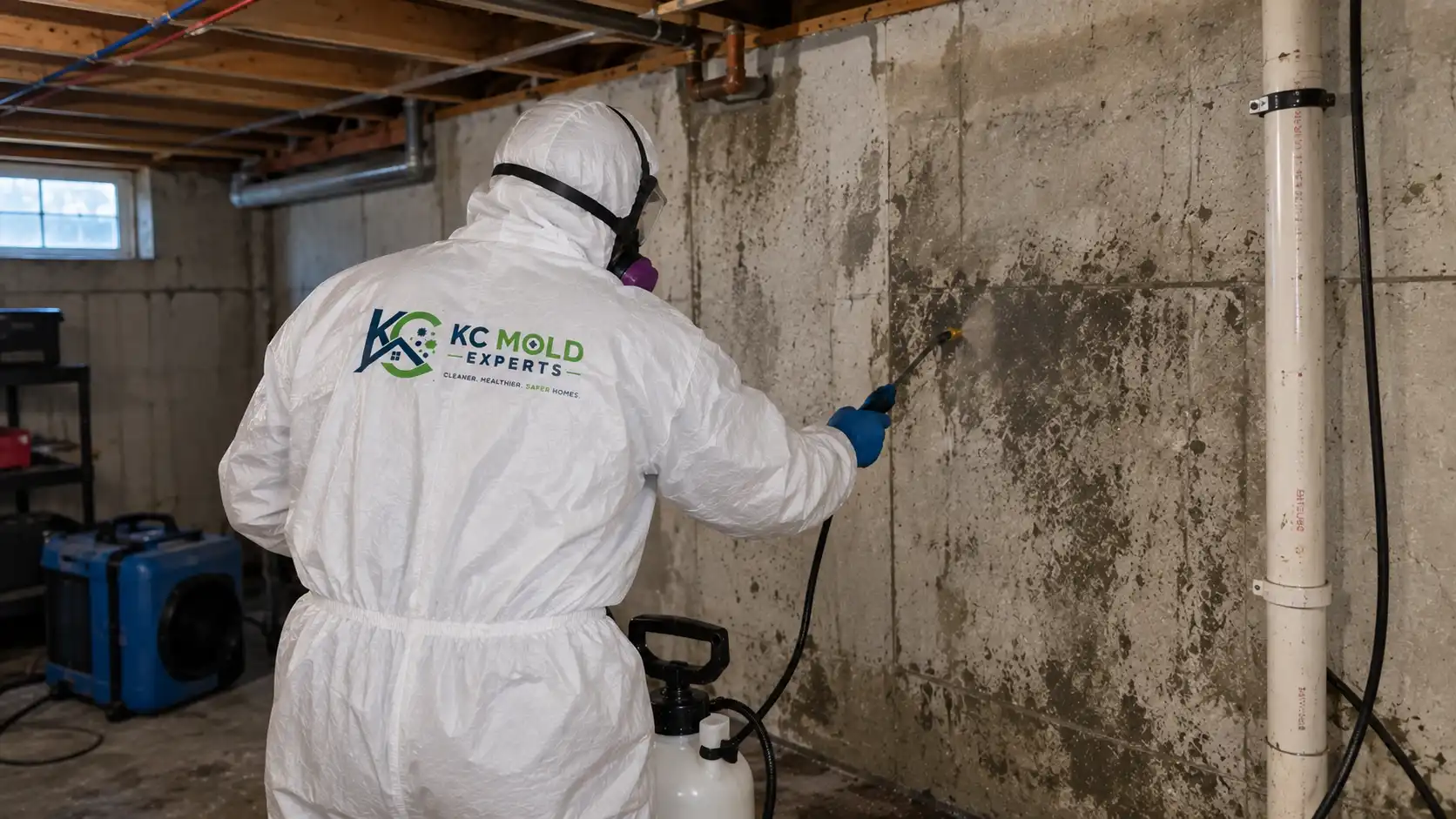
Basement Mold Treatment
Cleaning and antimicrobial treatment for surfaces that can be salvaged instead of replaced.
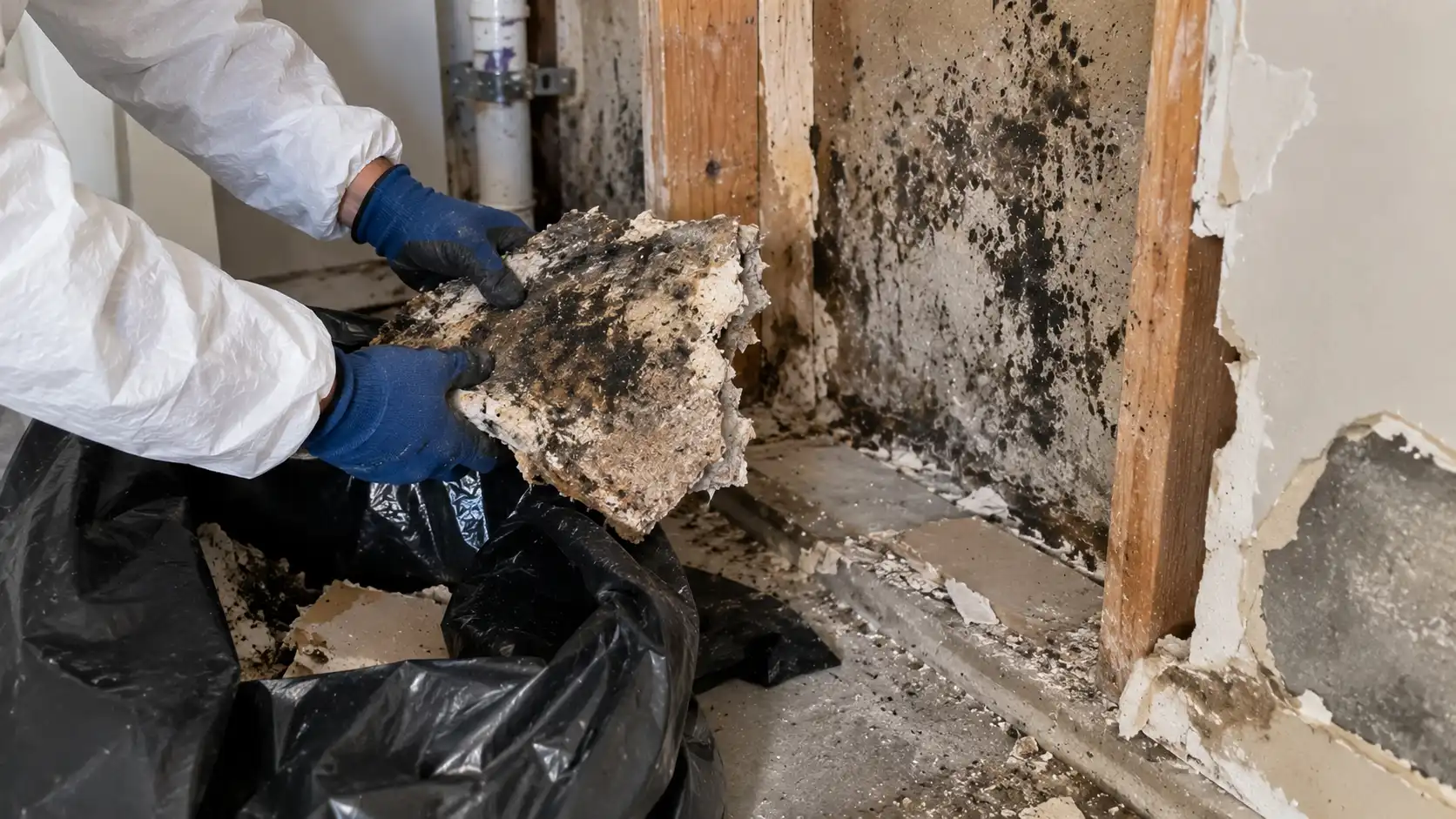
Contaminated Material Removal
Removal and disposal of drywall, insulation, carpet, or framing that’s absorbed mold beyond cleaning.
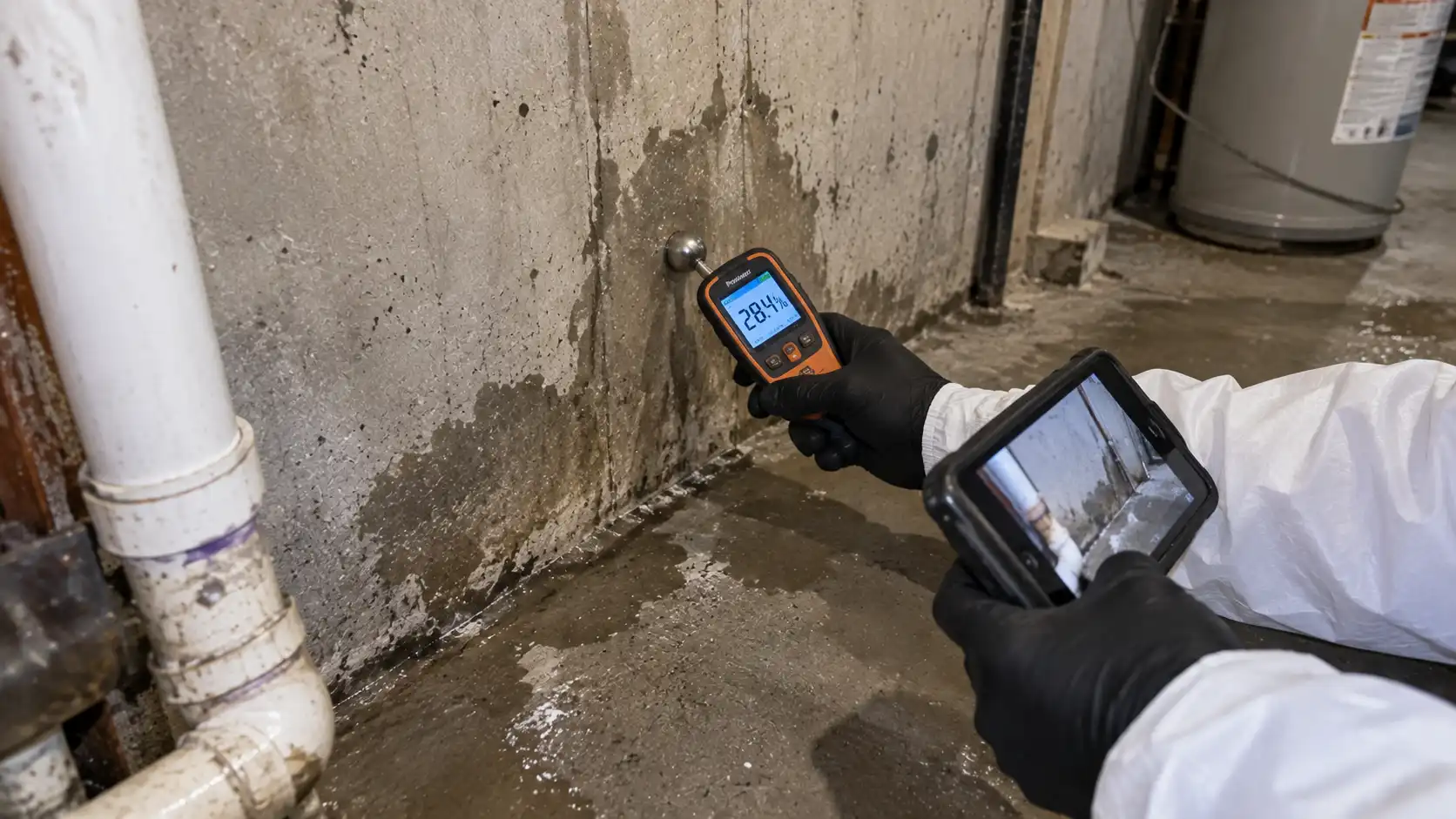
Moisture Source Assessment
Identifying the specific cause of basement moisture — foundation, plumbing, drainage, or humidity — and building the fix into your remediation scope.
Signs You May Have Basement Mold
- A musty smell, especially near walls, storage boxes, or the floor
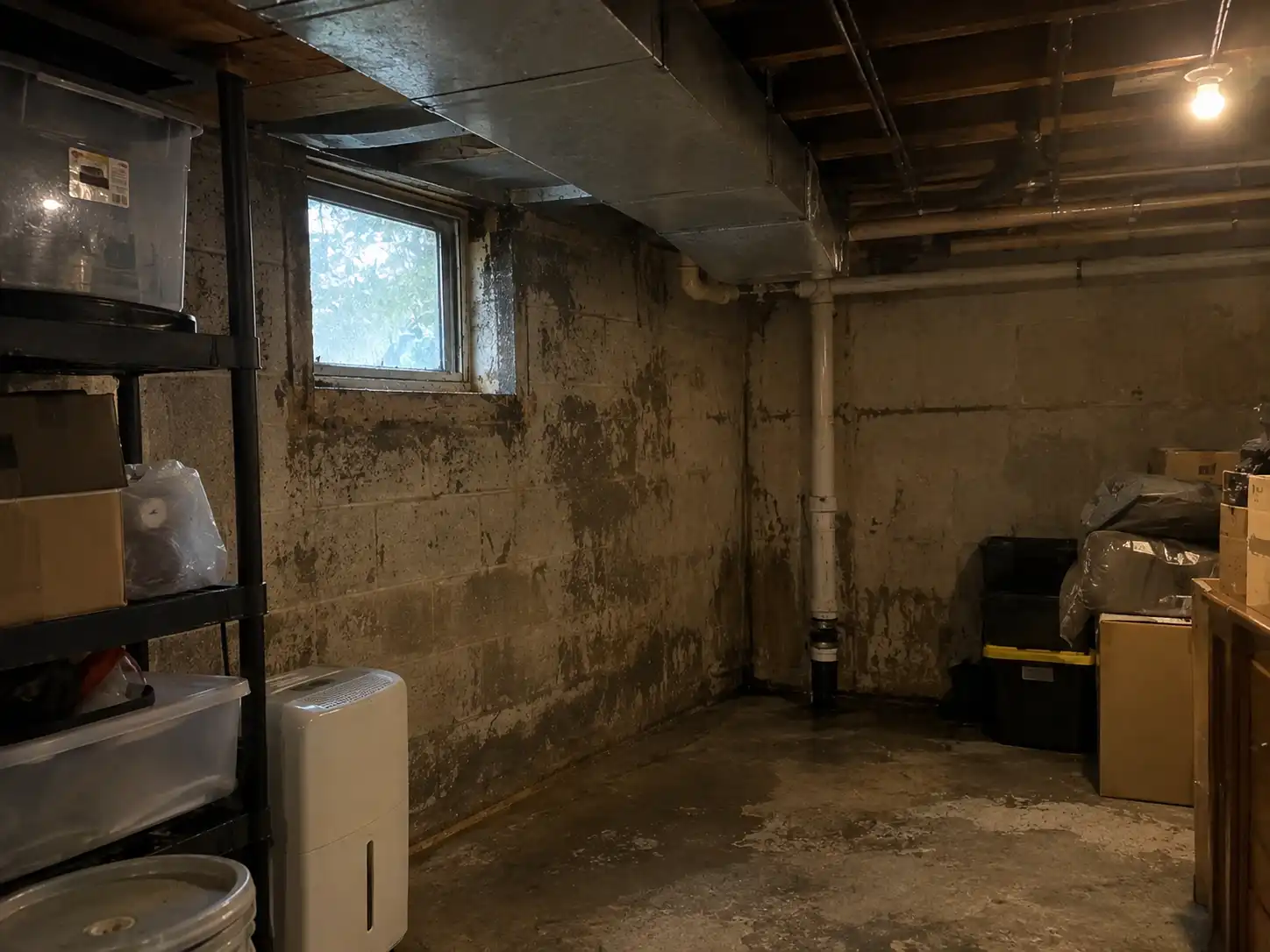
- Dark or discolored spots on drywall, framing, or concrete
- Peeling paint or a chalky white residue on foundation walls
- Warped baseboard or a soft feel to carpet or flooring
- Condensation on pipes, windows, or cold surfaces
- A history of past flooding or a sump pump issue
If more than one of these applies, get an inspection before storing anything else down there.
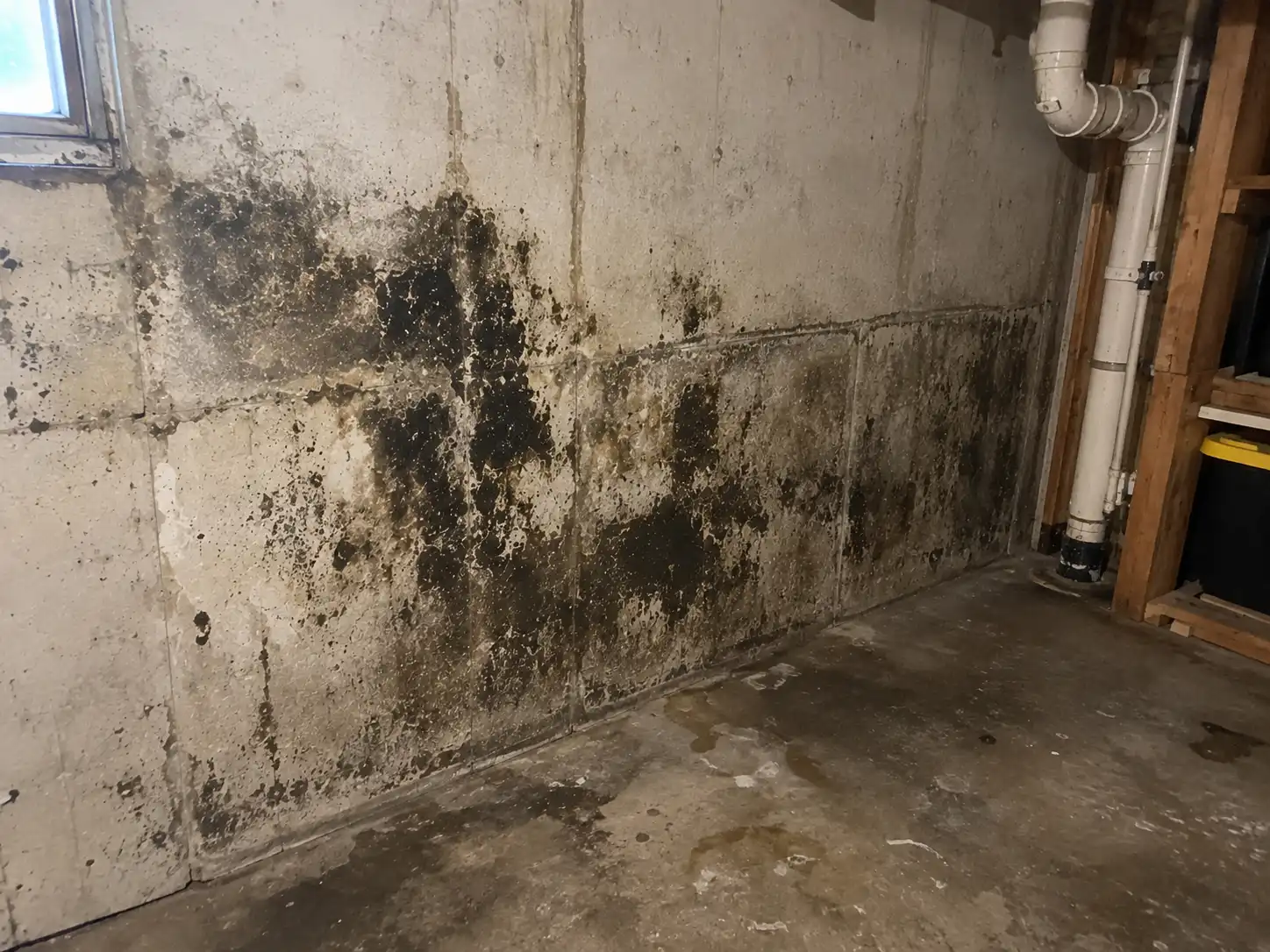
Inspecting a Basement for Mold and Moisture
Our inspection covers the whole space, not just the spot you noticed. We use moisture meters and thermal imaging to check foundation walls, framing, and flooring, and we document everything with photos before recommending any work.
You get a written report either way — whether that means a full remediation plan or confirmation that there’s nothing to act on yet.
Basement Mold After Flooding or Water Damage
Basement mold after a flood needs faster action than a slow, humidity-driven case. If a basement wasn’t fully dried within 24 to 48 hours of flooding, assume mold has started even if you can’t see it yet.
We check for both the mold and any lingering moisture behind walls or under flooring, since a flood that looks dry on the surface can still be wet underneath.
Finding the Source of Basement Moisture
Foundation and Wall Moisture
We check foundation walls and the base of framed walls with moisture meters, since this is where ground moisture typically shows up first.
Plumbing Leaks
Basements often hold water heaters, sump pumps, and plumbing runs. A slow leak in any of these can go unnoticed for a long time in an unfinished or lightly used space.
Flooding and Water Intrusion
We check for signs of past flooding, even if the basement looks dry now, since water lines and staining tell us how far a past event actually reached.
Humidity and Condensation
We measure relative humidity throughout the basement, since a space with no visible leak can still support mold growth if humidity stays high enough for long enough.
Our Basement Mold Remediation Approach
01
Identifying Affected Areas
We document visible mold and elevated moisture readings across the basement to set the scope of the job.
02
Containing the Basement
For larger jobs, we seal the work area with plastic barriers and run negative air machines, since basement mold spores can travel easily through an open stairwell into the rest of the house.
03
Removing Contaminated Materials
Drywall, insulation, and carpet that have absorbed mold are removed and bagged for disposal. Concrete and framing that can be cleaned instead of replaced are treated on-site.
04
Cleaning and HEPA Filtration
We HEPA-vacuum and treat remaining surfaces with an EPA-registered antimicrobial, pulling spores out of the air before any rebuild work starts.
05
Addressing the Moisture Problem
This is the step that makes basement mold removal last. We identify and fix the actual moisture source — a sump pump repair, foundation crack seal, or drainage correction — as part of the same scope.
06
Final Cleanup
We clean the space and recommend testing for larger jobs, confirming the basement is safe before you store anything or finish the space.
Why Mold Develops in Basements
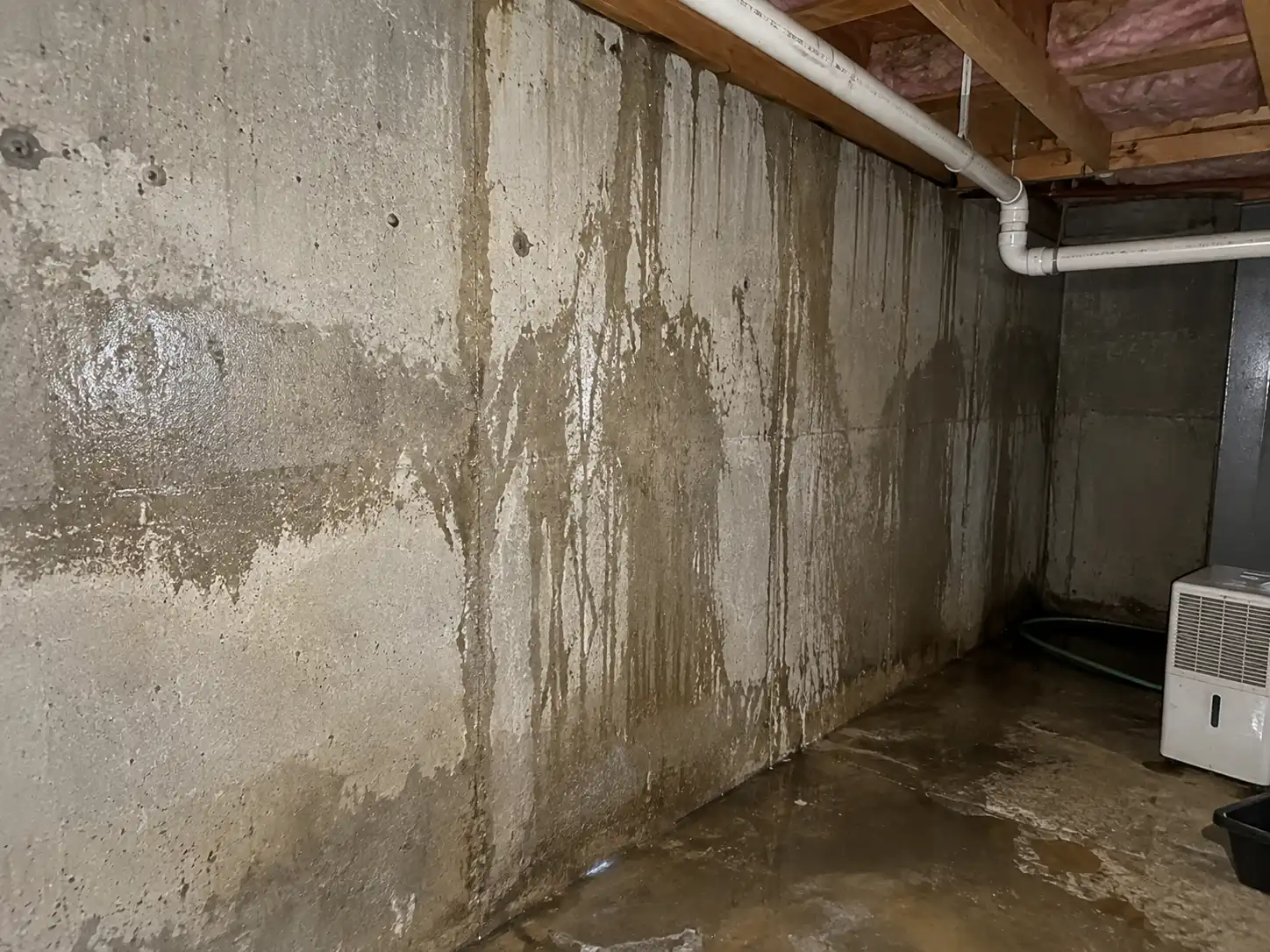
Excess Humidity
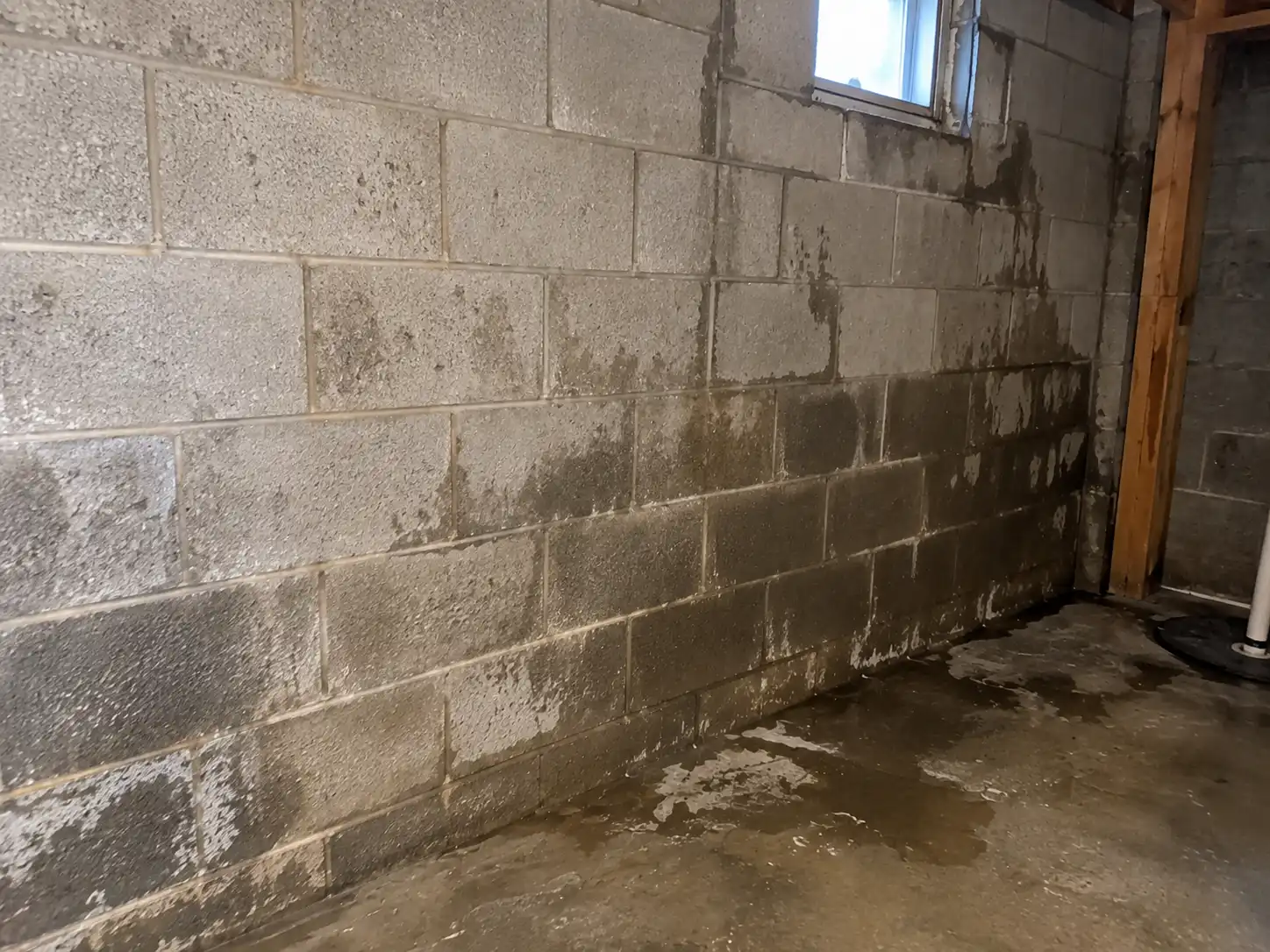
Foundation Moisture
Concrete block and poured concrete both absorb some moisture from the surrounding soil, especially after heavy rain. Over time, that moisture can reach a finished wall or the drywall built against it.
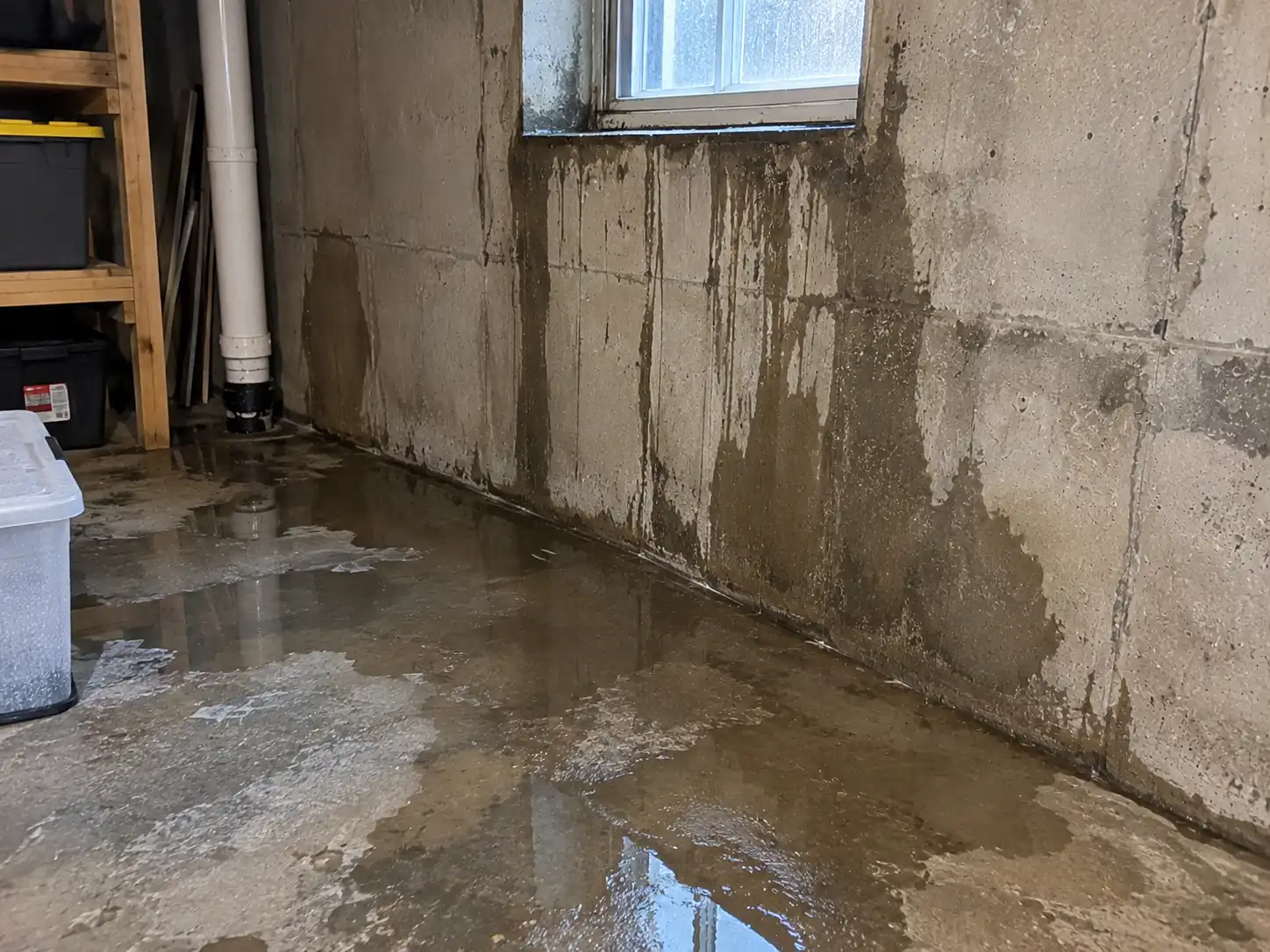
Water Intrusion
Cracks in the foundation, gaps around window wells, or a failing seal where the wall meets the floor let water in gradually, often without anyone noticing until a musty smell shows up.
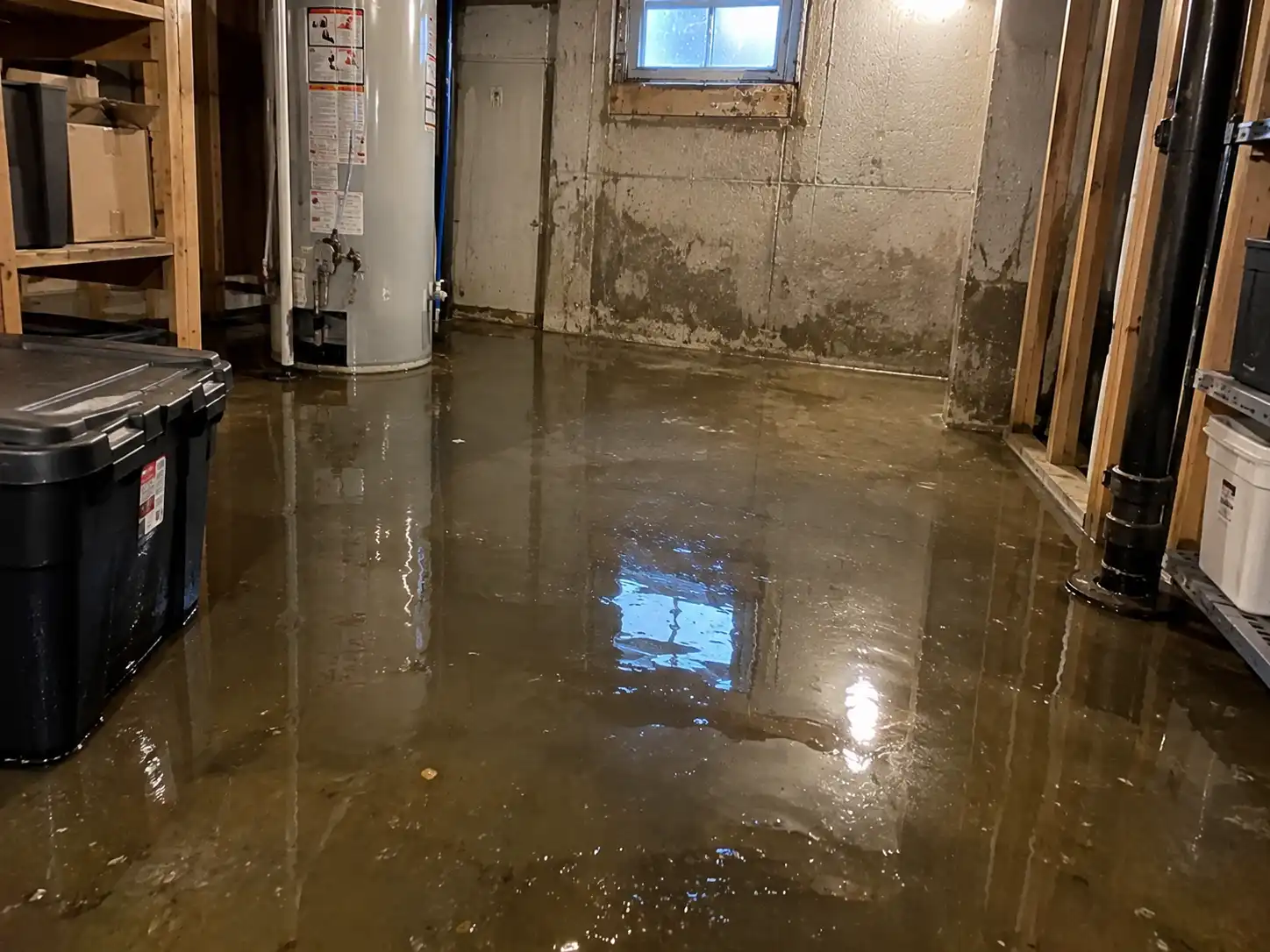
Flooding
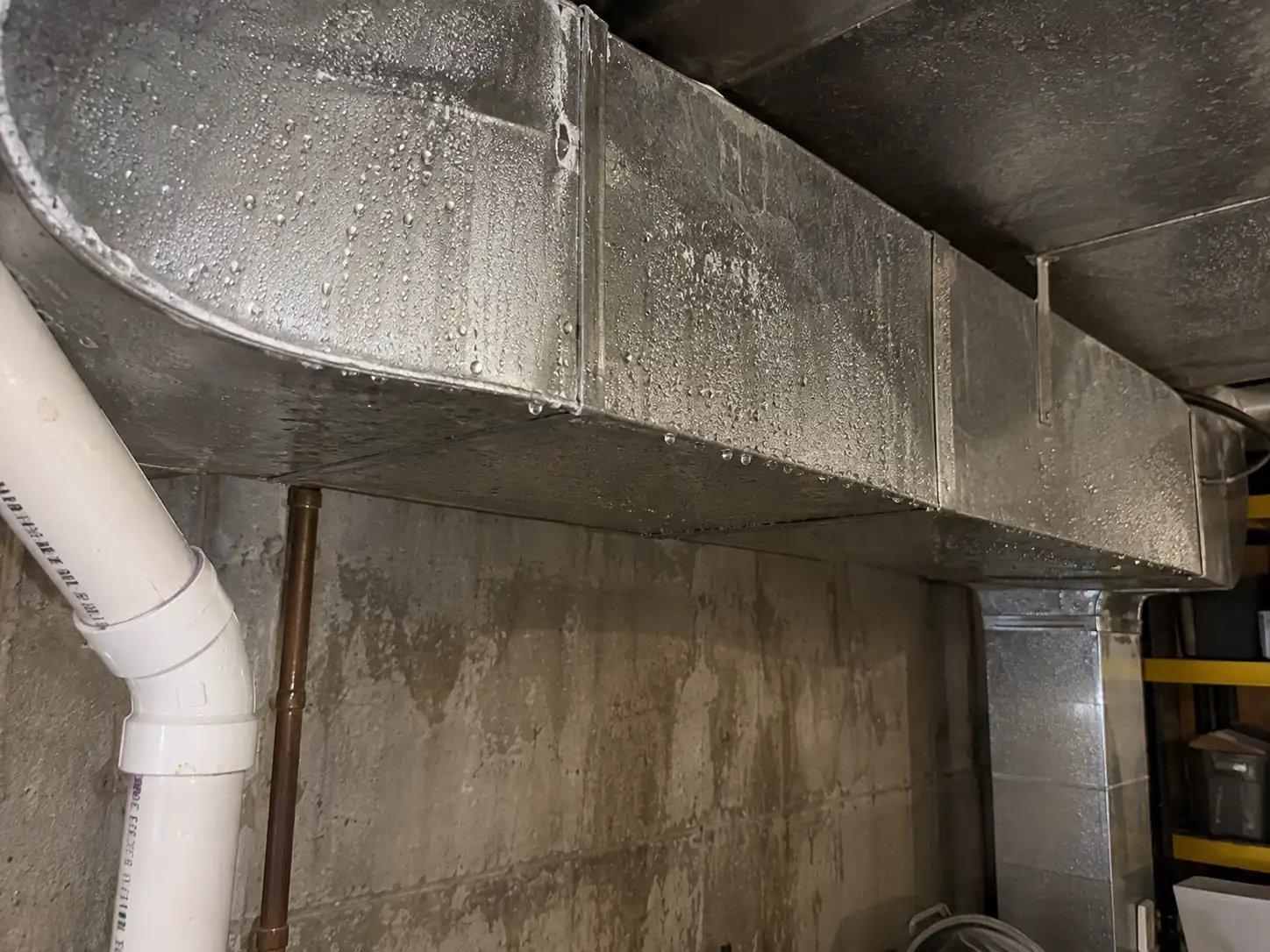
Condensation
Poor Air Circulation
Basements often have fewer vents, windows, and airflow paths than the rest of a home. Stagnant, damp air with nowhere to go is one of the most common conditions behind basement mold.

Why Choose Us for Basement Mold Remediation
- Below-grade moisture expertise, not a general mold crew working outside their usual scope
- Technicians trained to the ANSI/IICRC S520 Standard for Professional mold remediation homeowners rely on
- Licensed and insured in Missouri and Kansas
- Moisture-source correction included in the scope, not billed as a surprise later
- Written reports and estimates before any work begins
- 10 years remediating basements across Kansas City
Preventing Mold From Returning to Your Basement
Keep basement humidity below 60% with a dehumidifier if the space doesn’t stay dry naturally. Make sure your sump pump is tested regularly, especially before spring storms.
Grade soil away from the foundation outside, and check window wells for proper drainage. Address any foundation cracks or seepage promptly rather than waiting for a bigger problem.
Basement Mold Remediation Cost
Cost depends on the size of the affected area, the materials that need removal, and whether moisture-source repair — like a sump pump or drainage fix — is part of the job.
Basement jobs with finished walls and flooring generally cost more than an unfinished basement with concrete and open framing. We provide a written estimate after inspection.
Areas We Serve in the Kansas City Metro
We provide this service throughout Kansas City, MO, and the surrounding metro, including:
- Kansas City, MO (Brookside, Waldo, Westport, Northland, Downtown)
- Overland Park, KS
- Lee's Summit, MO
- Independence, MO
- Olathe, KS
- Blue Springs, MO
- Shawnee, KS
- Raytown, MO
- Gladstone, MO
- Liberty, MO
Frequently Asked Questions
Basements combine higher humidity, ground moisture through foundation walls, and less airflow than other rooms, which creates ideal conditions for mold to grow, even without a leak or flood.
We contain the area, remove material that’s absorbed mold, HEPA-clean the space, and fix the moisture source causing the problem. Removal without fixing the cause is why basement mold often returns.
Basement mold remediation typically costs $1,000 to $6,000, depending on the size of the area and whether finished materials or moisture repair are involved. (Replace with your real pricing — do not publish this placeholder as-is.)
Yes, if the moisture source isn’t fixed or humidity stays high. That’s why moisture correction is part of our standard scope, not an optional add-on.
Once relative humidity stays above 60% for an extended period, it’s enough on its own to support mold growth, even with no visible water source.
Not always, but it often does if the space isn’t fully dried within 24 to 48 hours. Fast, thorough drying after a flood is the biggest factor in whether mold takes hold.
Smaller, contained jobs often take 1 to 3 days. Larger jobs involving finished materials or moisture-source repair can take a week or more.