
HVAC Mold Remediation in Kansas City, MO
Every Time Your System Runs, It's Spreading Something Through Your Whole House.
If mold is inside your ductwork, coil, or drain pan, your HVAC system isn’t just failing to help — it’s actively pushing spores into every room it serves.
HVAC mold remediation removes the growth at the source and fixes the moisture problem that let it start, so your system stops being part of the problem. Most jobs are done in a day.
Mechanical Systems Need a Different Kind of Remediation
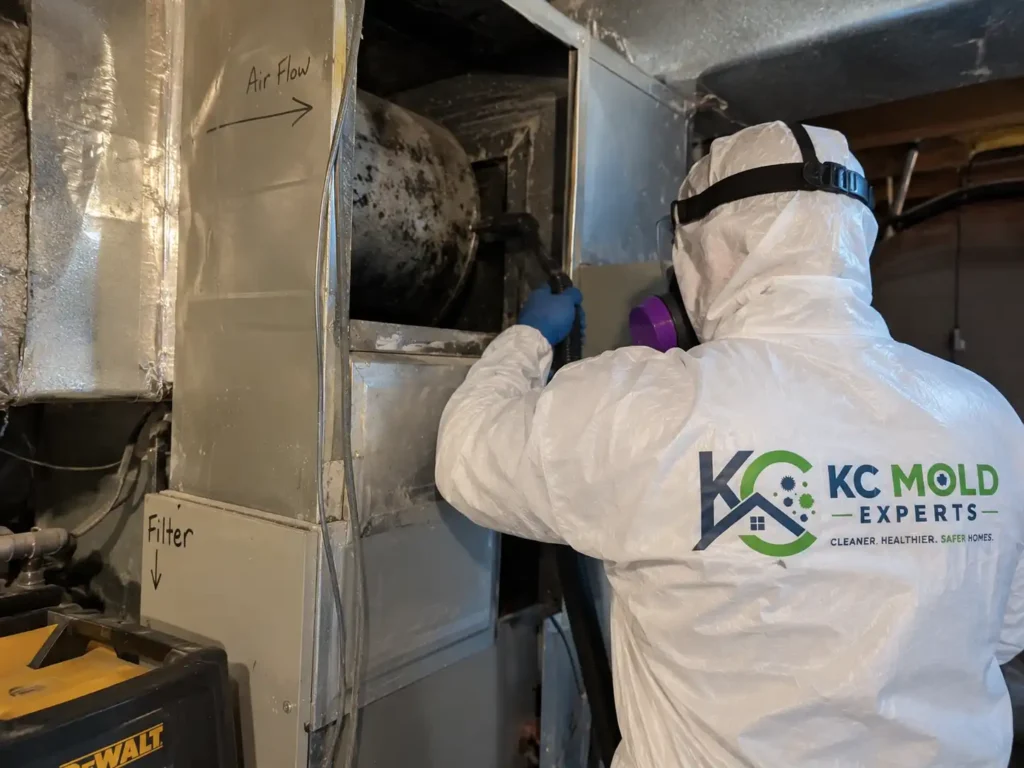
An HVAC system isn’t a room — it’s a machine with coils, drain pans, and sealed ductwork most crews aren’t equipped to open safely. HVAC mold remediation requires knowing which components can be cleaned in place and which need to come out.
Our technicians are IICRC-trained and coordinate directly with HVAC systems rather than working around them. KC Mold Experts is licensed and insured in Missouri and Kansas.
Our HVAC Mold Remediation Services
HVAC Mold Inspection
HVAC Mold Removal
HVAC Mold Treatment
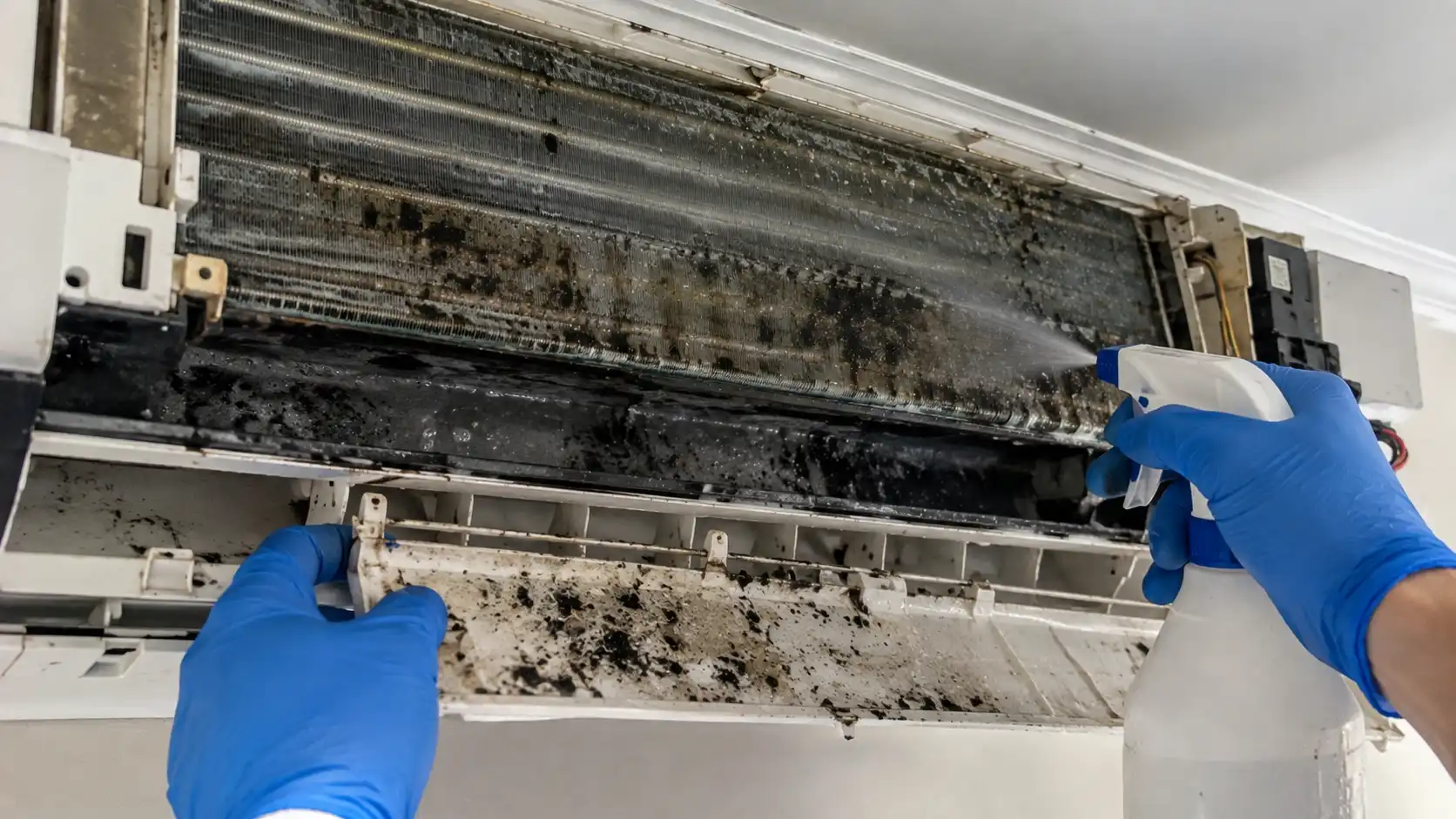
AC Mold Removal
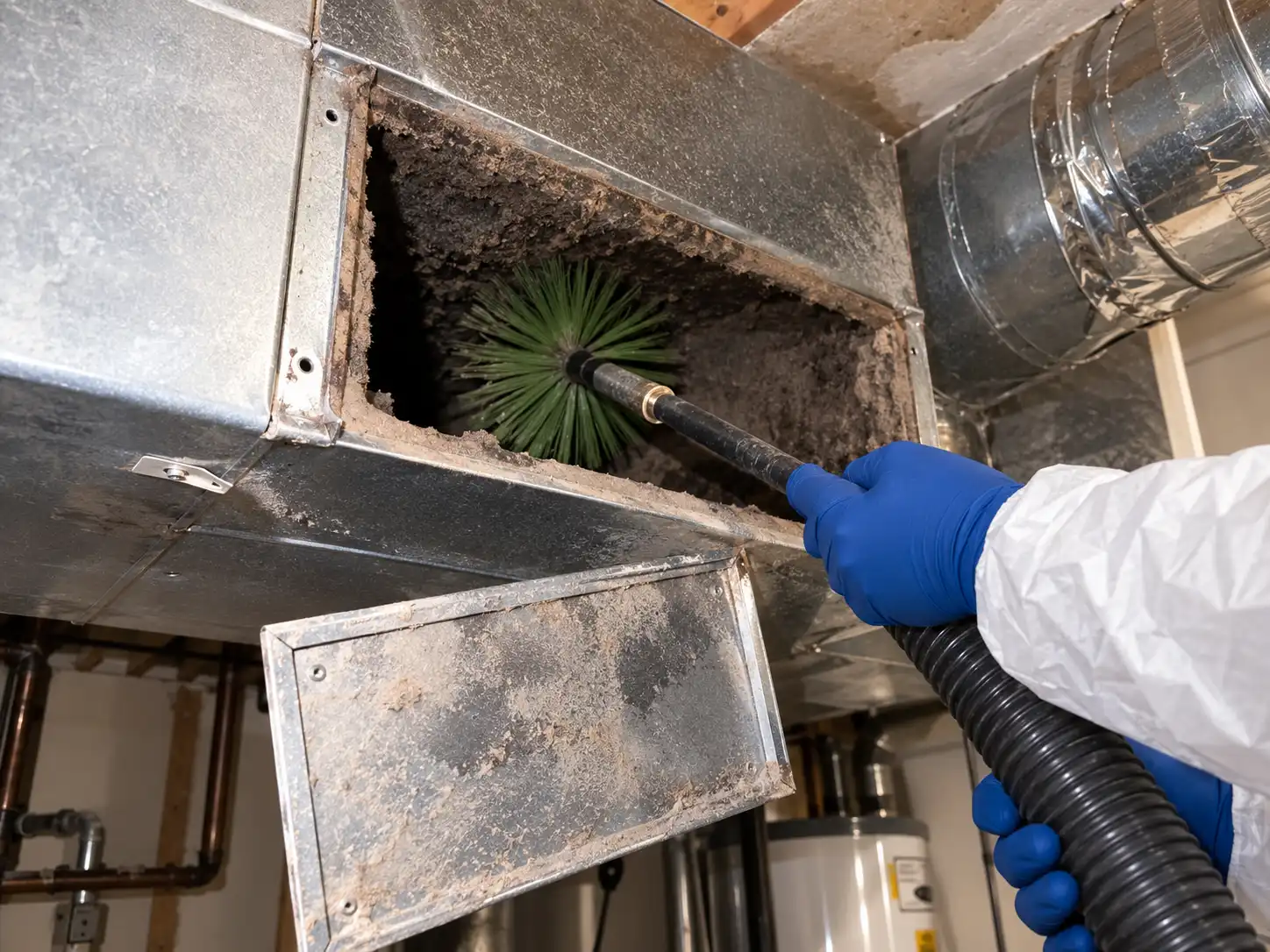
Ductwork and Component Cleaning
We clean accessible duct sections following NADCA-aligned practices, removing settled dust and spores that would otherwise recirculate every time the system runs.
Signs of Mold in Your HVAC System
Musty Odors From Vents
Visible Mold Around HVAC Components
Dark or fuzzy growth around vent covers, the air handler, or visible ductwork is a clear sign, though most HVAC mold isn’t visible without opening the system.
Recurring Mold or Moisture
Indoor Air Quality Concerns
How We Inspect HVAC Systems for Mold
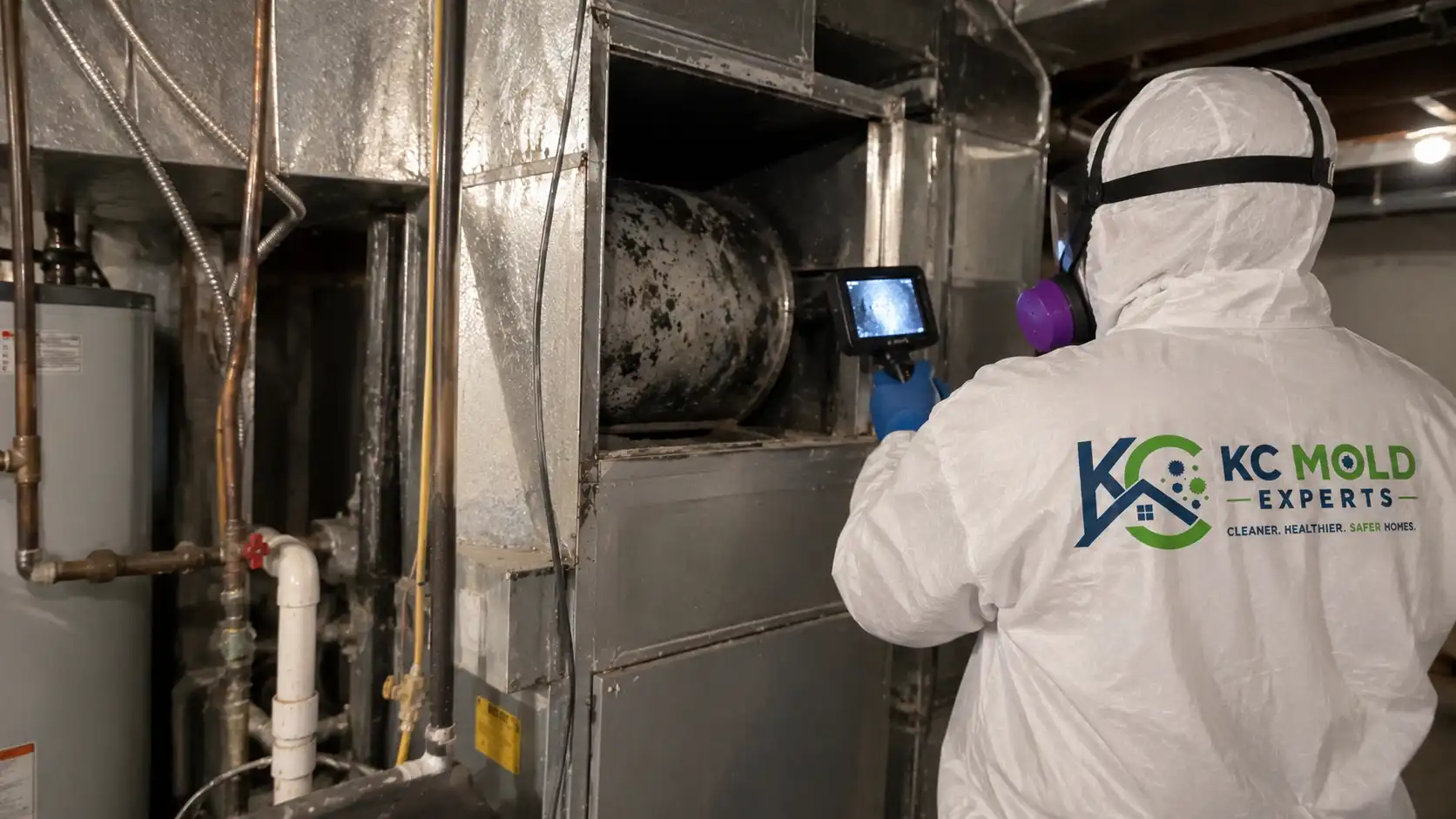
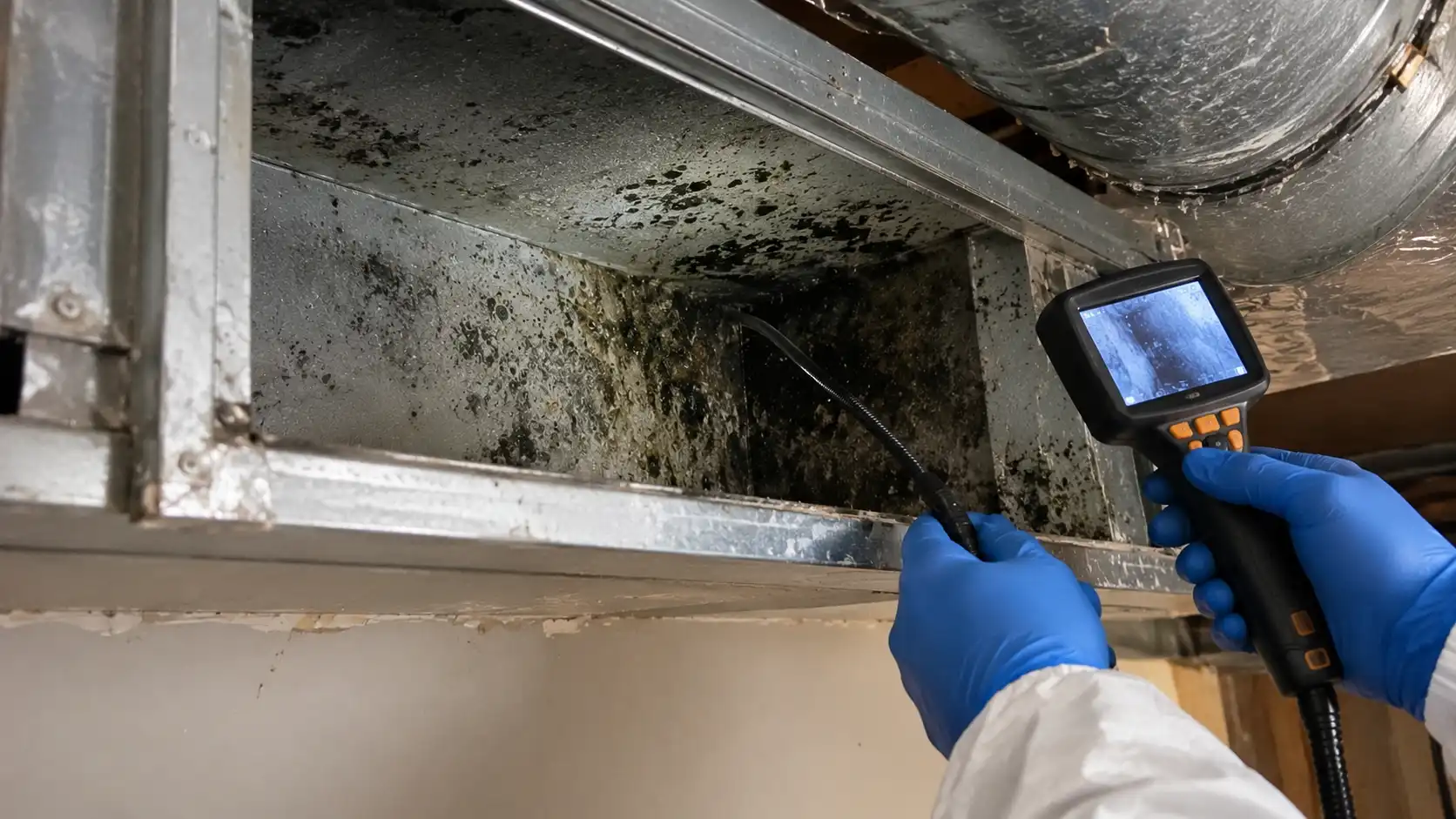
We start with a visual check of accessible components — coil, drain pan, and air handler interior — followed by a camera scope of duct sections that aren’t directly reachable. We check for both visible growth and elevated moisture using meters where appropriate.
You get a written report showing exactly which components are affected, so the remediation scope matches what’s actually there.
HVAC Mold Removal vs. HVAC Mold Remediation
HVAC mold removal is the physical cleaning or removal of mold from system components. It addresses what’s growing right now.
HVAC mold remediation includes removal plus identifying and fixing the moisture or condensation problem that caused it — a clogged drain, poor insulation, or a system issue. Removal alone tends to be a temporary fix if the underlying cause isn’t corrected.
How HVAC Mold Remediation Works
01
Identifying the Moisture Source
We determine why moisture built up in the first place — a clogged drain line, poor insulation, or an oversized system that runs inefficiently and leaves excess condensation.
02
Containing the Affected Area
We seal off the work area around the air handler or accessible ductwork to keep spores from spreading into the room during the job.
03
Cleaning and Removing Mold
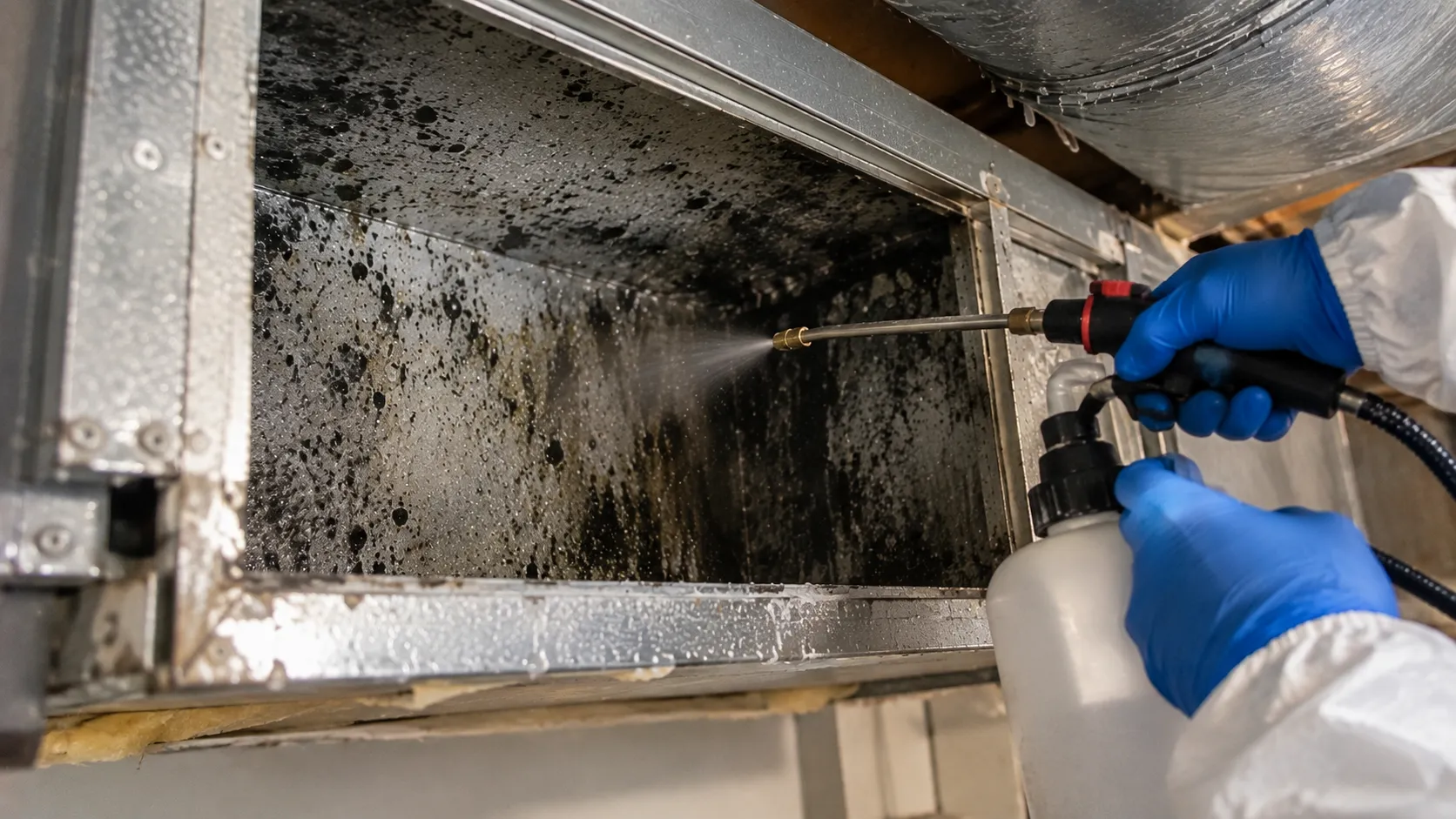
We clean and treat coil surfaces and drain pans, and remove duct sections beyond cleaning when growth has penetrated insulation or liner material.
04
HEPA Filtration
We run HEPA air scrubbers and vacuum accessible surfaces to clear spores from the immediate work area before the system runs again.
05
Correcting Moisture and Condensation Problems
This step is what makes HVAC mold remediation last — clearing a clogged drain line, improving duct insulation, or flagging an oversized system to your HVAC technician for further evaluation.
06
Final Assessment
We confirm the system is clean and moisture conditions are corrected before turning it back on for regular use.
HVAC Mold Remediation for Kansas City Homes and Businesses
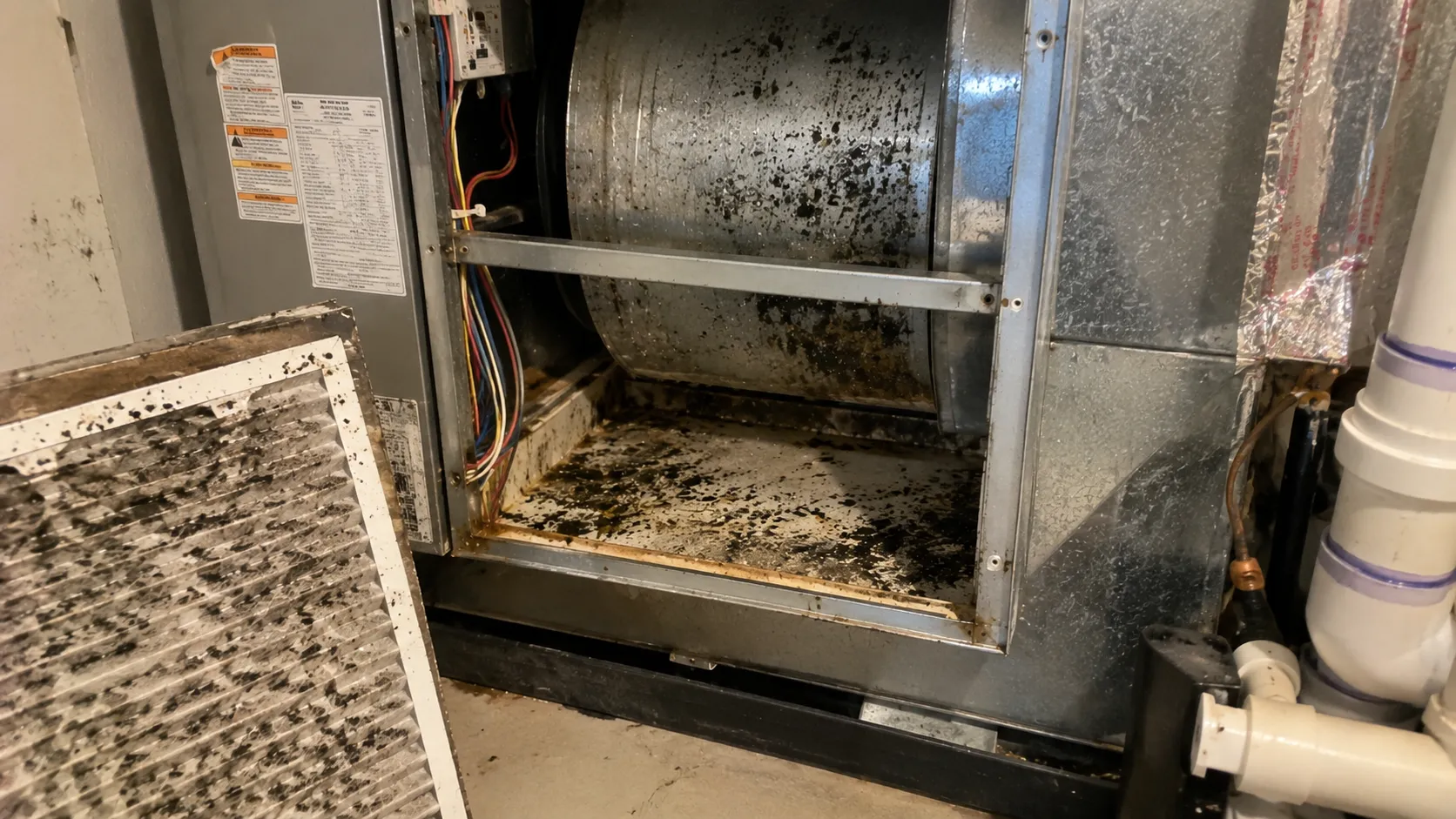
Residential HVAC Mold Remediation
We service single-family homes, condos, and rental properties, most often addressing coil and drain pan growth tied to routine condensation buildup.
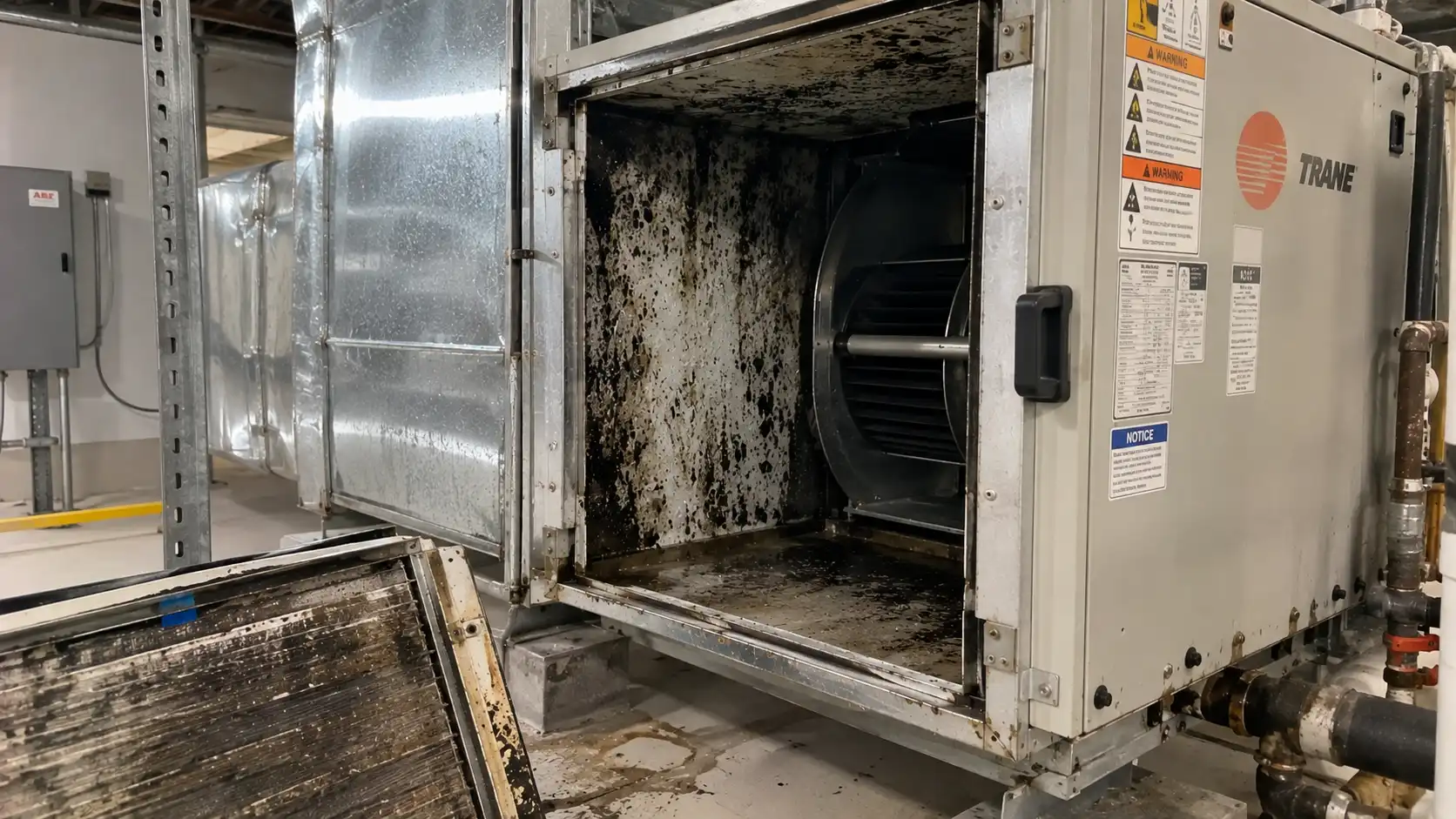
Commercial HVAC Mold Remediation

Why Choose Us for HVAC Mold Remediation
- HVAC-specific protocols, not a general mold crew improvising around mechanical equipment
- Technicians trained to the ANSI/IICRC S520 Standard for Professional Mold Remediation
- Licensed and insured in Missouri and Kansas
- Direct coordination with your HVAC technician when a mechanical repair is needed
- Written reports showing exactly which components are affected
- 10 years handling HVAC mold remediation across Kansas City
Where Mold Can Grow in an HVAC System
Air Handlers
The air handler interior stays damp from condensation, especially around the coil area, making it one of the most common growth spots in the whole system.
Ductwork
Ducts collect dust, which holds moisture longer than a bare metal surface. Combined with condensation in poorly insulated duct runs, this creates ideal conditions for growth.
Evaporator Coils
The coil is constantly wet during cooling season from condensation. Without regular cleaning, this moisture combined with dust buildup is one of the most reliable places to find mold in any AC system.
Drain Pans
Drain pans collect condensate runoff and can hold standing water if a drain line clogs. Standing water in a warm mechanical space is a near-guarantee of growth if left unaddressed.
Vents and Registers
Other Moist HVAC Components
Can HVAC Mold Spread Through Your Home?
Yes, and this is what makes HVAC mold different from mold in a single room. Every time the system runs, air moves through the affected component and out through the vents into every connected room.
This is why a single moldy coil or drain pan can lead to symptoms or odors showing up in rooms that have no visible mold problem of their own.
Preventing Mold From Returning to Your HVAC System
Change air filters on schedule, since a clogged filter reduces airflow and increases condensation buildup on the coil. Have your HVAC system serviced annually, including a coil and drain pan check.
Make sure the condensate drain line is clear and draining properly, and consider a UV light or antimicrobial coil treatment if your system has a history of recurring growth.
HVAC Mold Remediation Cost
Cost depends on which components are affected and whether ductwork needs partial removal versus cleaning in place. A coil and drain pan cleaning costs less than a job involving duct section removal and replacement.
We provide a written estimate after inspection, and we coordinate directly with your HVAC technician when a mechanical repair is part of the fix.
Areas We Serve in the Kansas City Metro
We provide this service throughout Kansas City, MO, and the surrounding metro, including:
- Kansas City, MO (Brookside, Waldo, Westport, Northland, Downtown)
- Overland Park, KS
- Lee's Summit, MO
- Independence, MO
- Olathe, KS
- Blue Springs, MO
- Shawnee, KS
- Raytown, MO
- Gladstone, MO
- Liberty, MO
Frequently Asked Questions
The clearest sign is a musty smell that’s stronger when the system is running. Visible growth around vents or the air handler is also a sign, though most HVAC mold isn’t visible without opening the system.
Yes. Air moves through the affected component and out through the vents into every room the system serves, which is why HVAC mold can cause symptoms in rooms with no visible mold of their own.
Accessible components like the coil, drain pan, and air handler interior are cleaned and treated. Duct sections with growth beyond cleaning may need partial removal and replacement.
HVAC mold remediation typically costs $500 to $2,500, depending on which components are affected and whether duct removal is needed. (Replace with your real pricing — do not publish this placeholder as-is.)
Yes, for anything beyond a filter change. Opening ductwork or handling coil components without the right equipment can spread spores through the system instead of removing them.
Yes, if the moisture source — a clogged drain, poor insulation, or a system issue — isn’t corrected. That’s why moisture correction is part of full HVAC mold remediation, not just cleaning.
Change filters on schedule, get annual service that includes a coil and drain pan check, and make sure the condensate line drains properly.