
Black Mold Removal in Kansas City, MO
That Dark Stain Might Not Be Ordinary Mold.
Black mold looks different, spreads differently, and needs to be handled differently than regular surface mildew.
Guessing at what you’re looking at, or trying to scrub it off yourself, can disturb it and spread spores through the rest of the room. We identify it, contain it, and remove it the right way the first time.
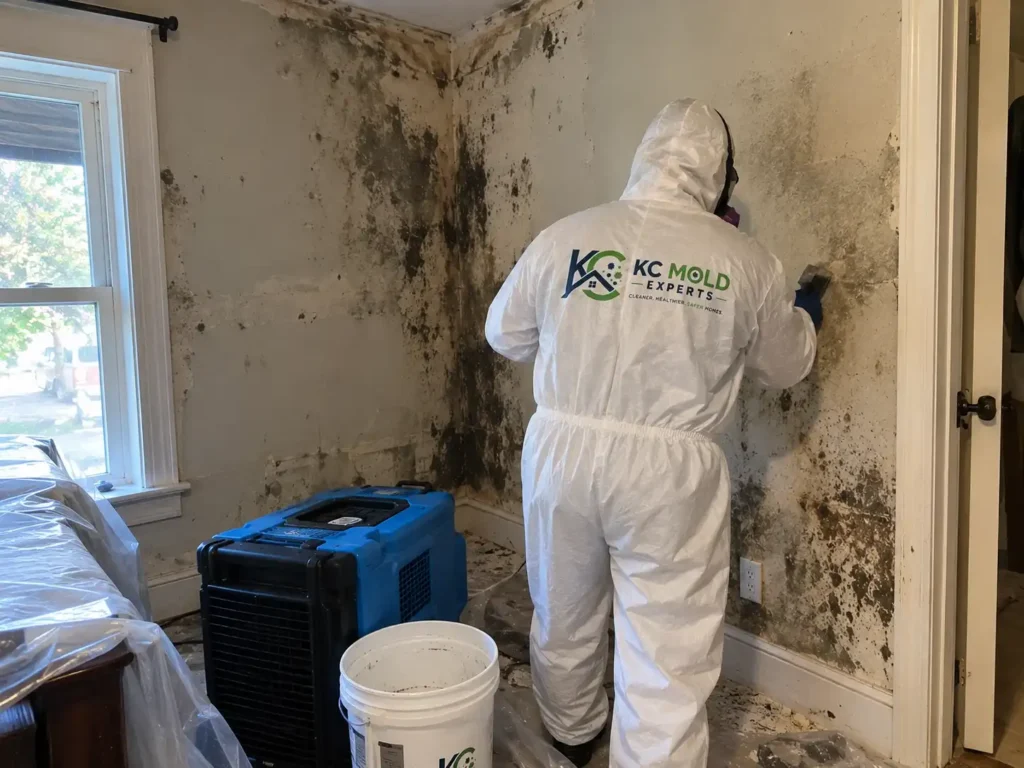
Black Mold Gets Handled Differently — Here's How
Standard mold containment isn’t always enough for Stachybotrys. It can release spores more easily when disturbed, so we scale up containment before we start, not after something goes wrong.
Our technicians are IICRC-trained, and KC Mold Experts is licensed and insured in Missouri and Kansas.
Certified Black Mold Removal Services in Kansas City MO
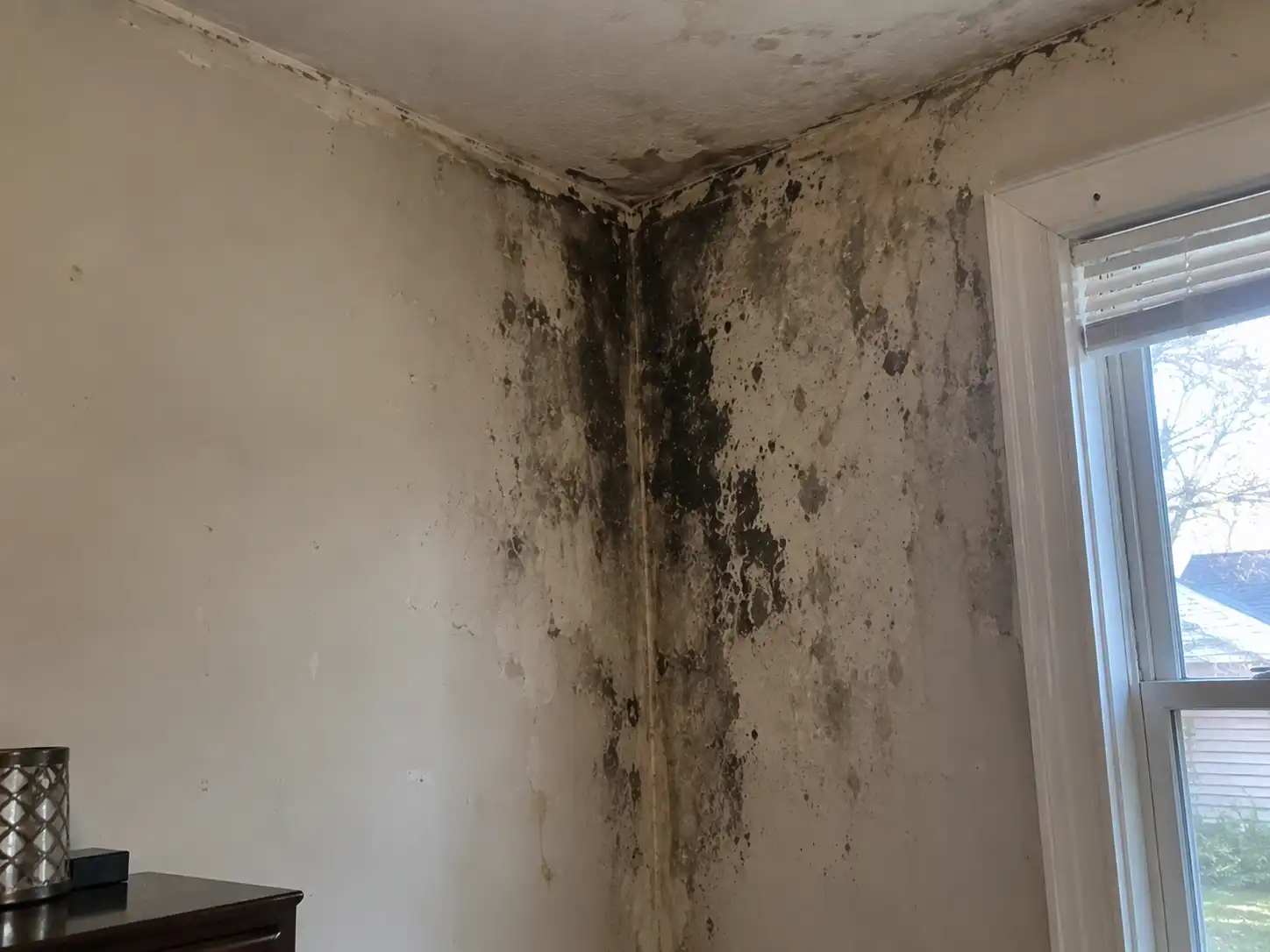
Residential Black Mold Removal
We remove black mold from homes, condos, and rental properties, most often in bathrooms, basements, and attics.
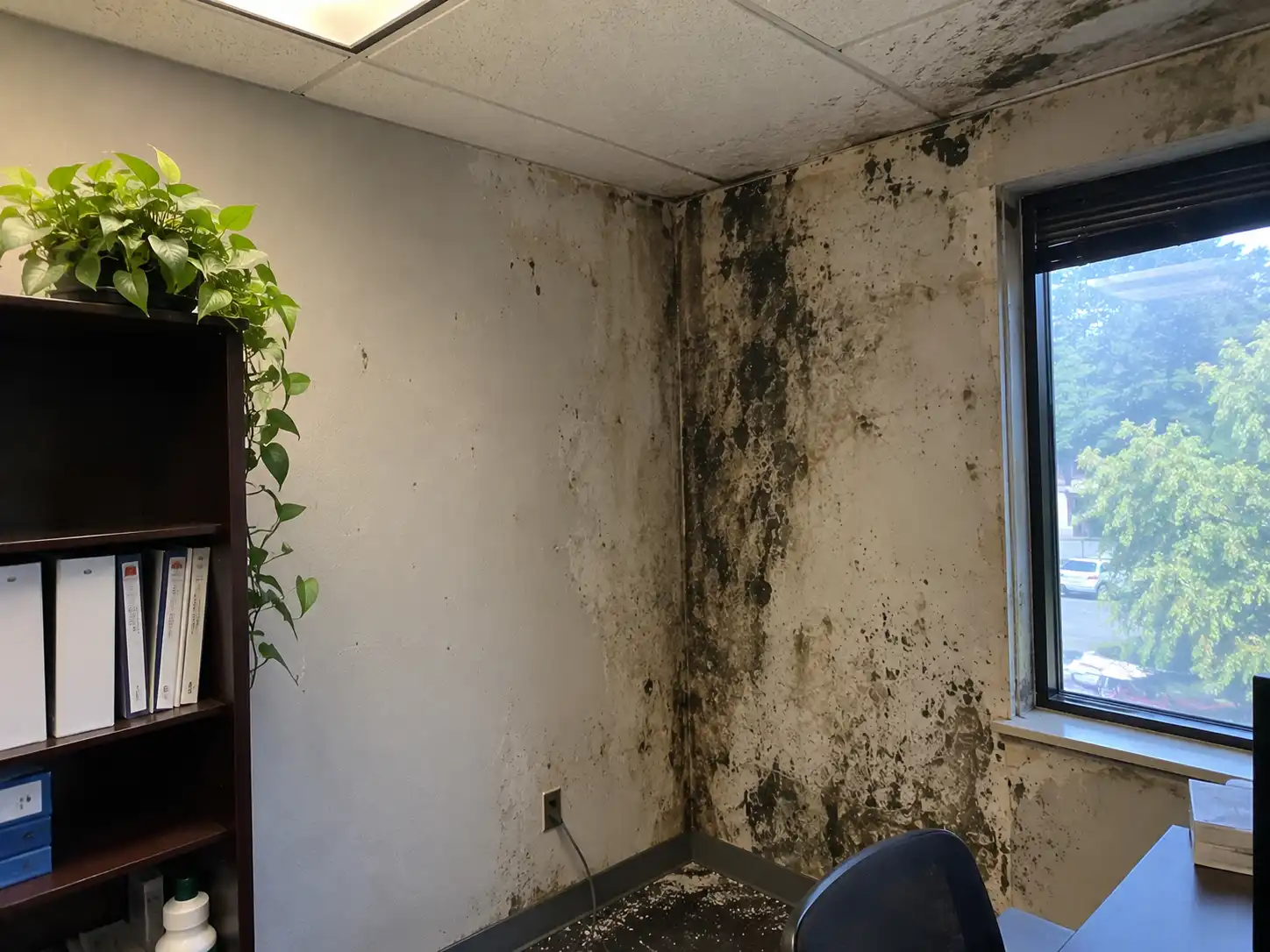
Commercial Black Mold Removal
We work with offices, retail spaces, and multi-tenant buildings, and provide documentation for property managers, landlords, and insurers.
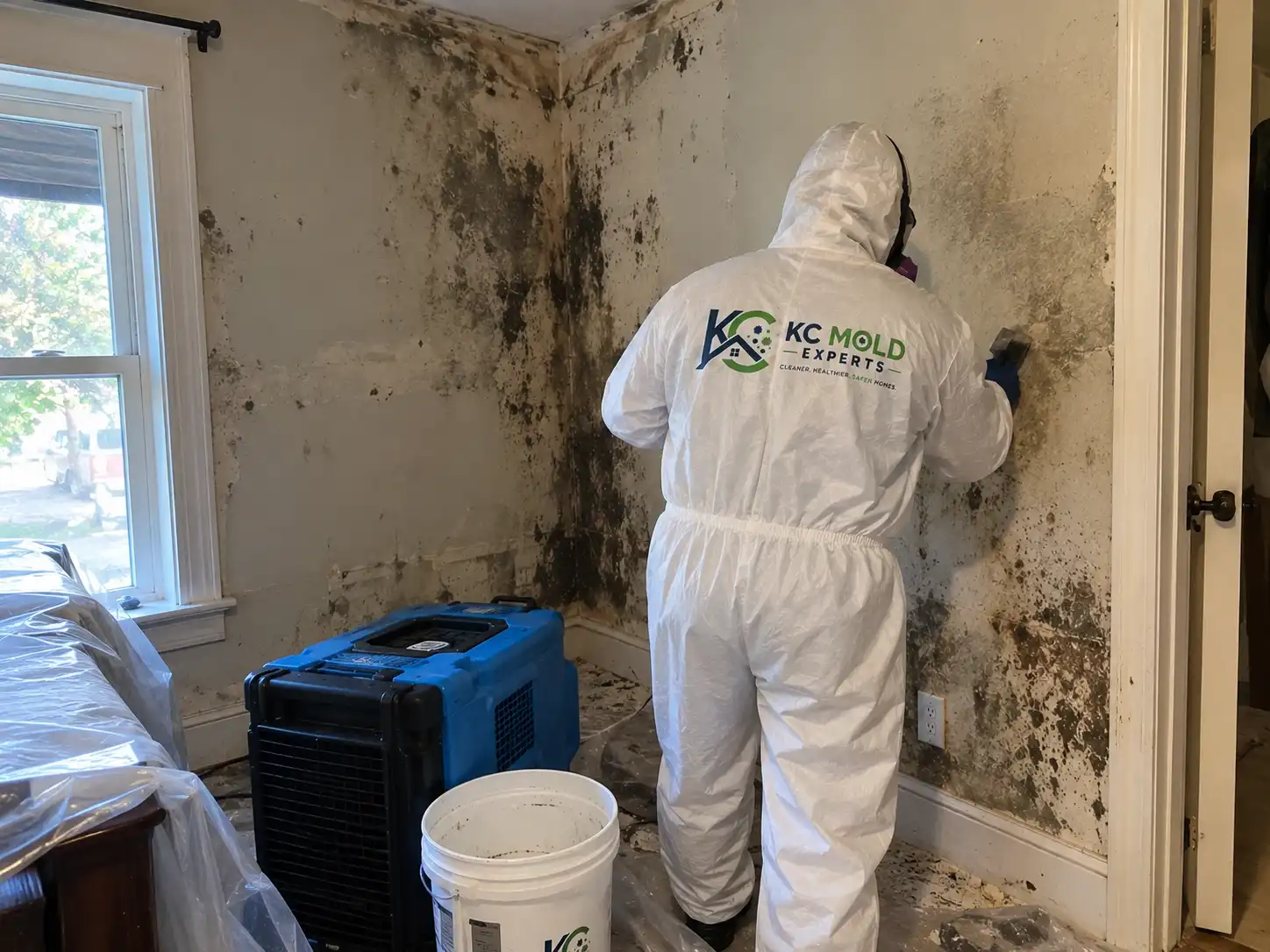
Black Mold Cleanup
Cleanup covers smaller, contained spots — a single wall section, a small ceiling stain. These jobs still get full containment and HEPA cleaning, scaled to size.
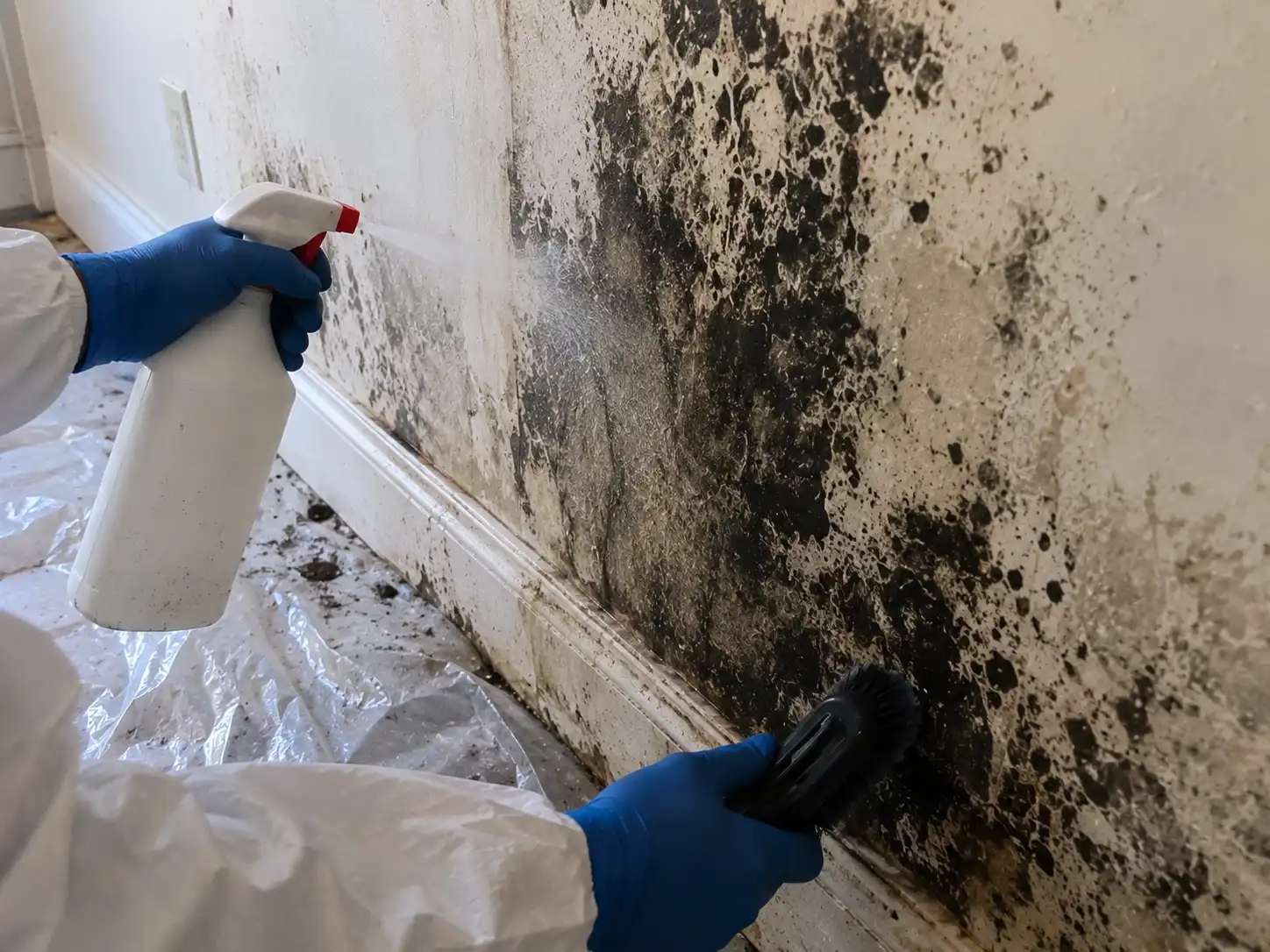
Black Mold Remediation
Remediation is the complete process: inspection, containment, removal, HEPA filtration, moisture-source correction, and final testing. This is what actually stops black mold from coming back.
Signs of a Black Mold Problem
- A dark, greenish-black growth with a slimy or wet-looking texture, not powdery
- Growth concentrated on chronically wet material — water-damaged drywall paper, ceiling tiles, wood
- A strong, persistent musty odor in the affected area
- A history of a slow leak, flooding, or long-term moisture that was never fully dried
- Allergy-type symptoms — nasal irritation, coughing, throat irritation — that ease up away from the space
Confirming the species requires testing. Visual appearance alone is a strong clue, not a diagnosis.
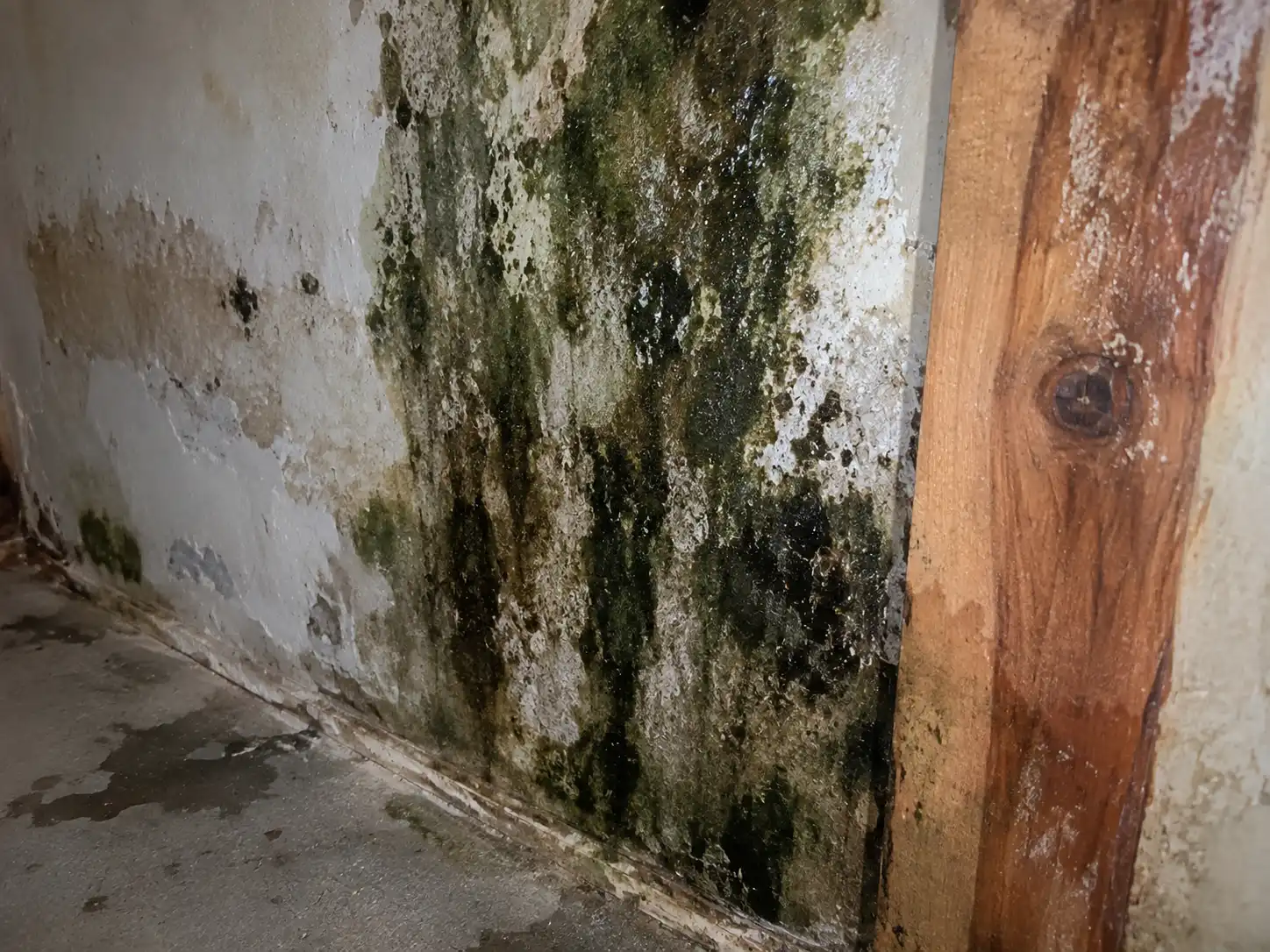
Black Mold Inspection and Assessment
We inspect the suspected area visually and check moisture levels with meters and thermal imaging. If the growth is consistent with black mold, we recommend surface sampling to confirm the species before finalizing a removal scope.
Confirming the species first means the containment and removal plan matches the actual risk, not a guess based on color alone.
Dealing With Suspected Black Mold?
Not every dark spot is black mold, and not every case of black mold is a health emergency. It’s a specific species, Stachybotrys chartarum, that needs sustained moisture, not just humidity, to grow.
If you’re seeing a greenish-black, slimy-looking growth on a surface that’s been chronically wet, that’s worth having checked. We can confirm what you’re dealing with through inspection and, if needed, lab testing.
Where Black Mold Is Found Kansas City Homes
Bathrooms and Showers
Grout, caulk, and drywall behind tile stay wet longer than other surfaces, especially with weak ventilation.
Basements
Below-grade humidity and past flooding make basements the most common place we find black mold in Kansas City homes.
Walls and Ceilings
Growth here usually points to a hidden leak — plumbing, roofing, or a past water event that wasn’t fully dried.
Attics and Other Damp Areas
Our Black Mold Removal Process in Kansas City
01
Containment
We seal the work area with plastic barriers and run negative air machines. Black mold containment is typically stricter than standard mold jobs, since this species can release spores more easily when disturbed.
02
Removal of Affected Materials
We remove and bag mold-affected material that can’t be cleaned — usually drywall, insulation, or wood with visible growth.
03
HEPA Filtration
HEPA air scrubbers and vacuums pull spores out of the air and off surfaces during and after removal, capturing particles down to 0.3 microns.
04
Cleaning and Decontamination
Remaining surfaces are cleaned and treated with an EPA-registered antimicrobial before any rebuild work starts.
05
Moisture Source Correction
We identify and address the moisture source that allowed sustained wetness in the first place — a leak, drainage issue, or ventilation problem.
06
Final Cleanup

Why Choose Us for Black Mold Removal
- Free, written inspection reports — not a guess over the phone
- IICRC-trained technicians who follow the S520 standard
- Licensed and insured in Missouri and Kansas
- Independent lab testing, not self-graded results
- 24/7 emergency response — mold doesn't wait for business hours
- Moisture source identified and documented, not just the mold treated
- Containment and negative air pressure to stop cross-contamination during removal
- Photo-documented before/after for insurance claims
- Post-remediation clearance testing before we call the job done
- No cross-selling reconstruction you don't need — remediation and repair kept separate
- Locally owned and operated, serving Kansas City for 10 years
- Direct communication with your insurance adjuster, no runaround
Black Mold Removal vs. Black Mold Remediation
Removal is the physical extraction of black mold and the material it grew on. It addresses what’s visible right now.
Remediation is the full process — inspection, containment, removal, HEPA filtration, moisture correction, and testing. Removal without remediation is why black mold often returns within months.
Why Black Mold Can Return After Improper Cleanup
Scrubbing a surface with bleach or a household cleaner can remove the visible color without killing the mold below the surface, especially on porous material like drywall.
Cleaning without containment can also spread spores into the air and to other rooms. And if the moisture source was never fixed, the same conditions that caused the mold the first time are still there.
Black Mold Removal Cost
Cost depends on the size of the affected area, the materials that need removal, and whether moisture-source repair is part of the job. Black mold jobs can cost somewhat more than standard mold removal due to stricter containment requirements.
We provide a written estimate after inspection, not a number over the phone.
Areas We Serve in the Kansas City Metro
We provide this service throughout Kansas City, MO and the surrounding metro, including:
- Kansas City, MO (Brookside, Waldo, Westport, Northland, Downtown)
- Overland Park, KS
- Lee's Summit, MO
- Independence, MO
- Olathe, KS
- Blue Springs, MO
- Shawnee, KS
- Raytown, MO
- Gladstone, MO
- Liberty, MO
Frequently Asked Questions About Mold Testing
Black mold typically looks greenish-black and slimy, growing on chronically wet material like water-damaged drywall. Visual appearance is a strong clue, but confirming the species requires a surface sample sent to a lab.
Affected material is contained, removed, and disposed of. The area is then HEPA-cleaned, treated with an antimicrobial, and the moisture source is corrected.
Black mold removal typically costs $750 to $4,000 depending on the size of the area and materials involved. (Replace with your real pricing — do not publish this placeholder as-is.)
Yes. Black mold needs sustained moisture, which is common behind walls with a hidden plumbing or roofing leak. A musty smell with no visible source is a common sign of this
Yes, if the moisture source isn’t fixed or if removal was incomplete. Full remediation, including moisture correction, is what prevents it from returning.
For anything beyond a very small, isolated spot, yes. Black mold containment and safe removal require equipment and protocols that DIY cleaning doesn’t include.